
Join Our Wildlife Volunteer Projects
We have global award-winning African wildlife volunteering opportunities currently running in South Africa and the Seychelles. Conservation volunteering in Zululand forms part of our Endangered Species Monitoring Programme. Our Seychelles Conservation Project focuses on endangered species monitoring, marine conservation and ecosystem restoration.

Winner of the World Responsible Tourism Award 2023 in the category Nature-Positive Tourism!
Winner of the African Responsible Tourism Award 2023 in the category Nature-Positive Tourism!
Get involved in real endangered wildlife conservation and have the ultimate African wildlife experience while doing it.
Apply to volunteer
Zululand, South Africa
Ages: 18 - 65+
Zululand is recognised as one of the most biodiverse wildlands in Africa, with much of it declared a World Heritage Site. Wildlife conservation volunteers work across unique parks, with most of them being nationally-proclaimed reserves. For every 2 weeks that you join us as a conservation volunteer, you will have the opportunity to live and work on a different park. Our work focuses on endangered and priority wildlife species, including the African Wild Dog, Cheetah, Rhino, Lion, Elephant, Leopard and Vulture.

Maloti-Drakensberg Park World Heritage Site and Surrounds
Relatively fit 18 - 65+
The Southern Drakensberg Conservation Project takes place both in and around the Maloti-Drakensberg Park World Heritage Site in South Africa, a crucial stronghold for several threatened and endangered species. During their time at the Project, volunteers live in an authentic farmhouse situated in the buffer-zone surrounding the World Heritage Site, surrounded by breathtaking scenery.

Zululand, South Africa
Ages: 18 - 65+
Wildlife ACT is officially contracted by the international wild cat organisation, Panthera, to conduct Leopard density estimate surveys within South Africa. This involves conducting a number of exciting, short-term Leopard Population Surveys using remote camera trapping survey methods. The survey is one of the largest on Leopards of its kind in the world where we’re working together with provincial protected areas to help inform management to improve Leopard conservation.

North Island, Seychelles
Ages: 21 - 60
Our Seychelles volunteer project focuses on three key aspects: Endangered Species monitoring, Marine Conservation and Ecosystem Restoration. For a unique ecotourism experience which allows you to give something back by supporting a dedicated conservation research and volunteer team on a private tropical island paradise, come and support those volunteering in the Seychelles. Ecotourists live and experience land and marine conservation life on the exclusive North Island in the Seychelles – considered by many to be the most beautiful archipelago in the world with its luminous white beaches, granite outcrops and azure oceans.

Platte Island, Seychelles
Ages: 20 - 65
Platte Island, a mid-ocean oasis 130 km south of the inner islands of Seychelles archipelago, has just commenced a unique and exciting ocean volunteer conservation project. As an ocean volunteer, you will spend much of your time in the calm tropical water around the island, helping to conserve an array of both land and marine wildlife, including the endangered Green Turtle and critically endangered Hawksbill Turtle. Volunteer to become a valued member of our marine conservation team on this spectacular coralline island sanctuary, encircled by a 13km fringing coral reef forming a shallow lagoon (or atol) holding over 8% of seychelles’s seagrass beds, creating ocean nursery to a breathtaking array of marine wildlife.
- Wildlife ACT was awarded First Place for both a WTM World Responsible Tourism award and for an Africa Responsible Tourism award, in the category Best Nature-Positive Tourism.
- We are the only wildlife volunteer programme in Africa that works with and are supported by high-profile and international conservation organizations such as WWF, Endangered Wildlife Trust, Panthera and Wildlands Conservation Trust (to name just a few).
- We work across different game reserves in South Africa, including Hluhluwe-Mfolozi Game Reserve and Manyoni Private Game Reserve. Conservation volunteers therefore get the chance to experience varied natural environments. Many volunteer organizations allow their volunteers to experience only one reserve.
- Unlike other volunteer organizations that work solely on small, private game reserves (used as farmland in the past) we work predominantly on large, nationally proclaimed and protected game reserves that have always been home to wildlife – giving you a real sense of the true African wilderness.
- The Wildlife ACT experience is unmatched in terms of the type of work we do and the diversity of species we work with, including the ‘BIG 5’. We have been reviewed on several online platforms and the feedback we receive is overwhelmingly positive.
- No more than five volunteers are allowed per reserve at any given time. Unlike other volunteer projects we are not a glorified safari where up to 10 people get on one vehicle and as many as 30 volunteers on one private reserve.
- Our team members are highly qualified and focused on real conservation work. Our one founding member, Dr Simon Morgan, holds a PhD in Black Rhino Ecology. Our other founding member, Chris Kelly, completed his studies in nature conservation before a long career in wildlife monitoring, game capture, relocation and reintroduction.
- Wildlife ACT is a founding partner of Project Rhino KZN and sits on the advisory committee of the Wild Dog Advisory Group of South Africa. The Wildlife ACT Team founding members are also trustees of Wildlife ACT Fund.
Wildlife ACT is looking for people who want their contribution, in terms of their time and funds, to be effectively utilised in genuine conservation efforts. If you wish to be a part of a professional conservation team, make a real difference and experience important conservation work in Africa, then you are the kind of conservation volunteer we are looking for!
Anyone from the age of 18 up can join our team. All you need for wildlife volunteering is the passion to make a difference, have a good grasp of the English language, be in a reasonably good physical condition and most importantly, have a good attitude. And remember: This is Zululand, not Disneyland!
You can make a no obligation application at any time. ENQUIRE NOW
 Make contact with us
Fill out our simple online application form to become a conservation volunteer.
 Ask our expert
Bronwen Kelly is our friendly and helpful reservations manager. She will guide you through the process and make sure your plans come together.
 Pay your deposit
When you are happy with everything, you can secure your place by paying your 30% deposit. 70% of your remaining balance will be due four weeks before you arrive in Africa.
 Book your flights
You will be responsible for booking your own flights.
We collect and drop off all our participants at RICHARDS BAY, which is the closest airport. You would need to book your international flight arriving in JOHANNESBURG (O.R. Tambo International Airport), followed by a short internal flight from Johannesburg to Richard’s Bay (RCB). Please see the “How Do I Get There” tab on our Project Page for more info about flights.
Transfer Service:
When you arrive at Richards Bay airport, you will be collected by an organised responsible transfer company with a sign. All arriving conservation volunteers will be transported by the transfer company to a central meeting point, where you will be met by your respective Wildlife ACT wildlife monitors, who will then take you into the reserve, on the back of a monitoring vehicle. On the Monday of your departure you will be transported back to Richards Bay airport to catch your departing flight home.
Contact us at any time for help and advice
We guarantee you a prompt response to your enquiries. You will be able to contact the Wildlife ACT team on the reserves at any time during your preparations, so you will have access to all the latest developments live from the field. The Wildlife ACT team can also help you with specific enquiries relating to latest animal sightings and other interesting news as it happens. For the latest news, visit our blog.
Most conservation volunteers join Wildlife ACT for 4 to 12 weeks, with a minimum stay being two weeks. We maintain a small volunteer group of no more than five people per reserve and therefore recommend that you apply as soon as possible in order to confirm the dates that suit you.
Wildlife ACT runs a number of projects so we are in the unique position to offer you theli opportunity to join us on more than one reserve, giving you the chance to experience diverse aspects of wildlife conservation. The opportunity to work on multiple game reserves depends on the length of your stay. If you stay for only two weeks, you will work on one reserve, but for every additional two weeks you stay, the better your chance of experiencing another reserve.
Please Note: Once bookings fill up, placements will be made based on where there are spaces available. Although we do our best to keep to the planned schedule once bookings are confirmed, all placements are subject to change should there be a specific need at any time.
Crowd Funding:
If you are ready and excited to start planning your trip, but discouraged by a financial road block, Wildlife ACT has another solution for you. We have teamed up with FundMyTravel, who provides us with an online platform where you can fundraise for your meaningful travel experience. How does it work? You create a campaign page, complete a brief profile to build trust, add a video and tell your story!
FundMyTravel has a team of dedicated staff who want to help Wildlife ACT participants reach their fundraising goals. They can provide tips and insights on the best ways to spread your word and offer sharing tools to get your campaign greater exposure through social media and email. Click the button below to learn more and get started!


I spent two very exciting weeks in the Park with many experiences I would not have expected. Watching how passionate everyone is about their work was really inspiring. Taking part in this experience made me feel like I was contributing something useful towards the project. I wasn't totally sure what it would be like (although my girlfriend told me what we were going to do), but in the end it was a really amazing time which created great memories for me. My personal highlight of many incredible experiences was helping with an orphaned Rhino calf that was on the way to the orphanage. We encountered them on the way and could tell that they were having a bit of trouble, had a quick talk with them and followed to provide some helping hands. It was really intense to watch the calf on the truck and helping to transfer it to the orphanage. As sad as it seemed, I was impressed by the collaboration of three different groups working hand in hand to achieve the best outcome.

It was an amazing stay and I enjoyed every minute of it. I'm very glad that I finally managed to come back and it was totally worth the long trip again. It's also great to see that the people from a few years ago are still around and everybody has been incredibly nice and helpful. We were so lucky to be here when the Rhino dehornings were taking place and I really didn't expect to see so many different things in just two weeks. Another highlight was the moment when I finally got to see the Wild Dogs again after 8 years, which had me really emotional. Seeing them so often was exactly what I needed.

It was amazing as usual. No complaints. I have already made another booking. It’s hard to believe that this is already my third time working alongside the one monitor who has come so far since our first meeting and has a wealth of information. His passion and enthusiasm for his job immediately draws you into his world. I feel that over the last few years, I always learn something new. Great monitors have a way of bringing back us returning volunteers - creating a family, and welcoming us home.

It was an amazing time. I’m quite impressed with your wildlife, your work and your passion for the animals. It is hard work out there in the bush but the monitors love their job. I loved to learn about the work and the animals, and the monitors told us so many facts and stories. Their passion was contagious. It was my first time in Africa and I didn’t know what to expect. I think two highlights were watching the Wild Dogs as they interacted with Elephants, and another day spent with the Rhinos. Every time we were searching for an animal and finally found them, was an amazing experience.

Beyond my expectations. I wasn’t aware of the amount of wildlife I would see and live just next to while doing this project. I learned a lot about the work you can and have to do in a reserve, and that’s what I came for. To be with the monitors for 2 weeks was really enjoyable. Both are lovely people who know a lot and share their experience and knowledge. A real highlight was the collaring of a Wild Dog after 9 days of trying, where we saw the sunrise and a rainbow perfectly at the same time. And the first drive from the gates to the camp. These are both memories I’ll keep for years.

It was a fantastic experience that I thoroughly enjoyed and one that I would definitely recommend to others. I can honestly say it was one of the most amazing things I’ve ever done, and definitely something that will stick with me forever. The field work and booking process way exceeded my expectations, and you will meet the most amazing people along the way. The monitors are amazing and incredibly knowledgeable, and really bring the whole experience together. When it comes to highlights, I have to say everything!

Overall, my experience with Wildlife ACT was wonderful. I felt welcomed by my monitors and other volunteers. I believe we had a really good group. The field work was interesting and easy to pick up! I enjoy writing data down and feeling like putting an active contribution on monitoring these endangered species. I was very pleased that it met my expectations on responsible conservation. I put a lot of effort into making sure I was making a good decision to aid in actual conservation efforts and not impact the surrounding communities negatively.

Loved my experience with Wildlife ACT. I felt like the work we were doing truly gave back to conservation. The monitors were knowledgeable and made an effort to make sure you enjoyed your time on the projects. I also met so many wonderful volunteers that I hope to stay in touch with, and even volunteer with Wildlife ACT again. I really enjoyed getting to know the animals we were monitoring and looked forward to seeing them during sessions. Our monitors brought a lot of energy and enthusiasm with them. Both are passionate about their job and conservation.

Fantastic. I already did two volunteering trips in the past (not with wildlife ACT). They provided a different experience with animals, but with wildlife ACT, the impression at the end is that the work you are doing really does bring something and help support endangered species. Participating (even if from the back of the truck) in diverse activities, like animal calling or setting bait, helping to find tracks and gaps in the reserve fence to keep the animals safe, made for a rich experience altogether. I will put wildlife ACT on top of my list for my next volunteering trip.

Amazing! I learnt a lot about different wildlife and the ways of tracking and monitoring them. It was very insightful and awe-inspiring. I have never volunteered with wildlife ACT so it is hard to judge if my expectations for the field work were perfect. However, I had an amazing time and learnt a lot, which I think proves that the organization is well-structured and really cares about the work they do. I found the accommodations to be quite peaceful.You can’t change the way the animals behave. If they want to stay hidden, they will. We had trouble seeing the Wild Dogs because they were in the bush, but that isn’t the program’s fault. There is no guarantee that you will see everything you want or that you will participate in every aspect, but learning and trying to make a difference is one of the most rewarding things. As long as you are taught how to use the equipment and what is going on, that is enough in order to help.

The trip of a lifetime! I had the most amazing time with a great group of people. I learned so much about the reserve and conservation, and got to immerse myself a bit in South Africa and South African culture as well. There are too many highlights to mention! Seeing a baby Elephant and Cheetah cubs, helping feed a Cheetah and Wild Dogs, finding a pair of male Cheetah after searching for them for ages, having a braai with everyone! Our monitors were super entertaining and engaging and really knowledgeable about the animals and the landscape!

Excellent experience. I will definitely recommend this program to people around me and will try to return again. Wildlife ACT definitely makes an impact. I love the fact that Wildlife ACT contributes with providing data to make informed decisions and gather support when needed. The passion of our two monitors showed incredible effort, love, and time allocated to the conservation program, as well as kindness to volunteers. They are two of the best assets you have :)

My experience with Wildlife ACT was fantastic! I will be returning very soon… already booked! I’d thoroughly recommend this experience to anyone with an interest in wildlife conservation. The patience, dedication and knowledge of the team, is incredible, and I look forward to being back with them. It was an opportunity to experience the animals in an up-close, but safe and respectful manner, and a chance to work with such a dedicated team. We worked well as a group and our monitor was easy to get on with, very professional, as well as a good laugh – a real asset to the team! We had a fantastic time and saw a lot of exciting things.

I thoroughly enjoyed my time at the Southern Berg project. I went there with a passion for Vultures from what I had learned at university. Having the opportunity to participate in a practical, hands-on experience of monitoring, management, and observation of these incredible species, was inspiring and insightful. Having the chance to put what I have learned theoretically in lectures, into practice for a species I hold close to my heart, was a completely different experience. Learning new skills and approaches to conservation, will take with me further in future employment and endeavors. Wildlife ACT's team is warm, welcoming, and supportive, and I cannot thank them enough. It was fantastic to meet like-minded people with a shared passion for these fantastic vultures.

My overall experience during my four weeks with wildlife ACT were truly unforgettable. I never thought I would do such meaningful work and meet the amazing people that I did. I will be back as soon as I can! Our monitor taught me so much - way more than I expected to learn even. He knows every bird, plant, reptile, everything. He could identify birds by their calls and it was so cool to learn so much. He was also a very kind and a fun monitor to have!

I really had the time of my life during my stay. I learned a lot from both the monitors and the other volunteers. It was a very good experience that I can recommend to many people. The fieldwork was always very good! We got to do a lot and also saw a lot. It was very nice that our monitors often stopped to explain certain things we saw. This was very informative and a great added value! We were also lucky to be allowed to be part of the collaring of a Cheetah. This was by far the highlight! But monitoring the Wild Dogs was also one of the many highlights.

It was an amazing experience! It was my second time volunteering with Wildlife ACT and it was just as incredible as I remembered. We learnt so much about the wildlife and met passionate people and beautiful animals. A highlight was definitely finding the Wild Dogs! It felt like time stopped in those moments! Our monitor always had a good story to tell about the animals, and we enjoyed them very much!

My experience was FANTASTIC! Booking and communication was amazing - prompt and clear. It was easy to slip into the routine required and I thought the field work was amazing. I enjoyed the inclusive and friendly atmosphere and the passion of the Wildlife ACT staff. I love what you are doing and really believe you do make a difference.

That was the best part of my life in South Africa. I want to give a big thanks to our monitors. They shared all kinds of knowledge about the animals and the policies around protecting them. Even though my English is not very good, they still chatted with me like friends, made us laugh, and took us to do all sorts of things. I never thought I would see a Brown Hyena! At the end we even successfully helped complete work with a Cheetah. How perfect it ended! I will definitely come back again. See you soon guys!

Wonderful, wonderful, wonderful. A great experience once again topping my previous visit in 2018. The field work was excellent. The chance to be up close with Rhino and Cheetah, far surpassed my expectations. Very informative and we learned something new at each sighting. Making new friends and getting a chance to be involved at the top level with a collaring and animal relocation, were true highlights. Our monitor was marvellous. He has an excellent attitude and a clear love for the work he does. He can read the crowd very well and his emotional intelligence is up there with the best. He has a fantastic rapport with the staff and volunteers and is willing to help in any way he can. A true asset to Wildlife ACT.
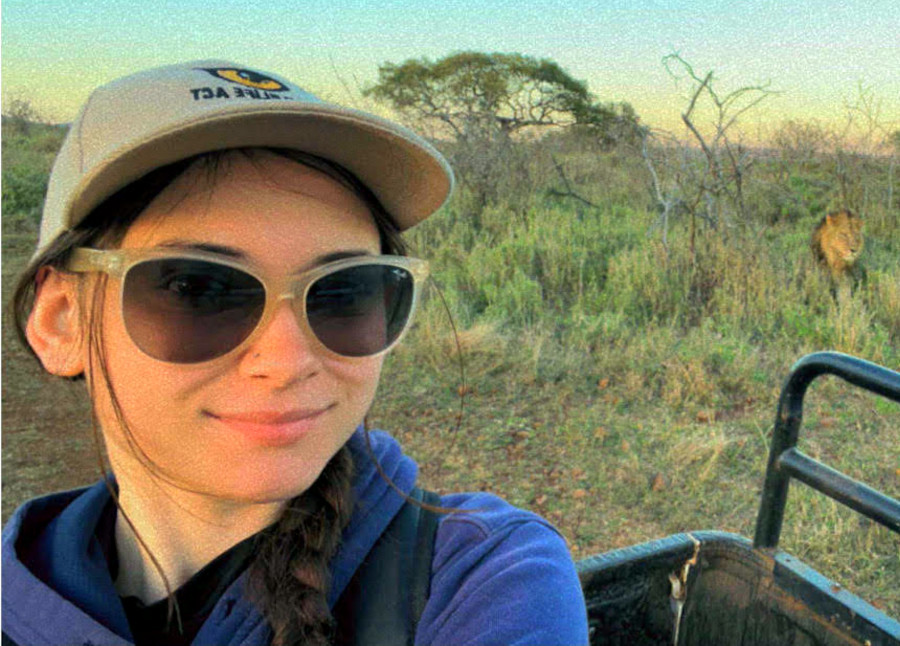
My overall experience with wildlife ACT has been amazing. My group grew so close in the short two weeks and we all had so much fun together. The conservation work we did was so rewarding and an incredible once-in-a-lifetime experience. The pre-arrival/booking process, accommodation and field work, all way exceeded my expectations. Highlight of my stay were definitely making life-long friends and connections within my group, as well as being a part of an Elephant herd relocation. Our monitor was an awesome leader!! I will miss him and his knowledge!

It was truly amazing and the best experience I’ve ever had. I enjoyed every minute of being there. I think experiences like these are really unique and I will do my best to spread the word about your projects and I hope to bring more volunteers from Slovenia :) Seeing a cheetah and her three cubs eating an impala, a leopard with cubs, meeting amazing people and seeing all the effort and love that the Wildlife ACT monitors put in their work – were all highlights.

I loved volunteering with Wildlife ACT. Not only are you able to spend time doing meaningful work, you are also able to meet people from all over the world who are also passionate about wildlife and conservation. The group we had was fabulous, I think it made the experience of being in the bush even better.

Excellent. To see so many Cheetahs and come away with the experiences we had, are really unique moments which very few people will ever see. Knowing our money goes towards sustaining a great cause, makes the whole experience even more satisfying. Bronwen is awesome during the booking process, incredibly informative and attentive to the questions we asked, as was the case last time! Accommodation was a lot better than we expected, even having seen photos beforehand. The rooms are very warm at night, cool during the day, and very comfortable. The field work was arguably even more fantastic this time around due to being very lucky and witnessing the collaring of a Cheetah. It was a real privilege. We have 0 complaints about anything done in the field. I also saw Black Rhino for the first ever time, courtesy of our monitor’s eagle-like eyesight. So many once-in-a-lifetime moments crammed into 2 weeks!

My experience was excellent! I especially appreciated the opportunity to see a Vulture tagging as well as a Wild Dog collaring and relocation first-hand. Seeing the Wild Dog pack most days was wonderful. Bronwen is helpful and responsive during booking process. Accommodation is clean and reasonably comfortable. Volunteers can understand the budget constraints and prefer that their funds be spent on conservation efforts.