
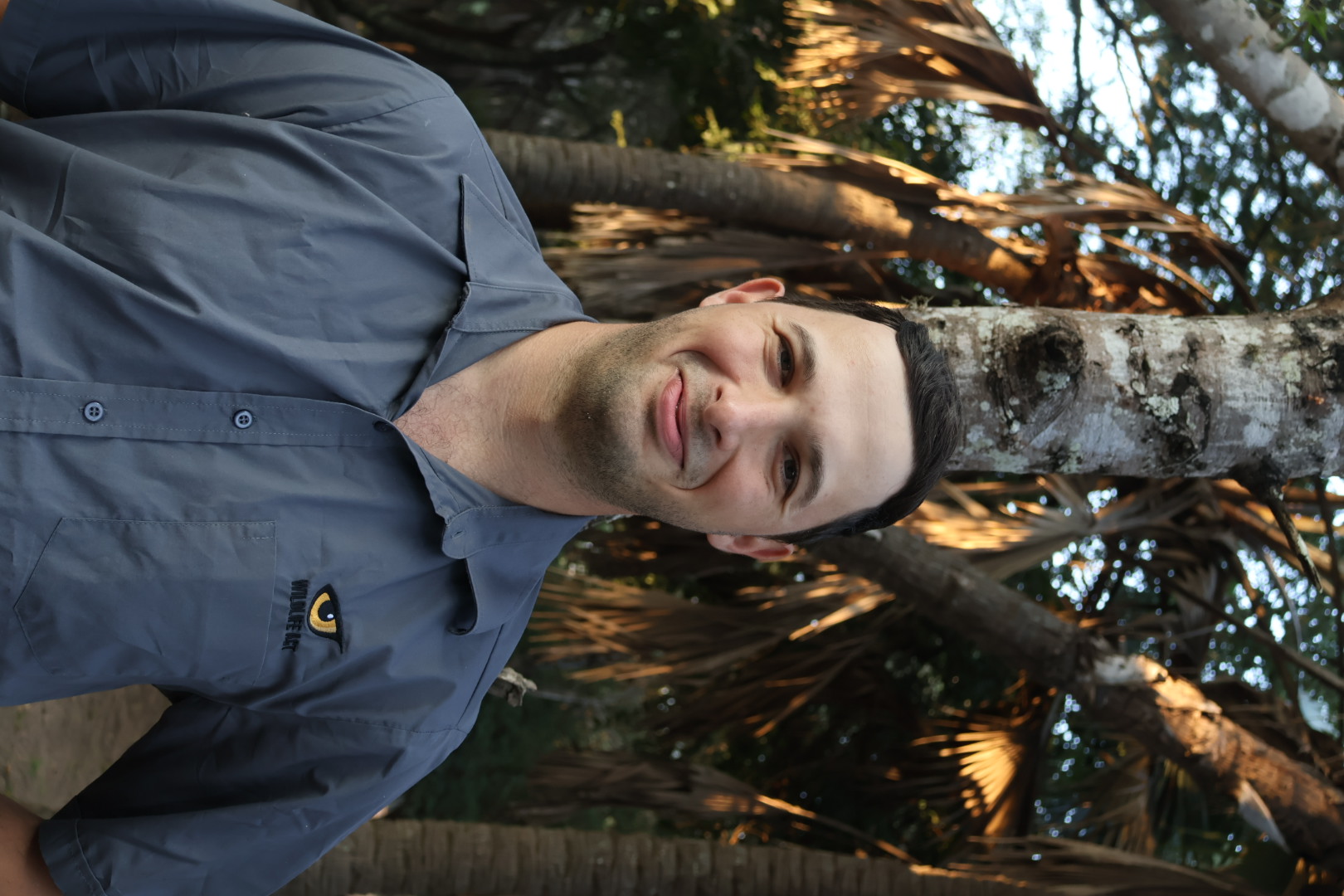
Tavish is Wildlife ACT’s Zululand Vulture Officer, working on the frontline of vulture conservation across northern KwaZulu-Natal through GPS tracking, emergency response, and community engagement. With seven years managing a raptor rehabilitation centre and deep hands-on experience with birds of prey, he brings specialist expertise to protecting one of Africa’s most threatened bird groups.


Tavish is from Hillcrest, KwaZulu-Natal, and has worked with birds of prey since leaving school. He spent seven years at a dedicated raptor rehabilitation centre, eventually serving as General Manager and lead raptor handler, where he gained extensive experience in raptor husbandry, rehabilitation, and behavioural monitoring. He joined Wildlife ACT in 2026 as Zululand Vulture Officer.
Working across protected areas and communities throughout Zululand, Tavish focuses on the remote monitoring of GPS-tagged Vultures, using tracking platforms to follow daily movement and behaviour patterns and identify early signs of injury, poisoning, or other threats.
He assists with the deployment and maintenance of tracking units during capture and tagging operations, monitors the progress of released and rehabilitated birds, and supports a network of safe feeding sites that reduce poisoning risk while enabling closer population monitoring.
His work also spans nest monitoring, camera trap deployment, sample collection, and emergency response to poisoning incidents and other threats, working closely with reserve managers, field rangers, veterinarians, and local communities across the region.
Outside of work, Tavish has a strong passion for birding, and enjoys overlanding, camping, and hiking in remote and wild places.
“I am especially proud of being part of a team that combines science, technology, and on-the-ground conservation to make a real difference. Knowing that my work helps safeguard individual birds and contributes to the long-term survival of vulture populations across the region is incredibly rewarding and motivates me to continue making a positive impact for wildlife conservation.”