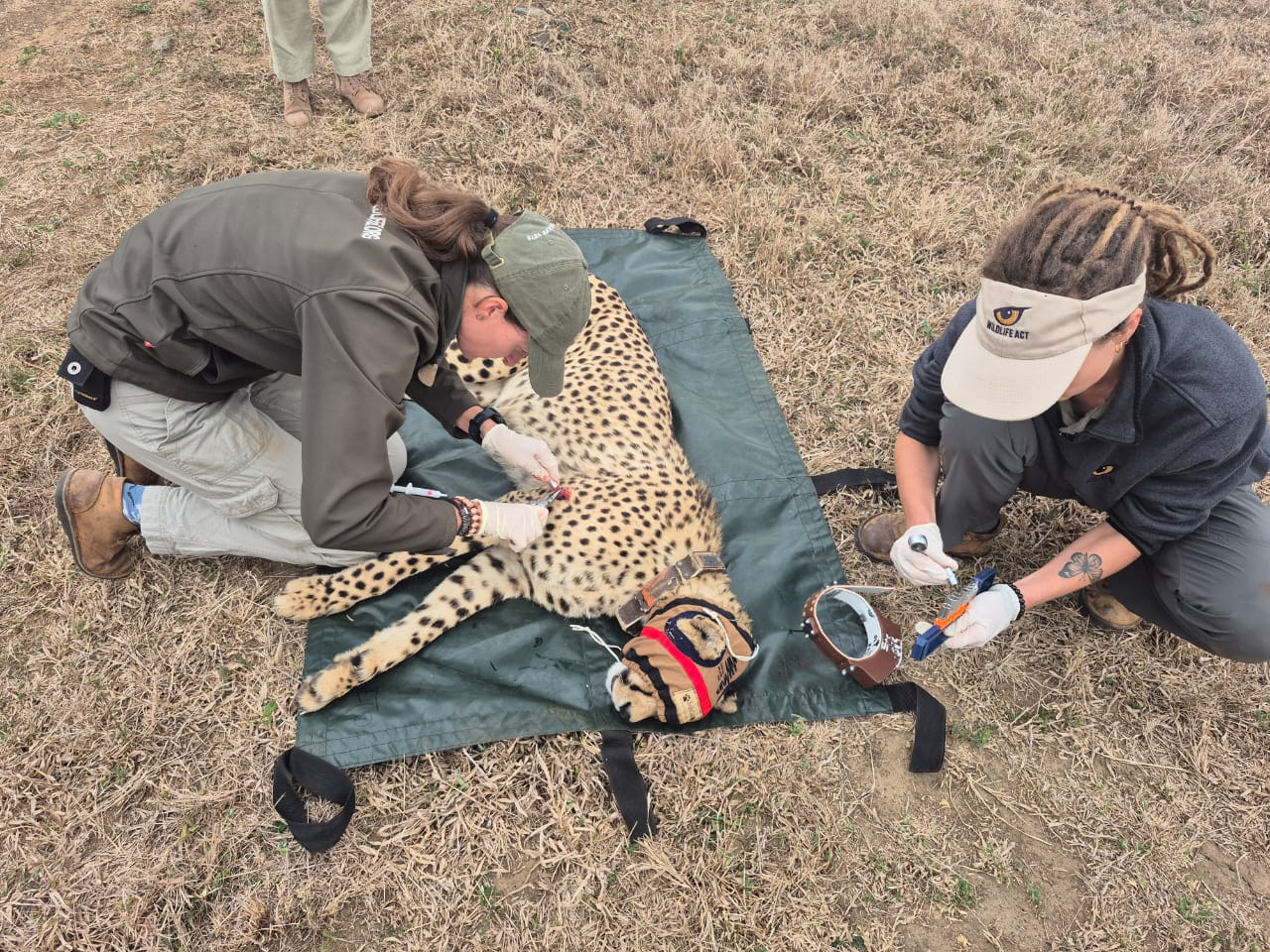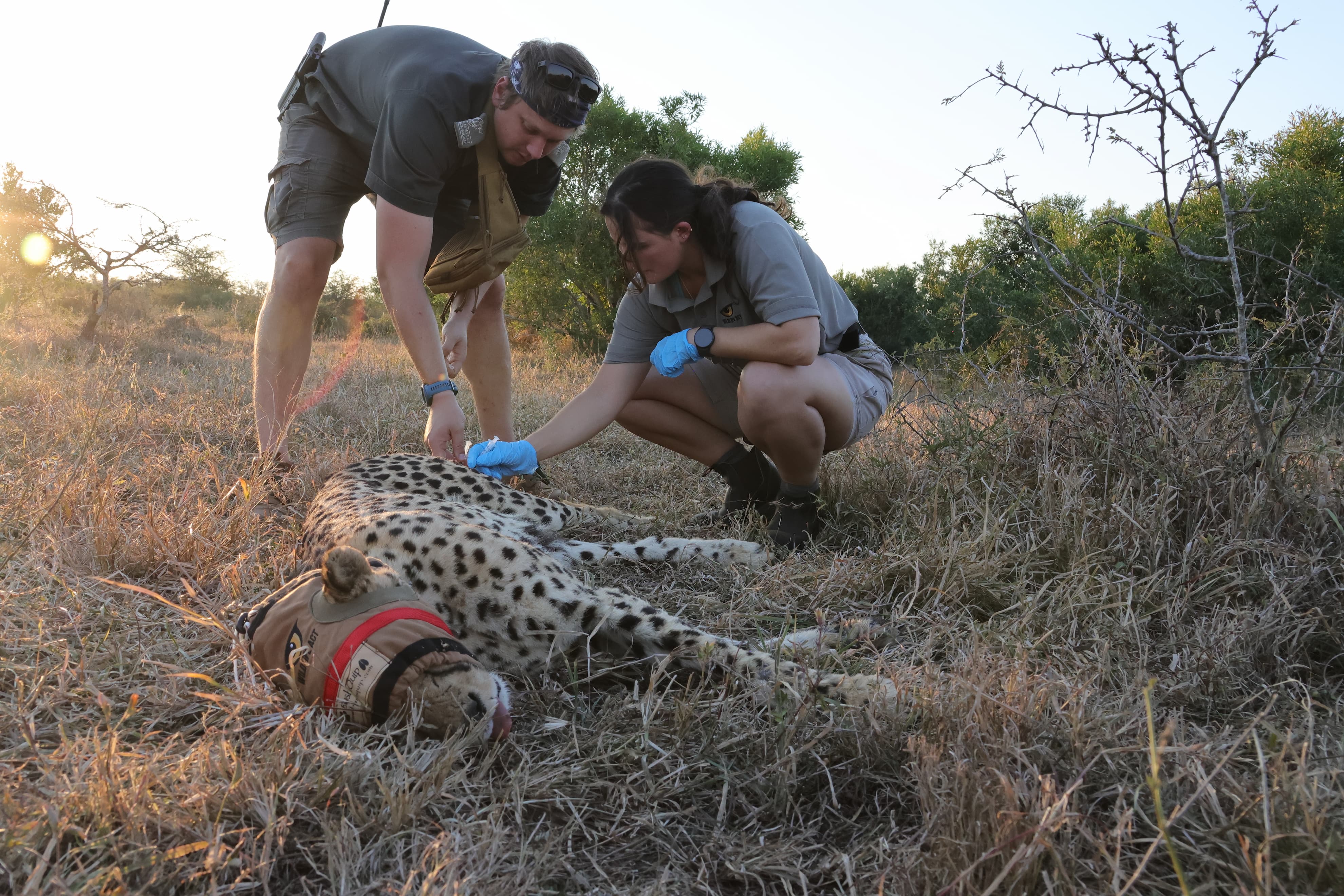
In late July 2026, Wildlife ACT and Ezemvelo KZN Wildlife with support from Forever Wild Foundation, carried out a large-scale Cheetah collaring operation in Hluhluwe-iMfolozi Park, KwaZulu-Natal. Over the course of the operation, five collars were successfully fitted, three of them on individuals collared for the first time, marking a significant step forward in the long-term monitoring of one of the province's most important Cheetah populations. This operation builds on efforts begun at the end of 2025, bringing the total collars deployed since then to eight.
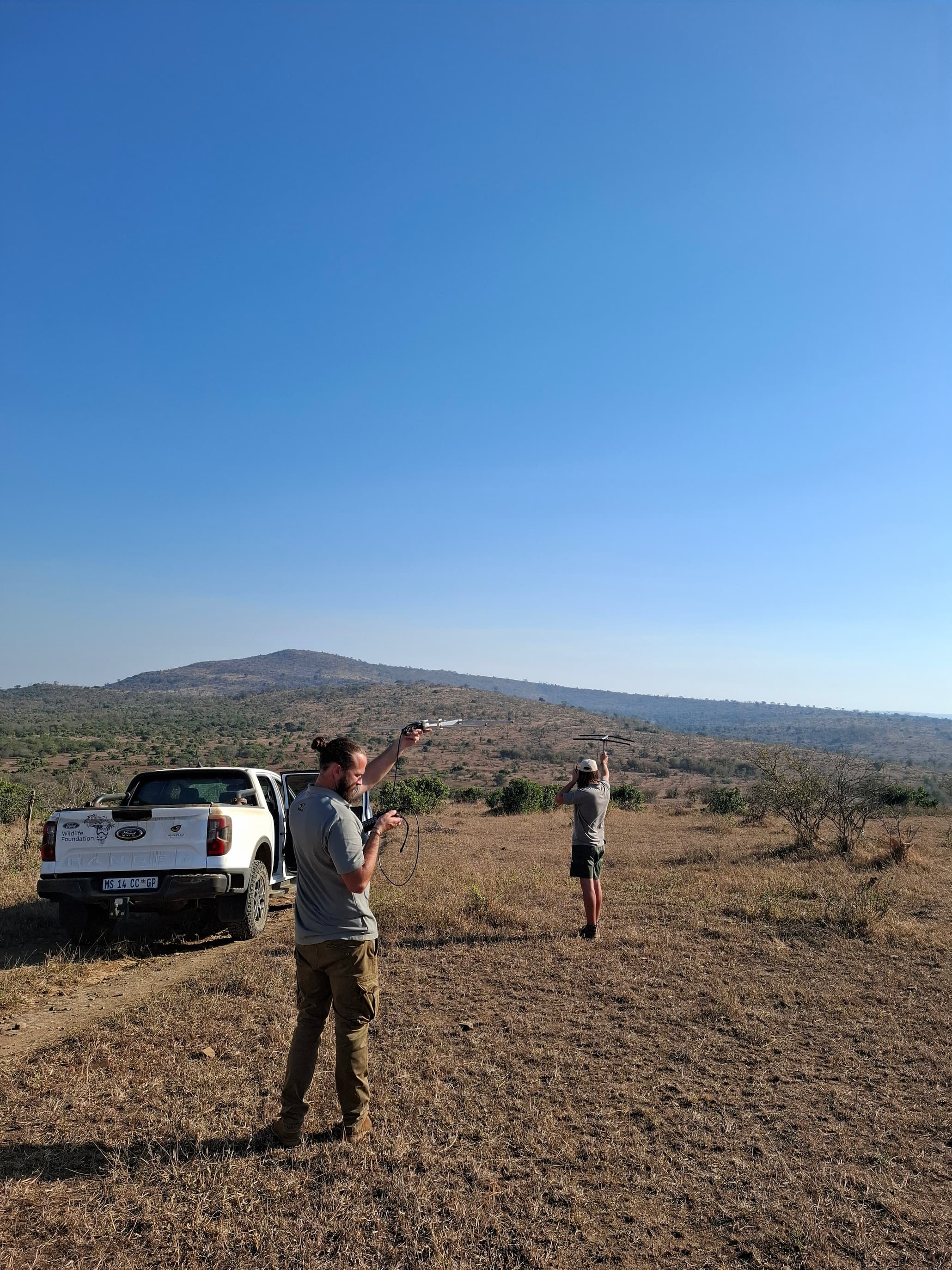
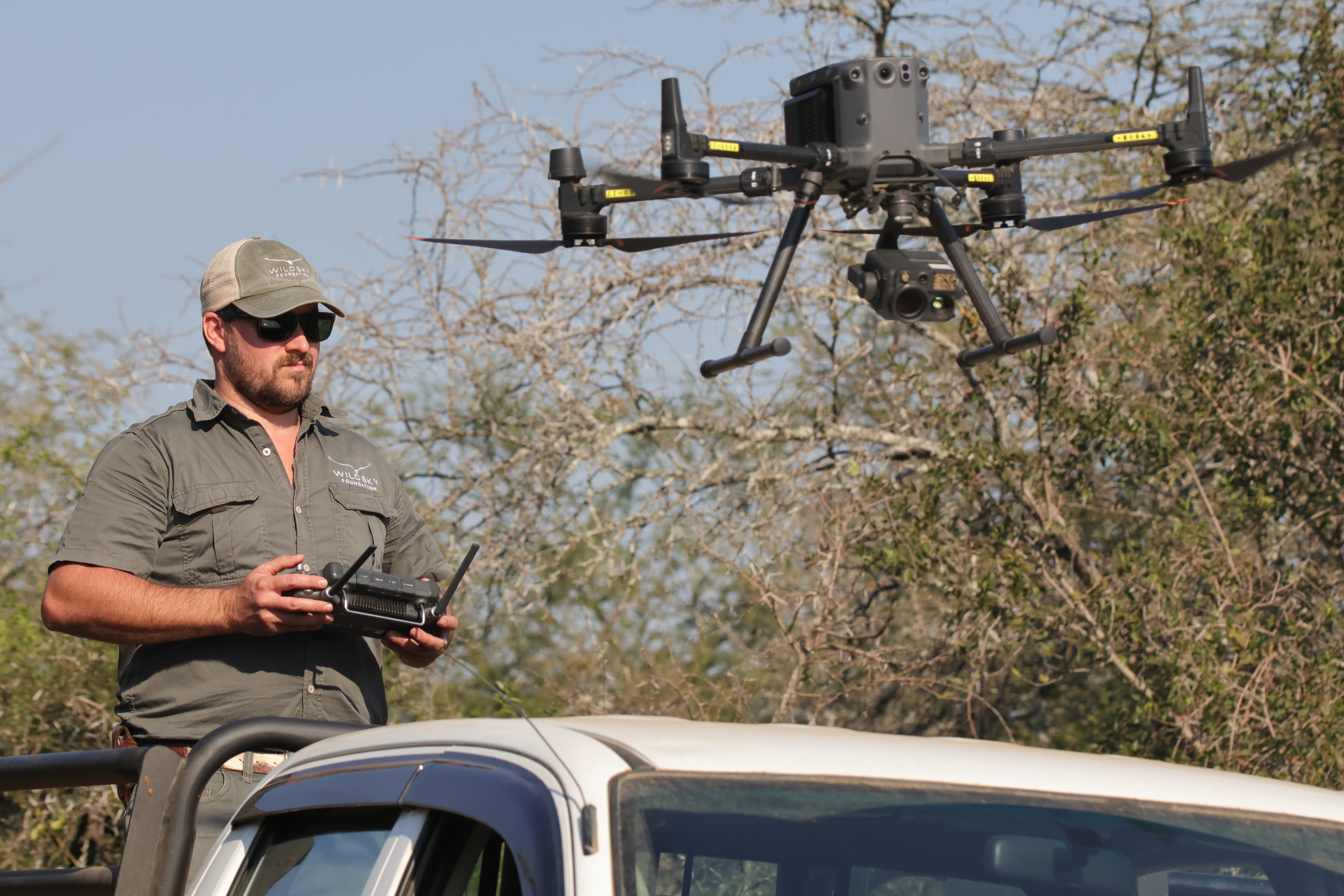
The eight-day operation drew on multiple ground teams working alongside drone support, with additional aerial coverage provided by a fixed-wing aircraft and a helicopter, supplied by Ezemvelo KZN Wildlife. In total, the drone alone, provided by WildSky Foundation, completed 94 flights and logged more than 30 hours of flight time in support of the operation, reflecting the scale and intensity of effort required to locate and safely collar Cheetah across the historic Protected Area's dense and varied terrain.
Darting and veterinary oversight was provided by Rowan Leeming and Jennifer Lawrence of Ezemvelo KZN Wildlife, together with Liam Best of African Wildlife Vets, with collars supplied by Forever Wild Foundation and with additional support from Ford Wildlife Foundation.
Selecting Individuals for Collaring
Selecting a Cheetah for collaring depends on a number of factors, including age, sex, existing collar status, and social structure. With the rapidly growing cheetah population in HiP, priority is given to breeding females, young dispersing individuals and potential candidates for future relocation.
Darting is only carried out when conditions are appropriate, taking into account weather, terrain, and each individual's own circumstances. Mothers with young cubs are not considered for collaring, as even a brief separation carries too much risk, and age and growth are also factored in to ensure a collar is only fitted once an individual is ready to carry one.
Finding the right candidate is rarely straightforward. During this operation, one adult female took several days to locate before a safe opportunity for darting arose, with teams and the drone repeatedly relocating her before she was successfully darted and fitted with a new collar.

“It’s always a privilege to work with Cheetah,” said Ezemvelo KZN Wildlife Vet, Dr Jennifer Lawrence. “They are challenging to dart and collar as they are very sensitive to the drugs and overheating is a big risk. Conditions have to be just right and managing the anaesthetic becomes the priority. This makes every collaring success a rewarding step towards ensuring Cheetah are well monitored on the reserve.”
Not every Cheetah encountered was collared. When cubs were too young, or conditions weren't right on the day, teams chose to wait rather than risk an animal's welfare. One recollared male was also treated for a minor injury while sedated, before waking well and rejoining his coalition.
Why We Collar Priority Species
Collaring is central to effective species management, particularly for vulnerable and intensively managed species like Cheetah. With fewer than 7,500 Cheetah estimated to remain in the wild, and fewer than 1,000 in South Africa, careful management at a protected area and regional scale is essential to avoid the risks of genetic bottlenecking.
The collars fitted during this operation were designed by Wildlife ACT Innovations and purpose-built for the demands of African conservation landscapes. Each unit combines LoRaWANand VHF components, allowing for elevated monitoring within the Protected Area. The LoRaWANfunction records GPS points at set intervals for effective remote monitoring, while the VHF function enables Wildlife ACT monitoring teams to locate collared individuals on the ground using directional telemetry, which is essential in dense thickets or rugged terrain where visual confirmation is not always possible.
This dual approach ensures that monitoring is both broad and detailed, supporting the day-to-day work of Wildlife ACT's monitoring teams on Hluhluwe-iMfolozi Park, while also feeding into Ezemvelo KZN Wildlife’s long-term conservation planning and metapopulation support on a regional and national scale.
"Every collar we fit gives our teams and partners a clearer picture of how these Cheetah are using the landscape and how the population is changing over time. That long-term understanding is what allows us to plan effectively for this population's future, and to ensure it continues to play its part in the survival of the species across South Africa," said Chris du Toit, Wild Dog and Cheetah Conservation Programme Manager at Wildlife ACT.

The Importance of Hluhluwe-iMfolozi's Cheetah Population
Hluhluwe-iMfolozi Park, the largest protected area in KwaZulu-Natal, has long been at the centre of species recovery efforts in South Africa. The park’s Cheetah population has increased substantially over the past decade, making its contribution to the South African Cheetah metapopulation significant. With this growth comes a responsibility to manage it carefully. Genetic bottlenecking remains one of the greatest risks to the long-term survival of the species. Without intervention, even growing populations can suffer from reduced genetic variation, leading to lower resilience against disease and environmental change.
"It's encouraging to see this population grow. Consistent monitoring is what allows us to understand how the population is changing, identify individuals suited to future translocations, and step in early if something needs attention. The priority now is making sure this growth translates into long-term genetic strength," said Chris du Toit, Wildlife ACT's Wild Dog and Cheetah Conservation Programme Manager.
Genetic samples were also collected from the collared individuals during the operation, to help assess the genetic health of Hluhluwe-iMfolozi Park's Cheetah population and inform future management decisions. This work is particularly important given the risk of genetic pooling that Cheetah face as a species, where limited genetic diversity can leave populations more vulnerable over time.

A Collaborative Operation
Conservation work of this scale cannot succeed in isolation. The success of this operation rested on close collaboration and coordination between Ezemvelo KZN Wildlife, Wildlife ACT, African Wildlife Vets, Forever Wild Foundation, WildSky Foundation, and Ford Wildlife Foundation, each bringing different resources, and expertise to a shared goal. It is this kind of coordinated effort between conservation partners that ultimately determines whether a population like this one can be protected effectively over the long term.
"This project demonstrated what can be achieved when conservation partners work together towards a common goal. The close coordination between Wildlife ACT, Ezemvelo KZN Wildlife, the veterinary team and experienced drone operators played a vital role in the success of the collaring operation, with the welfare of every cheetah remaining the highest priority throughout. We look forward to continuing to support innovative conservation initiatives that strengthen monitoring efforts and help secure the future of this iconic species," Andrew Bone, Forever Wild Foundation.
Looking Forward
The Cheetah is currently classified as Vulnerable on the IUCN Red List, with numbers continuing to decline across much of its historic range. Securing a future for the species depends on exactly this kind of sustained, coordinated effort between conservation partners.
With more collars fitted as part of these ongoing efforts, this operation represents continued progress towards comprehensive monitoring coverage of Hluhluwe-iMfolozi Park's Cheetah population.
Every collar fitted, every hour in the field, and every partnership behind this operation is an investment in ensuring Cheetah remain part of South Africa's landscape for generations to come.
.jpeg)