
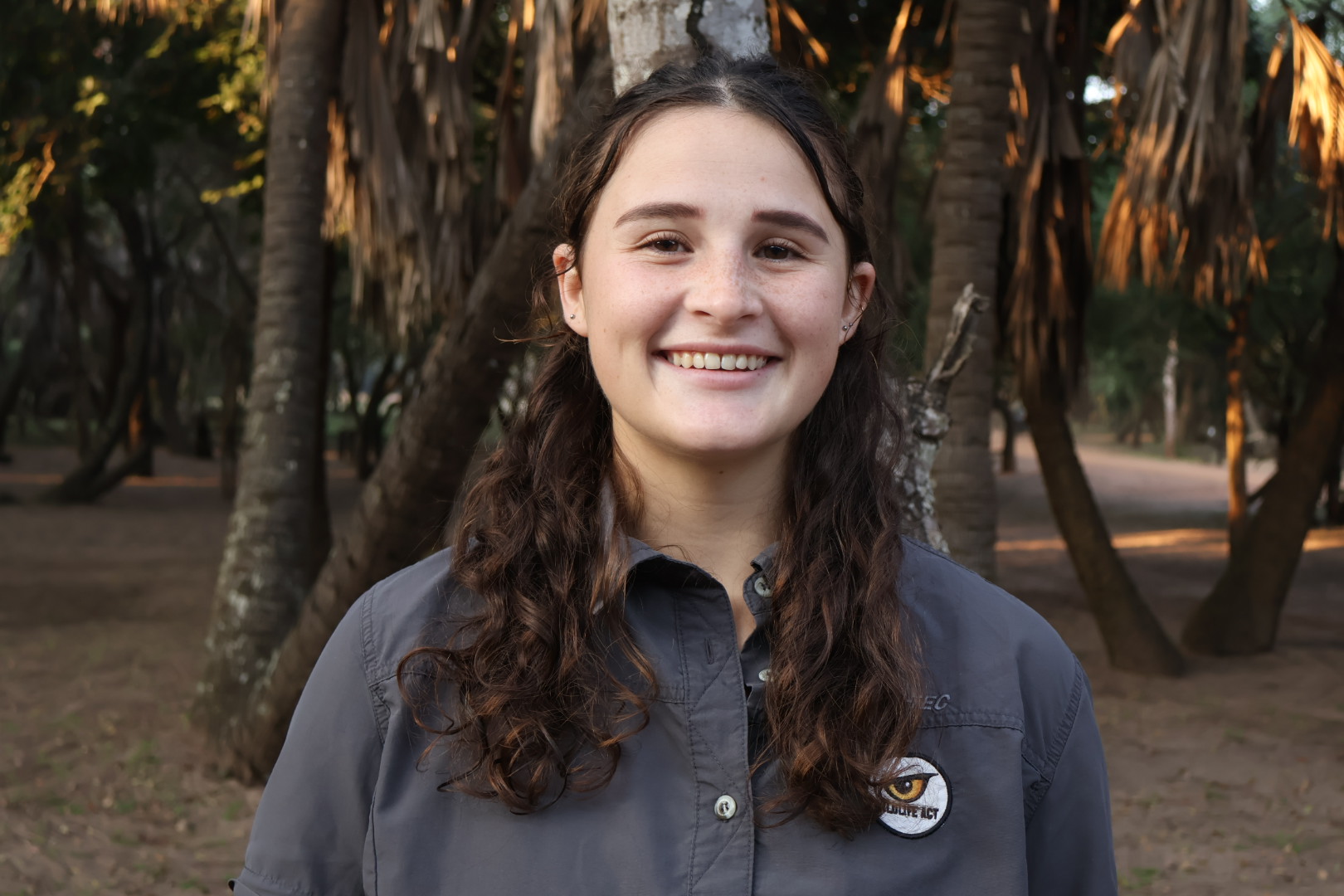
Savannah is responsible for conducting the long-term Leopard Monitoring Survey and bi-annual Landscape Predator Survey across Zululand’s protected areas, in collaboration with partners. A University of Pretoria Zoology and Plant Science graduate with camera trap survey experience from Zambia, she brings sharp fieldcraft and meticulous data analysis to Wildlife ACT’s Big Cat Programme.


Savannah grew up in Pretoria and studied Zoology and Plant Science at the University of Pretoria, where she conducted a Leopard population survey in Zambia using camera traps. Her fieldwork experience also includes thesis research in protected areas in South Africa, as well as time spent in Zambia’s Luangwa Valley. Her career in conservation began in 2024, and she joined Wildlife ACT in 2025 as a Big Cat Field Technician.
Based in Zululand, Savannah conducts her work across several protected areas and natural landscapes in the region and province of KZN. She conducts the long-term Leopard Monitoring Survey in collaboration with partners, repeating camera trap surveys every second year across KwaZulu-Natal’s protected areas to track Leopard population trends and identify individual Leopards over time.
She also conducts the bi-annual Landscape Predator Survey, applying a similar camera trap methodology with a broader focus on predator species across the landscape.
Her work combines extensive fieldwork, often starting before sunrise and ending after dark, with office-based data processing, sorting thousands of camera trap images and preparing data for long-term population analysis.
Outside of work, Savannah is happiest outdoors, hiking, trail running, and camping.
“I genuinely love being in the field, solving problems, and contributing to something that matters. Spending time in wild places has given me a huge appreciation for how interconnected everything is, and I want to play a part in protecting that. If my work helps conserve wildlife and supports the people who live alongside it, then it’s work worth doing.”