A specialised helicopter-supported operation has enabled the successful deployment of tracking units on two Lappet-faced Vulture chicks in Hluhluwe-iMfolozi Park. Coordinated by Wildlife ACT and Ezemvelo KZN Wildlife, as part of the Zululand Vulture Project, this mission with The Bateleurs represents an important advancement in monitoring one of South Africa’s most threatened Vulture species.
It is also the first time a helicopter has been used for this type of nest-access work in KwaZulu-Natal, allowing the team to reach locations that are otherwise extremely challenging to access on foot with heavy equipment and full rivers.
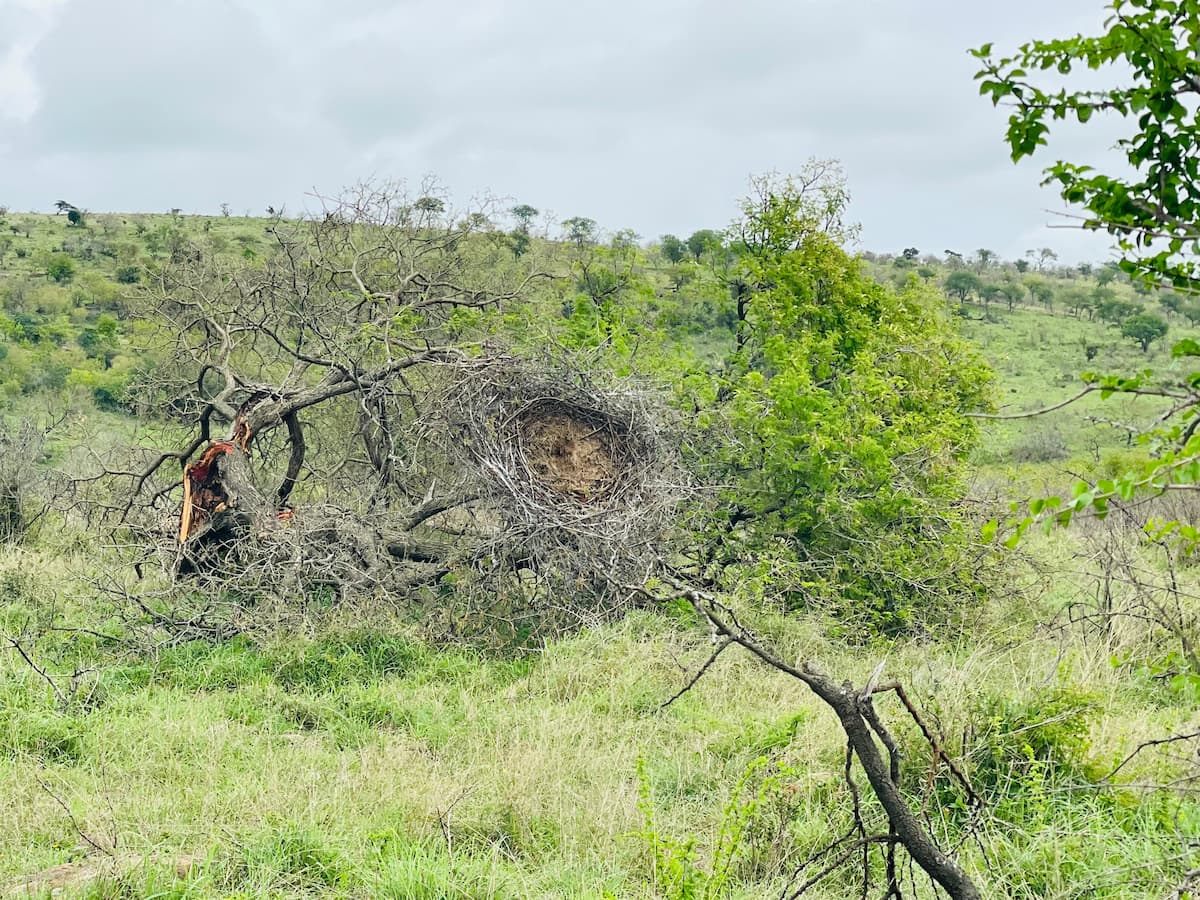
The initiative follows the provincial Vulture nest survey carried out in August 2025 with The Bateleurs, during which four active Lappet-faced Vulture nests were confirmed. Unfortunately two of the active nests were pushed over by Elephants. The remaining two nests were identified as suitable for tracking unit deployment ahead of the chicks fledging.
Why Monitoring Lappet-faced Vultures Matters
Lappet-faced Vultures are one of Africa’s most wide-ranging and endangered Vulture species. As obligate scavengers, Vultures play a crucial role in maintaining the health of ecosystems by removing carcasses and preventing the spread of disease. Their decline places pressure on both natural systems and surrounding communities.
Effective conservation relies on understanding how these birds move, where they feed, and which threats they encounter across a landscape.
Tracking units offer a powerful tool to address these challenges. The data collected helps conservation teams monitor survival rates, detect real-time emergencies such as poisoning or collisions, and build a clearer understanding of the species’ behaviour. This information directly informs local, regional, and national conservation actions and strategies.
Preparing for the Operation
Accessing the identified nests required a safe and efficient method of transport. An Alouette III helicopter, piloted by Martin Schulze and volunteered through The Bateleurs, was selected for the job. The helicopter allowed the effective transportation of highly-skilled conservationists and specialist equipment into remote areas of the Park.
Project Rhino and Zapwing supported the mission by supplying fuel drums and a hand pump, enabling the team to complete the flights as planned.
Deploying the Tracking Units
.jpg)
Upon arrival at each nest site, the crew worked together to secure the ladder and safely reach the chick. Once retrieved, the young Vulture was lowered to the ground so that data collection and processing could take place.
This included morphometric measurements, record photographs, and the collection of samples for research and monitoring.
.jpg)
Brent Coverdale of Ezemvelo KZN Wildlife led the ringing and tracking unit deployment. He was supported on the ground by Phillip Swart of Wildlife ACT, along with Zama Zwane and Eric Khumalo of Ezemvelo KZN Wildlife. A field ranger was present throughout for safety. After processing, each chick was carefully returned to its nest and monitored until settled.
The entire operation took place within approximately thirty minutes of flying time inside Hluhluwe-iMfolozi Park and was executed efficiently and safely. Both chicks were successfully fitted with their units and returned to their nests in good condition.
.jpg)
Looking Ahead
Now that the tracking units are active, daily remote monitoring begins. These datasets will provide essential insights into fledging success, dispersal, and the risks young Vultures encounter once they leave the nest. It will enable the team to pick up on immediate threats they face and mobilise a trained emergency response team to follow-up on the ground, further improving their chances of survival.
This operation strengthens ongoing efforts to understand and protect Lappet-faced Vultures in KwaZulu-Natal.
Sincere thanks are extended to all partners involved: Zululand Vulture Project, Ezemvelo KZN Wildlife, The Bateleurs, Project Rhino, Zapwing, Pilot Martin Schulze, and Wildlife ACT.
.jpeg)


.jpg)