

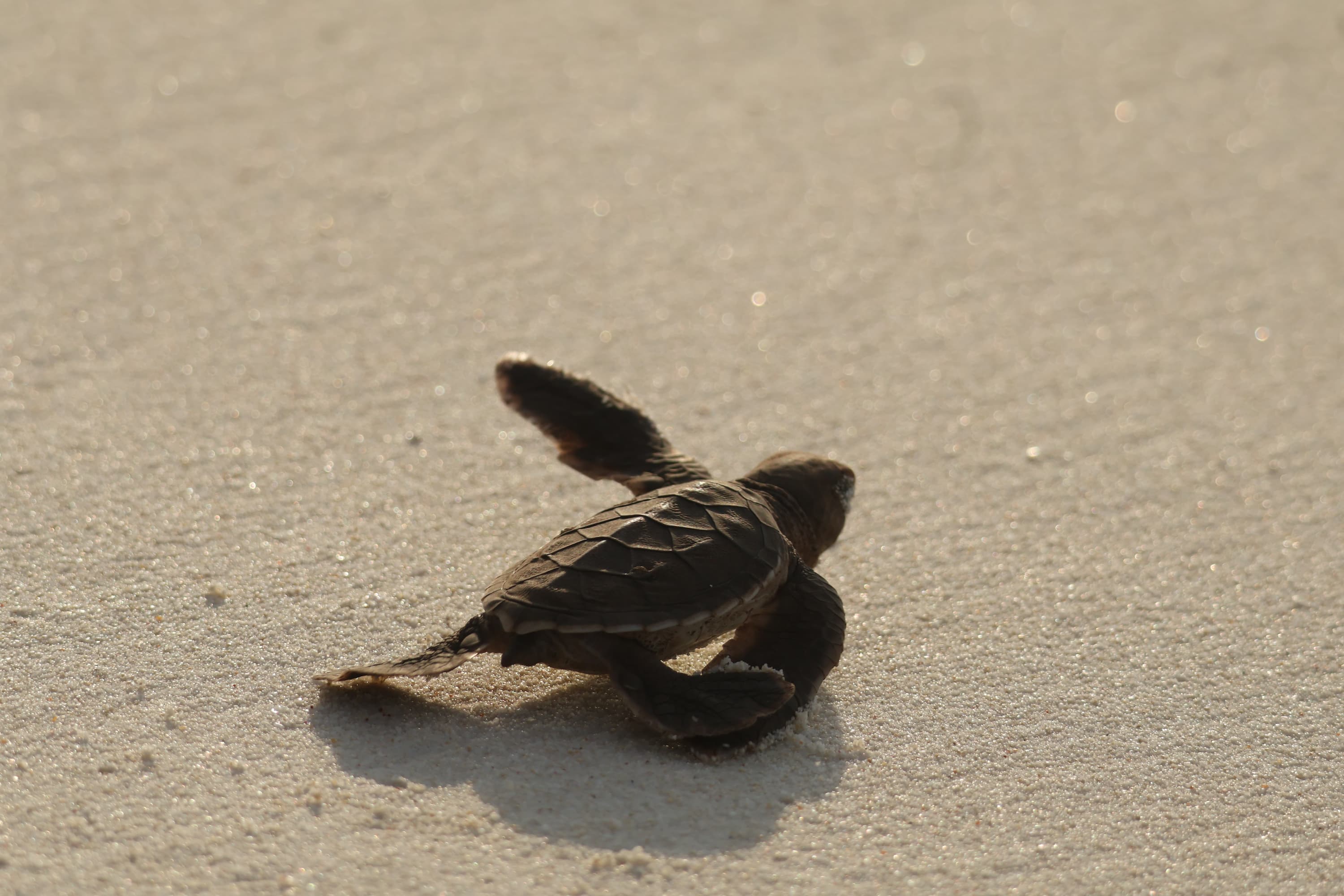
Endangered Sea Turtle Monitoring and Protection on North Island Seychelles
Endangered Sea Turtle monitoring and protection on North Island Seychelles is delivered by Wildlife ACT as part of its Marine and Coastal Conservation volunteer program, in partnership with North Island’s Environmental Team. The program is based on continuous, standardised field methodology designed to generate reliable long-term data on Sea Turtle nesting and hatching activity. Monitoring focuses on two species, the Hawksbill Sea Turtle and the Green Turtle, both of which depend on intact island beaches and stable coastal systems for successful reproduction.
The Seychelles is a priority region for Sea Turtle conservation in the Western Indian Ocean due to the concentration of nesting beaches, the relative protection of coastal habitats, and the presence of long-running monitoring initiatives. According to the IUCN Marine Turtle Specialist Group, the Hawksbill Sea Turtle remains globally classified as Critically Endangered, while the Green Turtle is currently classified as Least Concern at a global level following a reassessment published in 2024. The IUCN notes that recovery trends vary significantly between regions, including across parts of the Indian Ocean, making site-level monitoring and protection essential despite global status improvements (IUCN MTSG, 2025).
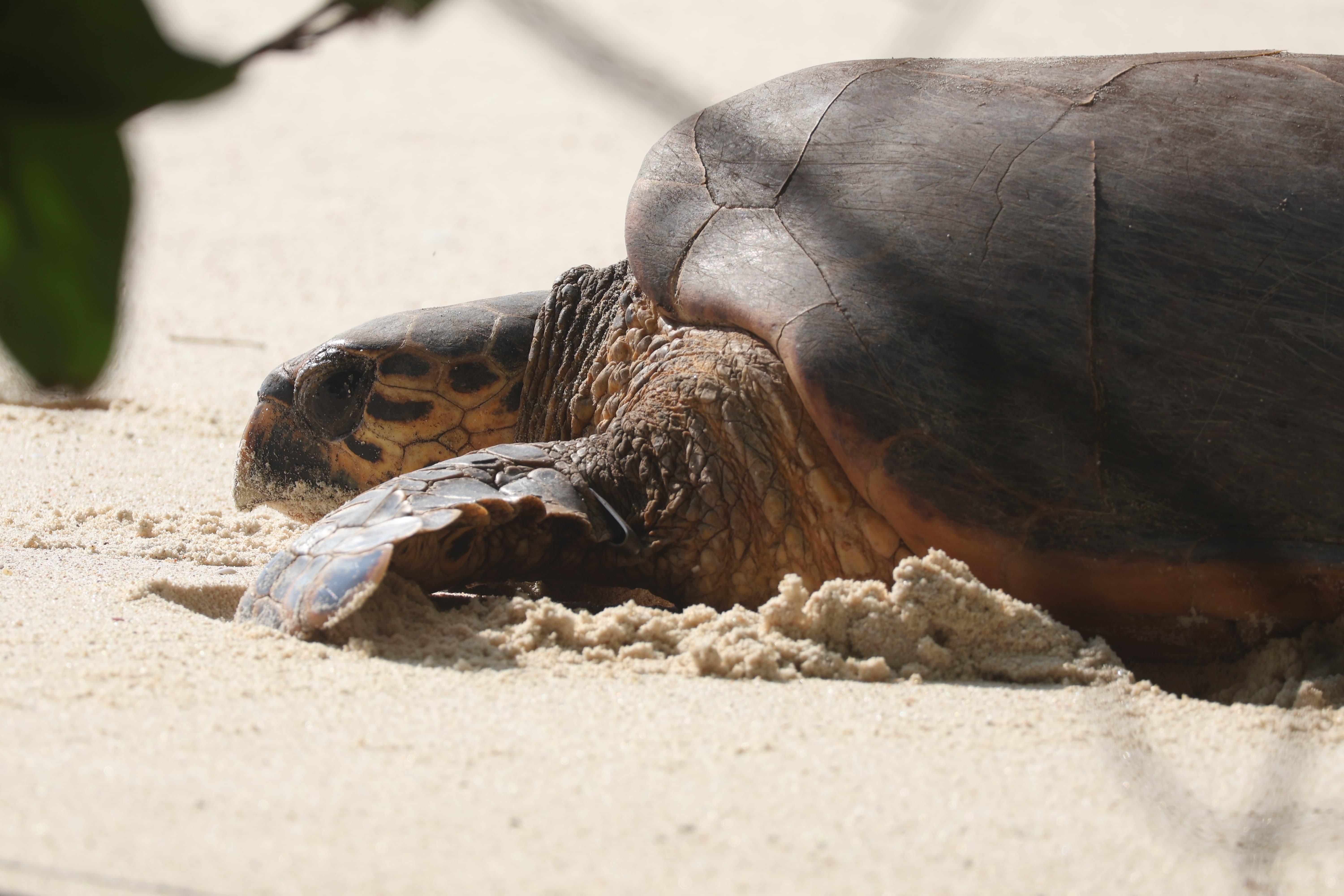
On North Island, Wildlife ACT’s endangered Sea Turtle monitoring and protection work is embedded within the island’s environmental management framework. This framework prioritises habitat integrity, limits human disturbance, and supports consistency of conservation effort across seasons and years. Monitoring is conducted across defined nesting beaches using the same core protocols each season. This allows nesting effort, hatching success rate, and spatial use of beaches to be compared reliably over time, rather than relying on isolated observations.
Wildlife ACT’s approach does not aim to produce short-term conservation outcomes or guaranteed reproductive success. Instead, the programme is structured to build an accurate long-term dataset that reflects real conditions on the ground. Daily beach patrols, individual identification using flipper tag numbers and scute patterns, nest excavation, and post-hatching assessment all contribute to a body of evidence that supports informed conservation decision making at island scale.
This monitoring framework aligns with international best practice for endangered Sea Turtle monitoring and protection, which emphasises repeatable methodology, minimal disturbance, and careful interpretation of results (IUCN MTSG, 2025). It also reflects Wildlife ACT’s wider conservation model, which prioritises data integrity, ethical field practice, and long-term commitment over short-term impact claims.
Sea Turtle Nesting Monitoring Methodology on North Island Seychelles
Endangered Sea Turtle monitoring on North Island Seychelles is a collaborative conservation effort led by the island’s Environmental Department, with structured field support provided through Wildlife ACT’s marine conservation program. This partnership strengthens daily monitoring capacity while ensuring the work remains science-led, ethical, and aligned with national conservation priorities.
North Island forms part of the wider Noah’s Ark Project, a long-term ecosystem restoration initiative focused on reversing historical ecological degradation and safeguarding species of global conservation concern. Within this framework, Sea Turtle nesting beaches are monitored daily during the breeding season to protect both nesting females and developing nests, and to build a reliable long-term dataset on reproductive success.
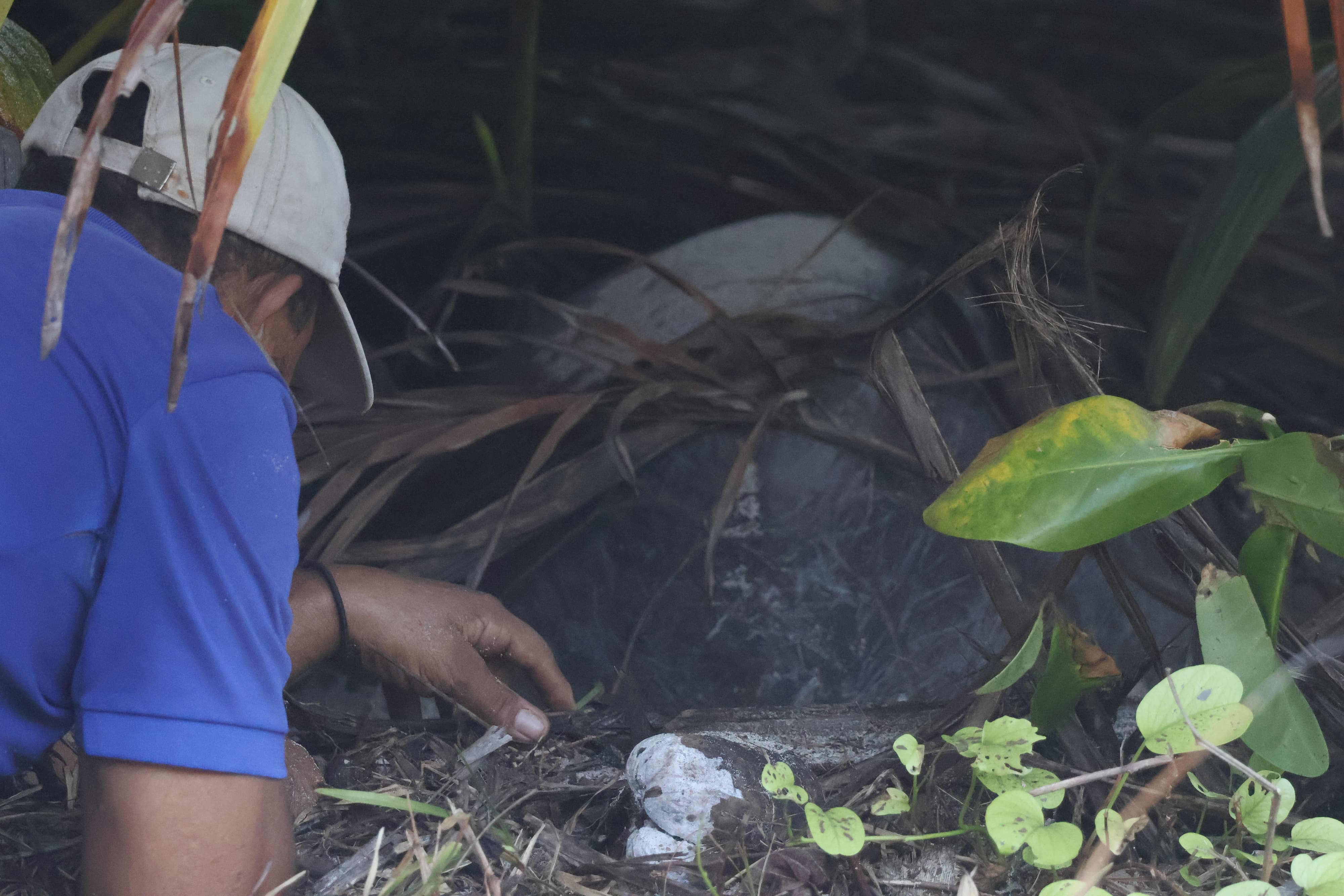
Wildlife ACT ecotourists are embedded within the Environmental Team and support this work through consistent field presence, data collection, and post-nesting monitoring. This ecotourism model provides essential operational support and funding for conservation while avoiding any form of wildlife interaction or disturbance. You can read more about Wildlife ACT’s ethical conservation approach here: https://www.wildlifeact.com/why-volunteer
North Island itself is recognised as one of the most ambitious private island restoration projects globally, combining high-end tourism with rigorous conservation management. More on the island’s environmental vision can be found here: https://north-island.com/conservation
Sea Turtle Species Monitored on North Island
Two species of Sea Turtle nest regularly on North Island beaches and are the focus of endangered Sea Turtle monitoring and protection, the Hawksbill Sea Turtle and the Green Turtle. While both species rely on protected beaches for reproduction, their nesting behaviour, habitat preferences, and monitoring challenges differ in important ways.
Hawksbill Sea Turtle Nesting Behaviour and Monitoring on North Island Seychelles
The Hawksbill Sea Turtle is classified as Critically Endangered on the IUCN Red List due to historical exploitation, illegal trade, and ongoing habitat loss (IUCN, 2025). Hawksbill Sea Turtles preferentially nest on small, undisturbed beaches, making carefully managed island sites such as North Island particularly important. According to the IUCN, global Hawksbill populations have declined by more than 80 percent over the last century, highlighting the importance of protected nesting habitat in the Seychelles.
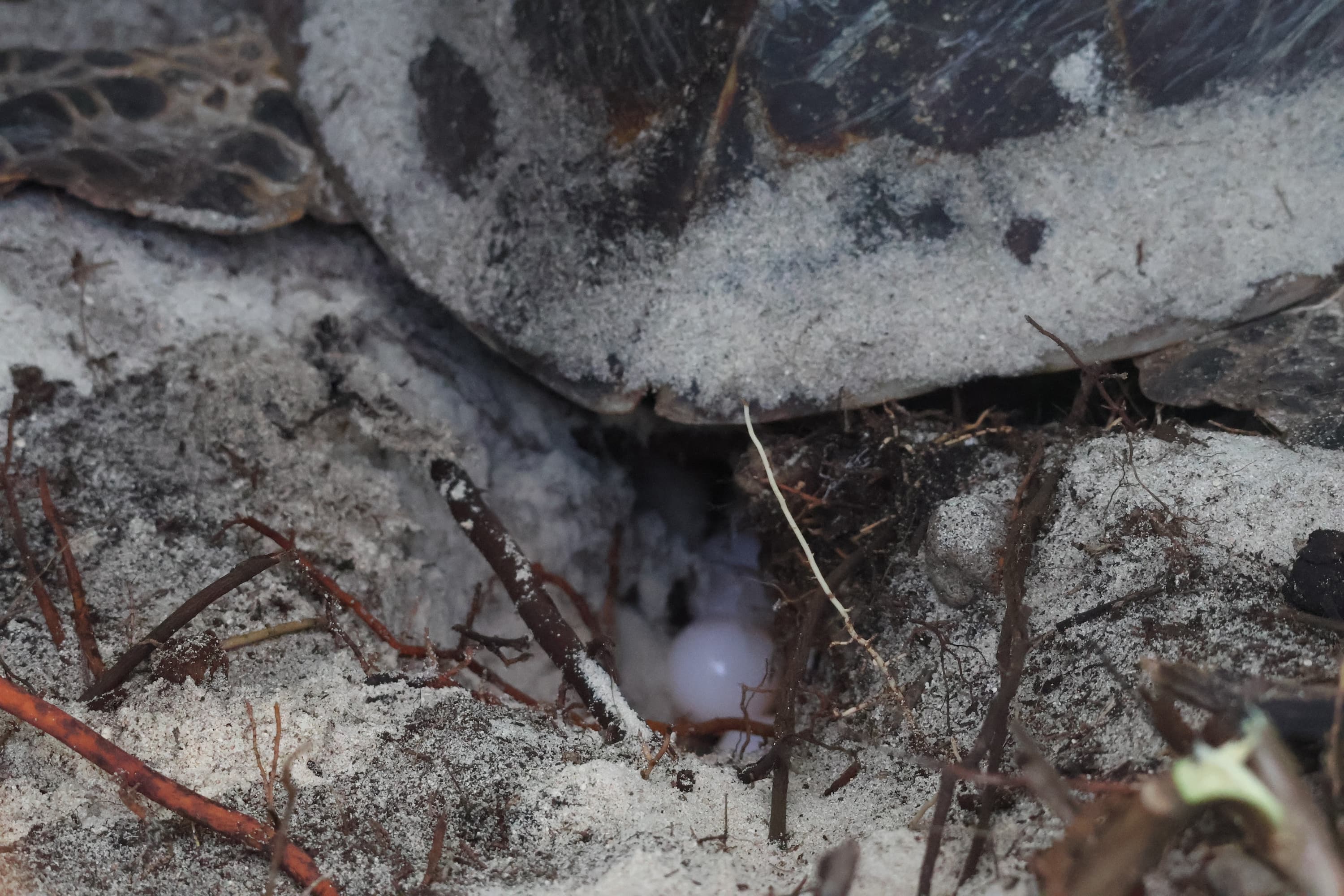
On North Island, Hawksbill Sea Turtles typically nest on smaller beaches and often select nesting sites higher up the beach, frequently near or within coastal vegetation. In the Seychelles, Hawksbill Sea Turtles are also known for daytime nesting behaviour, which is uncommon in many other parts of their range. This behaviour increases the importance of early morning patrols and careful observation, as fresh tracks and nesting activity can be accurately identified before environmental factors obscure them.
Hawksbill nests can be difficult to detect due to their placement and the species’ relatively lighter track marks. As a result, experienced track interpretation and consistent monitoring effort are essential for reliable nesting data.
Green Turtle Nesting Behaviour and Monitoring on North Island Seychelles
The Green Turtle is currently classified as Least Concern globally following a recent IUCN reassessment (IUCN, 2025). This status reflects recovery in some regions, but the IUCN notes that risk varies between subpopulations, including parts of the Indian Ocean. Continued nesting success on islands like North Island remains important for maintaining stable regional populations in the Western Indian Ocean.
Green Turtles are larger than Hawksbill Sea Turtles and produce broader, more symmetrical crawl tracks, which are often easier to identify during patrols. On North Island, Green Turtles tend to prefer wider, flatter sections of beach and usually nest at night. Because nesting often occurs after dark, monitoring relies heavily on track assessment rather than direct observation of nesting individuals.
Green Turtle nests are typically located lower on the beach profile compared to Hawksbill nests, which can increase vulnerability to flooding or erosion during high tides or storm events. This difference has direct implications for monitoring priorities, nest protection strategies, and decisions around egg translocation when nests are deemed at risk.
Understanding these species specific differences allows the Environmental Team and Wildlife ACT ecotourists to adapt monitoring effort appropriately, ensuring that nesting activity for both Hawksbill Sea Turtle and Green Turtle populations is recorded accurately and consistently over time.
Methodology and Data Application in Sea Turtle Monitoring
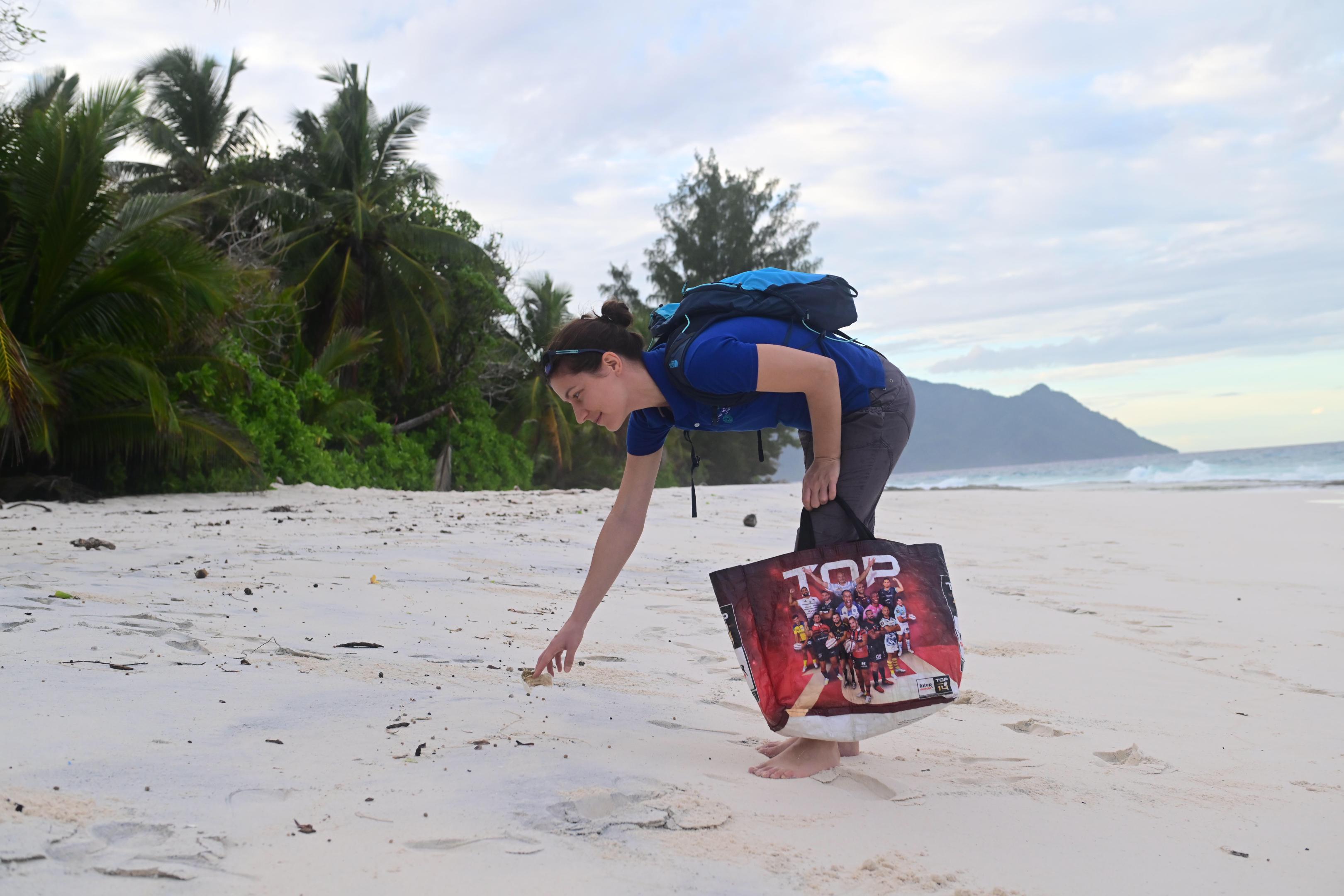
Sea Turtle nesting monitoring on North Island follows established conservation protocols designed to minimise disturbance while maximising data accuracy. Daily beach patrols begin at first light and are conducted throughout the nesting season, with additional night patrols during peak nesting periods.
Sea Turtle Nesting Activity Observation on North Island Seychelles
When nesting activity is observed, trained team members record key data points including species identification, nesting location, nest depth, and beach conditions. Flipper tag numbers are recorded where applicable, allowing individual females to be identified across seasons. Scute patterns are also documented, providing an additional method of individual recognition when tags are not present.
During patrols, all crawl tracks are assessed and recorded. Tracks are examined to determine direction of travel and likely species based on width, symmetry, and characteristic movement patterns associated with Hawksbill Sea Turtle and Green Turtle nesting behaviour. Accurate species identification at the track stage is important for maintaining reliable nesting records, especially when nesting density increases and track overlap becomes more common.
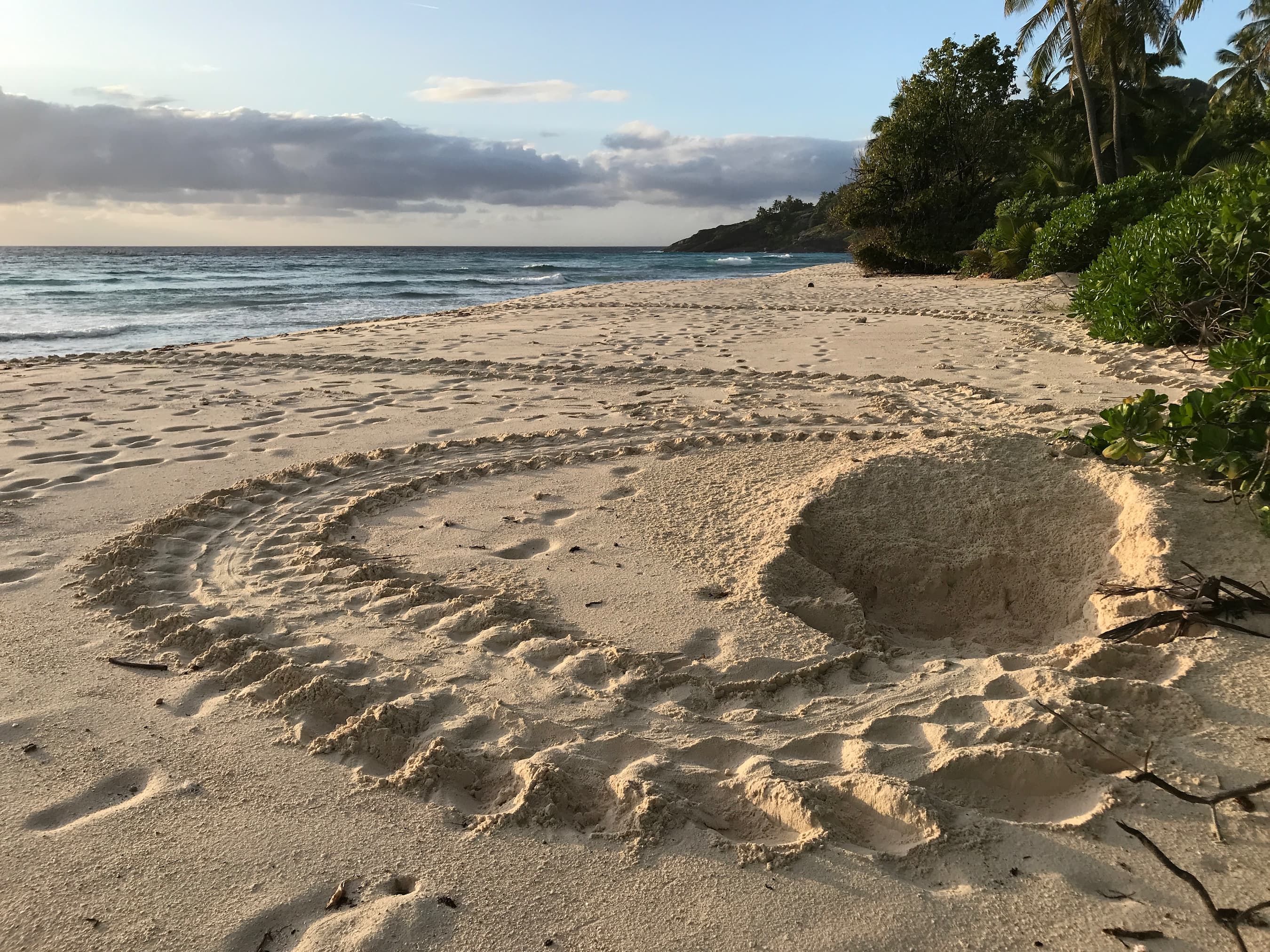
Each emergence is classified as either a confirmed nest or a false crawl. A confirmed nest indicates egg deposition occurred. A false crawl indicates the turtle emerged but returned to the sea without laying eggs. This distinction is central to endangered Sea Turtle monitoring and protection because false crawls reflect nesting effort but must not be counted as nests. If false crawls are included in nest totals, nesting effort is overstated and the long term dataset becomes less reliable.
For confirmed nests, the nesting location is recorded using predefined beach sectors. This allows spatial analysis of nesting distribution and supports methodology and data application over time. Sector based recording helps identify patterns such as preferred nesting zones, shifts in beach use linked to erosion or accretion, and areas that may require additional protection measures.
Monitoring is carried out with minimal disturbance as a priority. Observations are conducted efficiently and quietly. Physical interaction with nesting individuals is avoided unless required for identification or data collection under established protocols. This supports both ethical practice and data integrity because disturbance can influence nesting outcomes and alter natural behaviour.
Egg Translocation and Nest Protection
Egg translocation is used on North Island as a targeted conservation intervention when a Sea Turtle nest is assessed as being at high risk of failure due to environmental factors. It is not applied routinely and is only considered when leaving a nest in its original location is likely to result in egg loss.
Nests may be identified for translocation if they are laid too close to the high tide line, in areas vulnerable to tidal inundation, erosion, or heavy rainfall, or in sections of beach where repeated flooding is expected during the incubation period. Decisions are made by the Environmental Team based on beach conditions, nest position, and short term environmental risk, rather than as a response to species preference or hatching expectations.
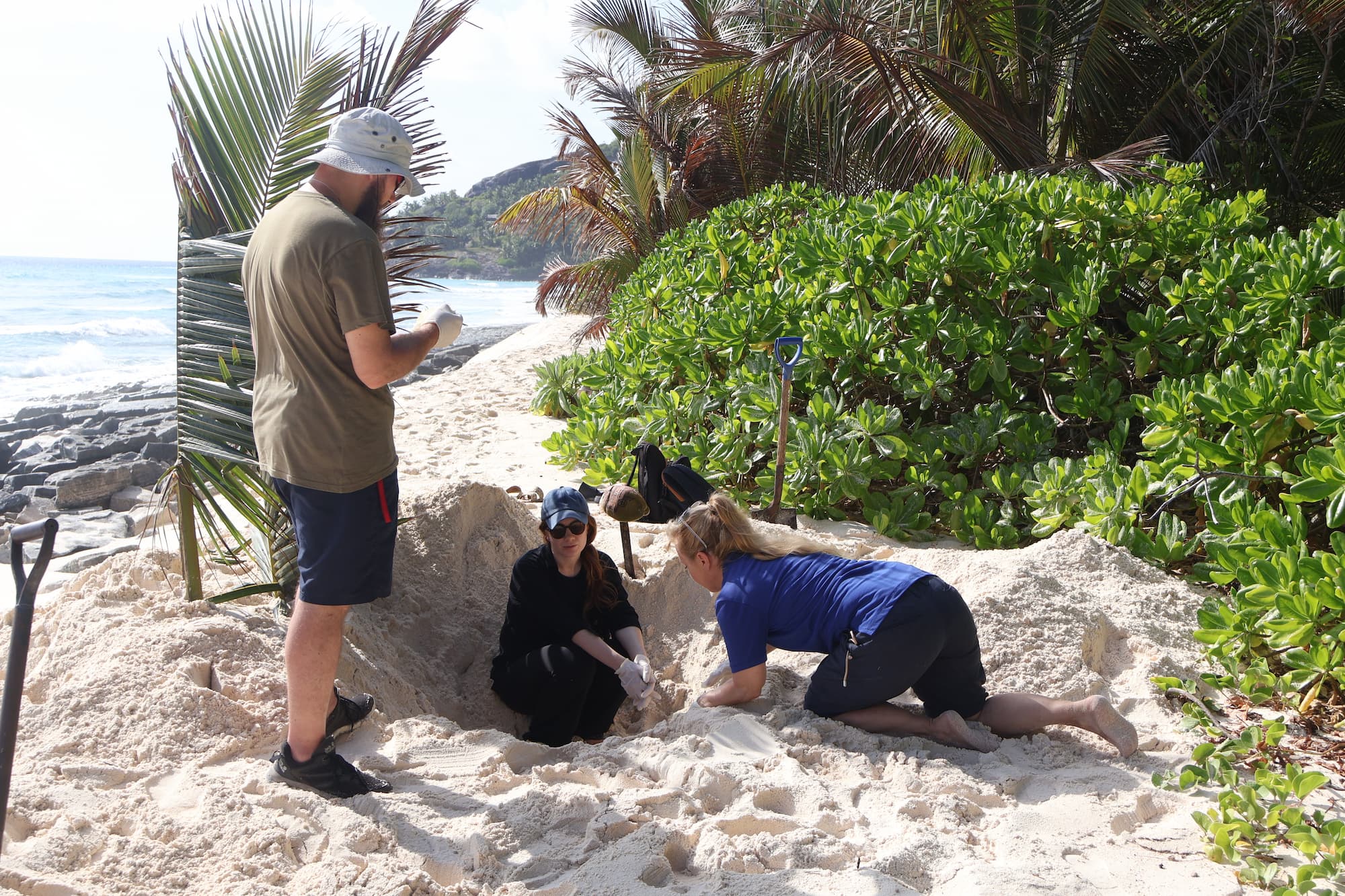
When egg translocation is required, it is carried out as soon as possible after egg deposition to reduce disturbance to embryo development. Eggs are carefully excavated and transferred to a more stable location on the same beach system, typically higher up the shore and away from flood risk. The new nest site is selected to closely match the original nest conditions, including sand depth and exposure, to minimise changes to incubation environment.
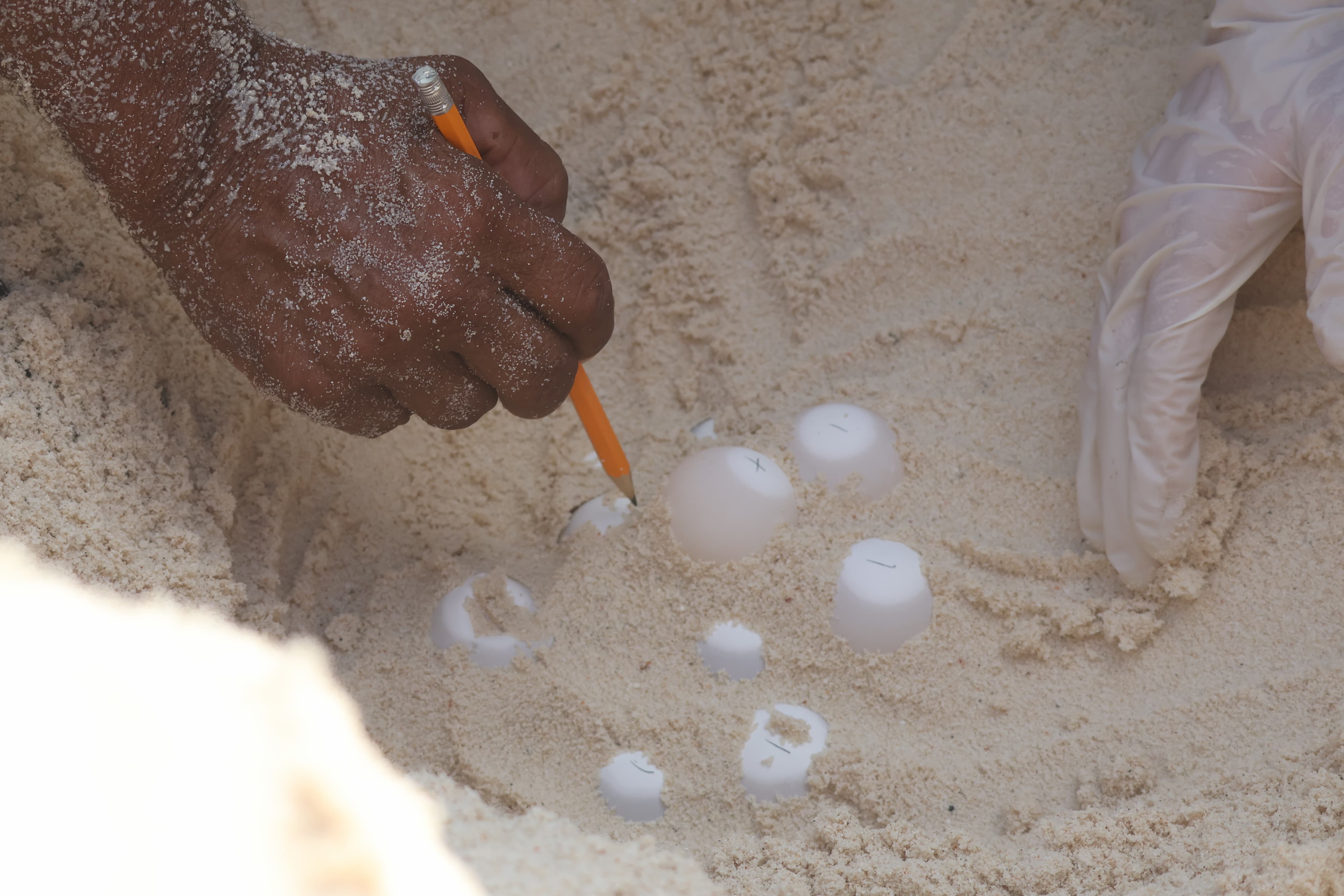
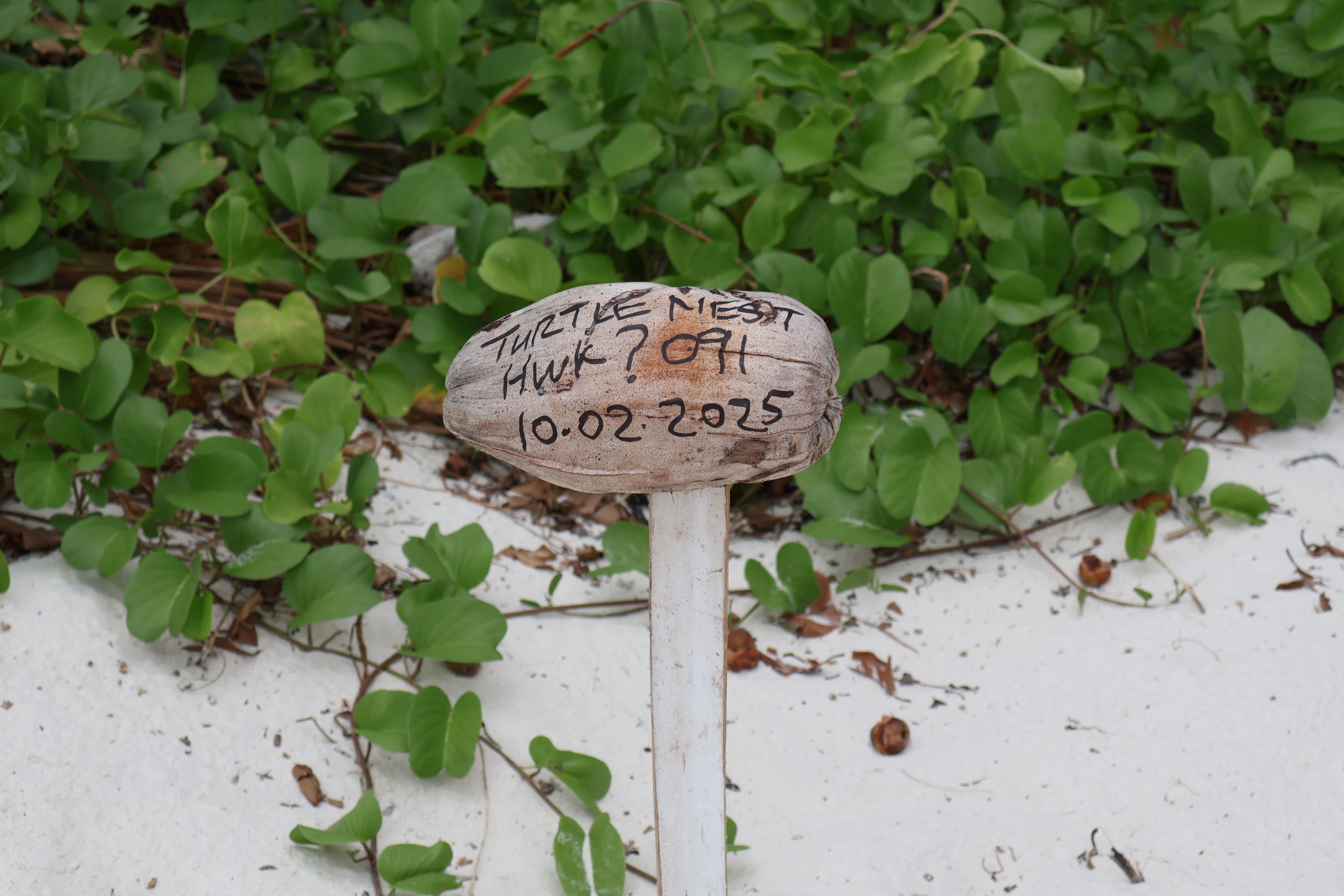
Translocated nests are marked and monitored in the same way as in situ nests. They remain part of the standard nesting dataset and are included in hatching success rate assessments alongside non-translocated nests. This allows conservation teams to evaluate outcomes over time and to assess whether translocation is contributing to improved nest survival under specific conditions.
Egg translocation on North Island is implemented as part of a broader nest protection strategy that prioritises minimal intervention. Wherever possible, nests are left in place and monitored without disturbance. Translocation is used only when the risk of nest loss is high and when intervention is likely to reduce avoidable egg mortality.
Ecotourists supporting Sea Turtle monitoring may assist with egg translocation under direct supervision, contributing to excavation, nest reconstruction, and data recording. They do not make decisions about whether translocation occurs. This ensures that all interventions remain science led and consistent with ethical conservation practice.
By combining careful nest protection with long term monitoring, egg translocation supports the broader goal of endangered Sea Turtle monitoring and protection on North Island. The focus remains on reducing preventable losses while maintaining data integrity and avoiding unnecessary interference with natural nesting processes.
Sea Turtle Nest Excavation and Hatching Success Assessment
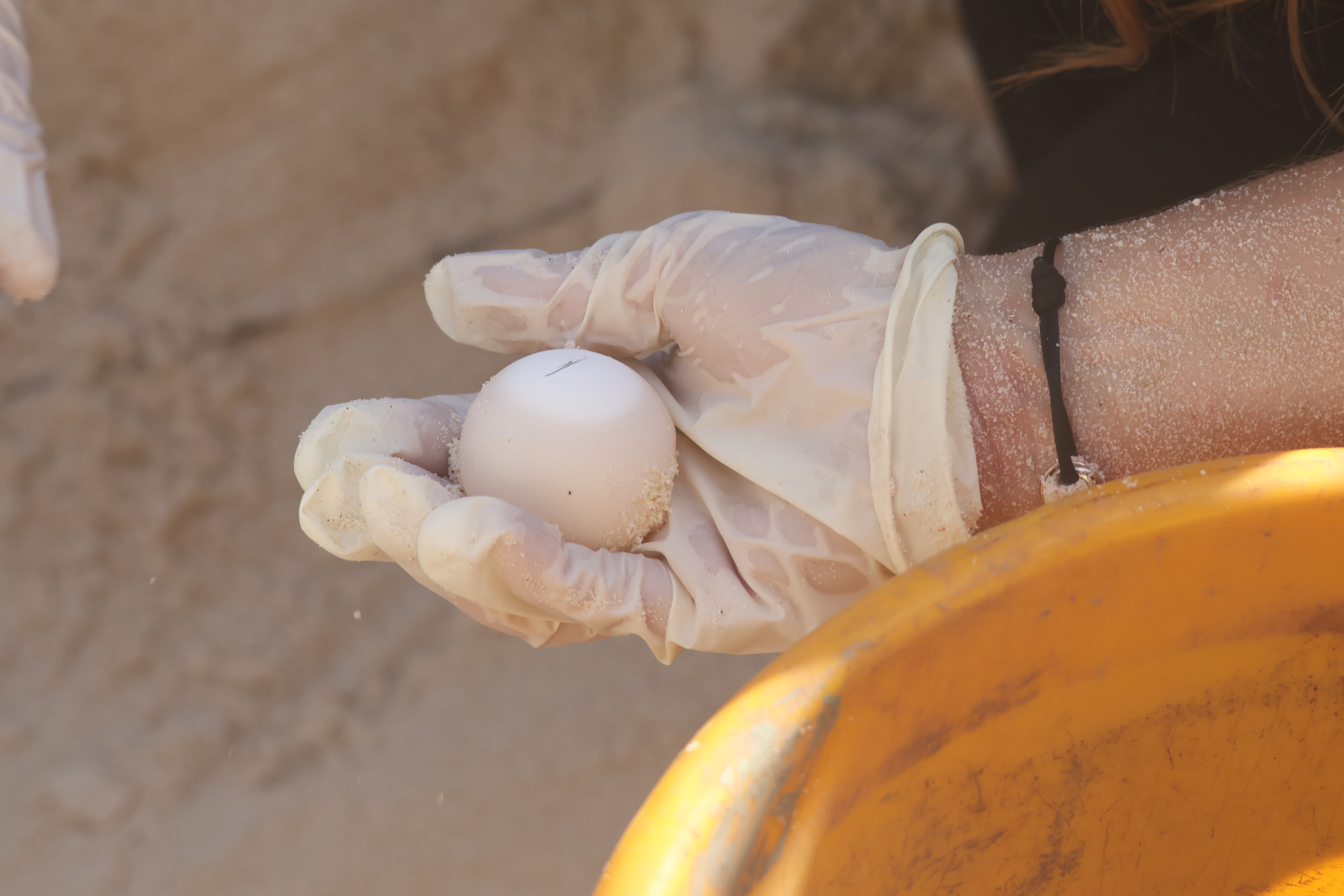
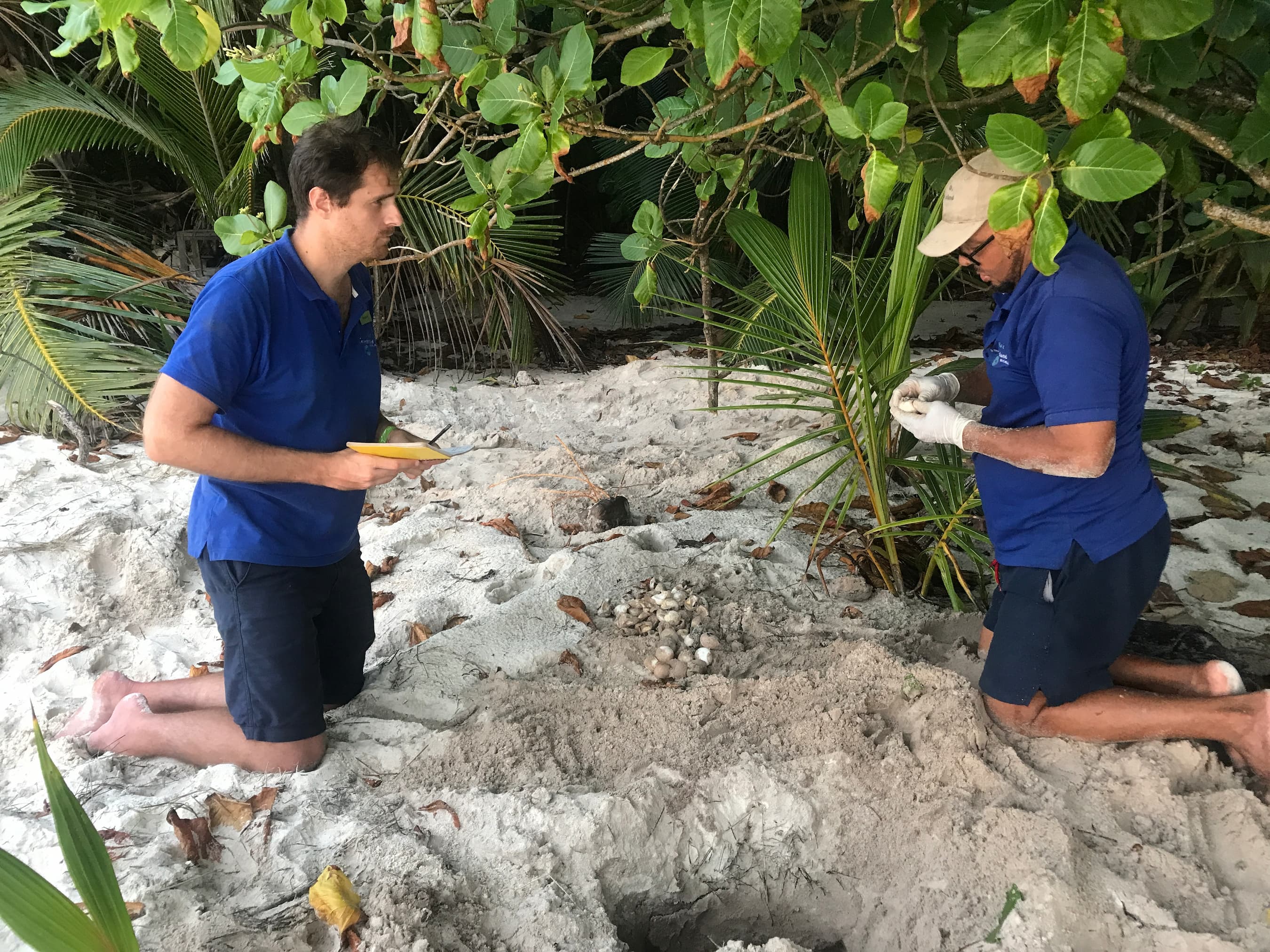
After hatching events, nest excavation is conducted where necessary to assess reproductive outcomes. During these excavations, unhatched eggs and empty shells are counted to calculate the hatching success rate, a key metric used to evaluate beach conditions, incubation temperatures, and potential threats to developing embryos. This data contributes directly to long-term population assessments and adaptive beach management strategies.
All monitoring data collected feeds into the island’s environmental database and is used to inform conservation decision-making at both site and national level. Over time, this information helps identify trends in nesting frequency, hatchling emergence, and environmental pressures affecting Sea Turtle reproduction in the Seychelles.
The Role of the Turtle Hatching Volunteer in Sea Turtle Monitoring
Turtle hatching volunteers on North Island support Sea Turtle monitoring by assisting with beach patrols, nesting activity observation, and data recording under supervision. Their role includes helping to document nesting attempts, supporting nest excavation and hatching success assessments, and contributing to post-nesting monitoring tasks. Volunteers do not handle turtles or hatchlings and do not make management decisions.
Participants supporting Sea Turtle monitoring on North Island are not recreational turtle hatching volunteers. They are trained ecotourists working within a professional conservation setting. Their role is to assist with observation, data recording, beach profiling, and post-hatching assessments under the guidance of experienced environmental staff.

Direct handling of turtles or hatchlings does not occur, except for extreme circumstances under supervision. Viewing protocols are strictly enforced to reduce stress, light disturbance, and physical interference, in line with international best practice and island-specific environmental guidelines. This approach ensures that conservation outcomes always take priority over experience or photography.
By contributing to consistent monitoring effort rather than short-term interventions, Wildlife ACT’s marine conservation program supports meaningful, measurable conservation impact while reinforcing North Island’s position as a critical refuge for Endangered Sea Turtles in the Indian Ocean.
Sea Turtle Monitoring on North Island as a Long-Term Conservation Model
Sea Turtle monitoring on North Island Seychelles represents a long-term conservation model built on consistency, ethical field practice, and data integrity rather than short-term outcomes. By combining daily nesting patrols, individual identification, nest protection, egg translocation where necessary, and post-hatching assessment, the programme generates a continuous dataset that reflects real environmental conditions over time.
The partnership between North Island’s Environmental Team and Wildlife ACT’s Marine and Coastal Conservation volunteer program strengthens monitoring capacity while maintaining clear ethical boundaries. Ecotourists support structured fieldwork under supervision, contributing to data collection and nest protection without interfering with natural nesting processes or animal behaviour.
This approach allows conservation decisions to be informed by evidence rather than isolated observations. Nesting effort, hatching success rate, and spatial use of beaches can be compared across seasons and years, supporting adaptive management in response to changing beach conditions, climate variability, and emerging risks.
As pressures on coastal ecosystems increase globally, long-term monitoring sites such as North Island play an important role in understanding Sea Turtle reproduction at a site level. The value of this work lies not in guaranteeing outcomes, but in building the knowledge base required to protect endangered Sea Turtle populations responsibly over time.
Frequently Asked Questions About Sea Turtle Monitoring in the Seychelles
What is endangered Sea Turtle monitoring and protection on North Island Seychelles
Endangered Sea Turtle monitoring and protection on North Island Seychelles involves daily beach patrols, nesting activity observation, nest protection, hatching monitoring, and long-term data collection. The work is led by North Island’s Environmental Team and supported by Wildlife ACT through its Marine and Coastal Conservation volunteer program. The aim is to protect nesting beaches while building reliable datasets on Hawksbill Sea Turtle and Green Turtle reproduction over time.
What is the difference between Hawksbill Sea Turtle and Green Turtle nesting on North Island
Hawksbill Sea Turtles often nest during the day in the Seychelles and tend to place nests higher up the beach, sometimes near vegetation. Green Turtles usually nest at night and prefer wider, flatter sections of beach, with nests often located lower on the shore. These differences affect how nesting activity is detected, monitored, and protected on North Island.
What is egg translocation and when is it used
Egg translocation is the careful relocation of Sea Turtle eggs to a safer location when a nest is at high risk of flooding, erosion, or other environmental threats. On North Island, egg translocation is used only when leaving a nest in place is likely to result in egg loss. Eggs are moved within the same beach system and monitored as part of the standard nesting dataset.
How is hatching success rate calculated after nest excavation
Hatching success rate is calculated after nest excavation by counting hatched eggshells, unhatched eggs, and other nest contents once hatchling emergence has finished. This information helps conservation teams assess incubation conditions, nest survival, and long-term reproductive trends for Sea Turtles on North Island.
What are flipper tag numbers and scute patterns used for
Flipper tag numbers and scute patterns are used to identify individual Sea Turtles. Recording this information allows conservation teams to track repeat nesting by the same females, assess nesting frequency, and study long-term site fidelity. This strengthens the accuracy and value of long-term monitoring data.
What does a turtle hatching volunteer do on North Island
A turtle hatching volunteer on North Island supports Sea Turtle monitoring by assisting with beach patrols, nesting activity observation, data recording, nest excavation, and post-hatching monitoring under supervision. Volunteers do not handle turtles or hatchlings and do not make conservation management decisions. Their role is to support ethical, science-led monitoring rather than wildlife interaction.
Is Sea Turtle monitoring ethical for volunteers in the Seychelles
Sea Turtle monitoring on North Island is designed to be ethical and non-invasive. Volunteers work under strict protocols that prioritise minimal disturbance, no handling, and respect for natural nesting behaviour. Wildlife ACT’s ecotourism model supports conservation outcomes without compromising animal welfare or data integrity.
References
Wildlife ACT, Marine and Coastal Conservation Volunteer Program, Seychelles, available at: https://www.wildlifeact.com/volunteer/program/marine-conservation-volunteering-seychelles (accessed 23 January 2026).
Wildlife ACT, Why Ethical Wildlife Volunteering Is Crucial for Conservation, available at: https://www.wildlifeact.com/blog/why-ethical-wildlife-volunteering-is-crucial-for-conservation (accessed 23 January 2026).
North Island Seychelles, Conservation and Environmental Management, available at: https://north-island.com/conservation (accessed 23 January 2026).
IUCN SSC Marine Turtle Specialist Group, Global Conservation Status and Assessments, available at: https://www.iucn-mtsg.org (accessed 23 January 2026).
IUCN, Hawksbill Sea Turtle (Eretmochelys imbricata), IUCN Red List of Threatened Species, available at: https://www.iucnredlist.org/species/8005/12881238 (accessed 23 January 2026).
IUCN, Green Turtle (Chelonia mydas), IUCN Red List of Threatened Species, available at: https://www.iucnredlist.org/species/4615/11037468 (accessed 23 January 2026).

.jpeg)


.jpg)
