

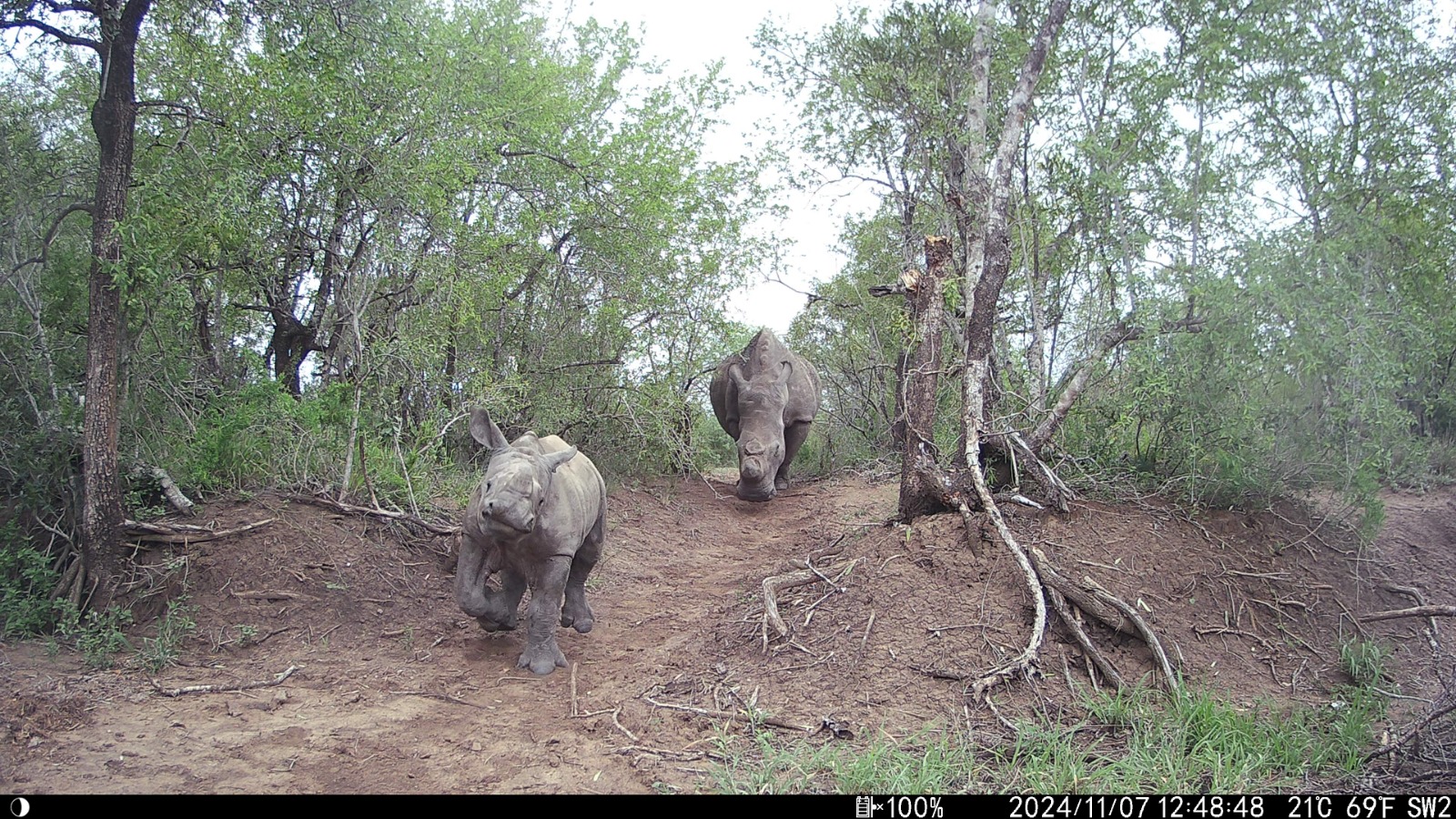
Welcome to the secret world of Hluhluwe-iMfolozi Park, brought to you by the all-seeing camera traps! These candid captures offer an unexpected look into the daily lives and fascinating behaviours of the park's iconic wildlife.
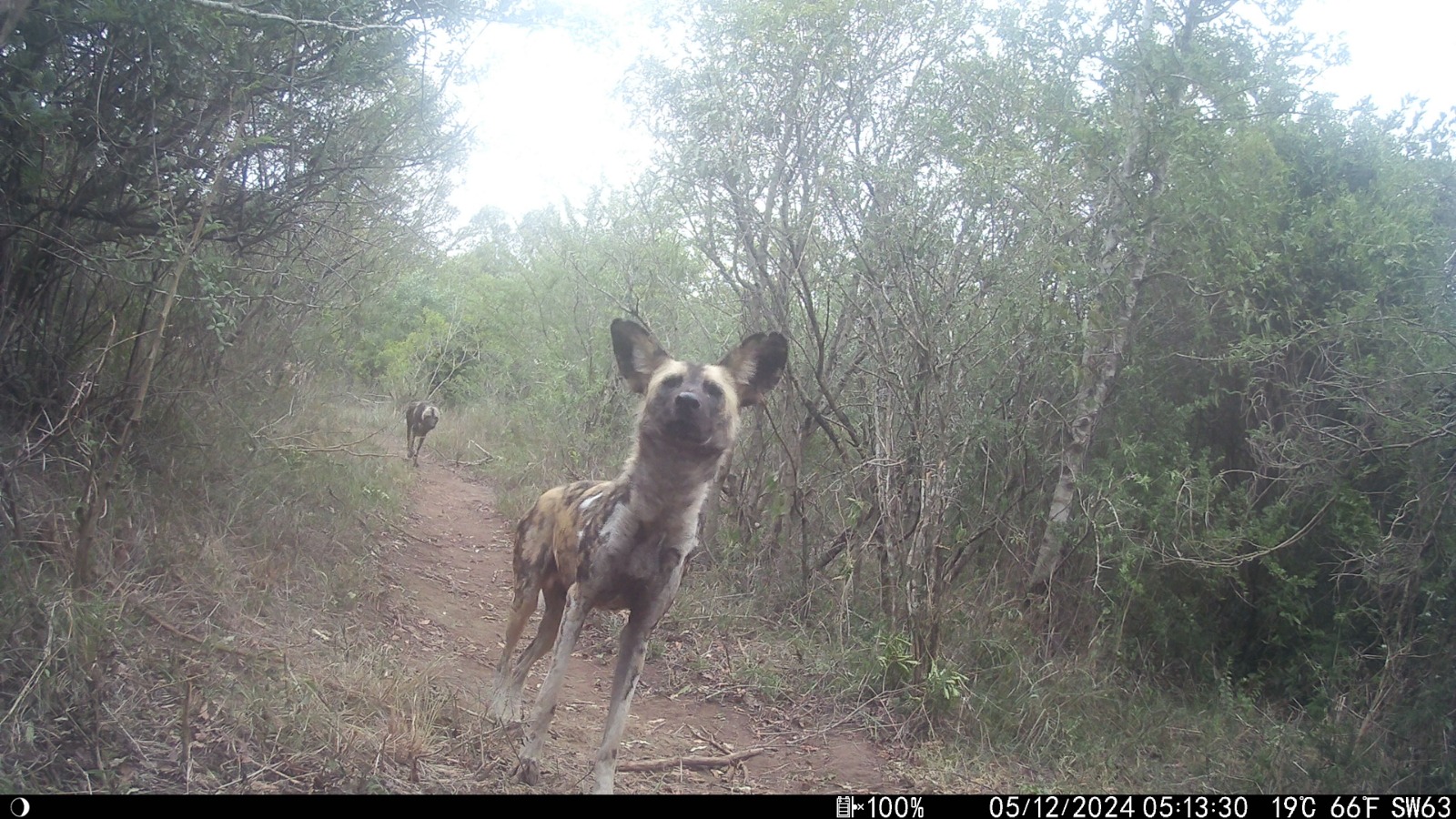
African Wild Dog
The highly collaborative nature of the African Wild Dog extends beyond the hunt; they also care for the old, sick, or injured members of their pack, sharing food and protecting them - a true testament to their strong social bonds.
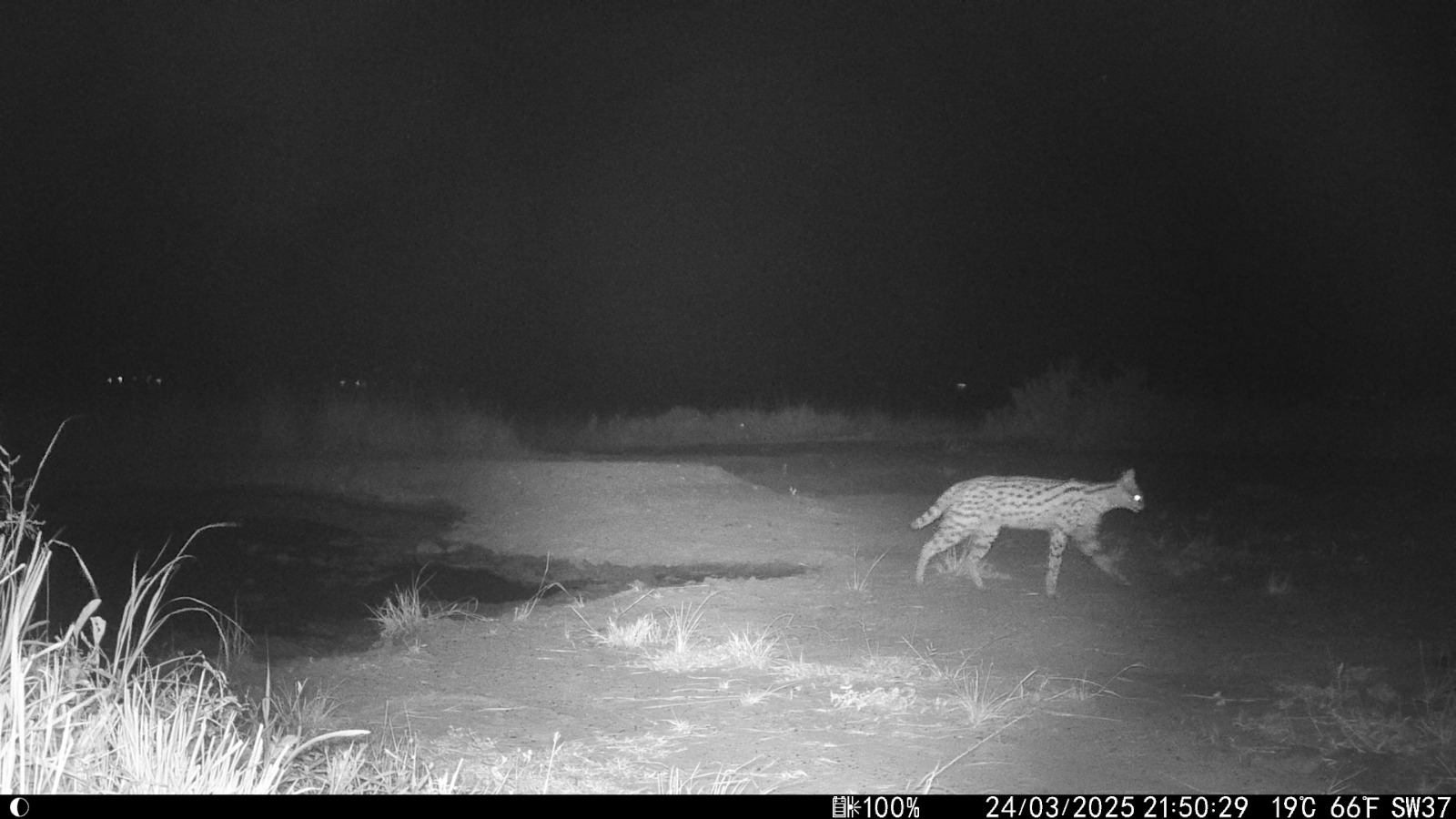
Serval
The serval is known for its remarkable hunting technique: a series of high-speed pounces and leaps. Its large, independently mobile ears help it to locate prey, such as rodents, moving among the grass.
Kudu
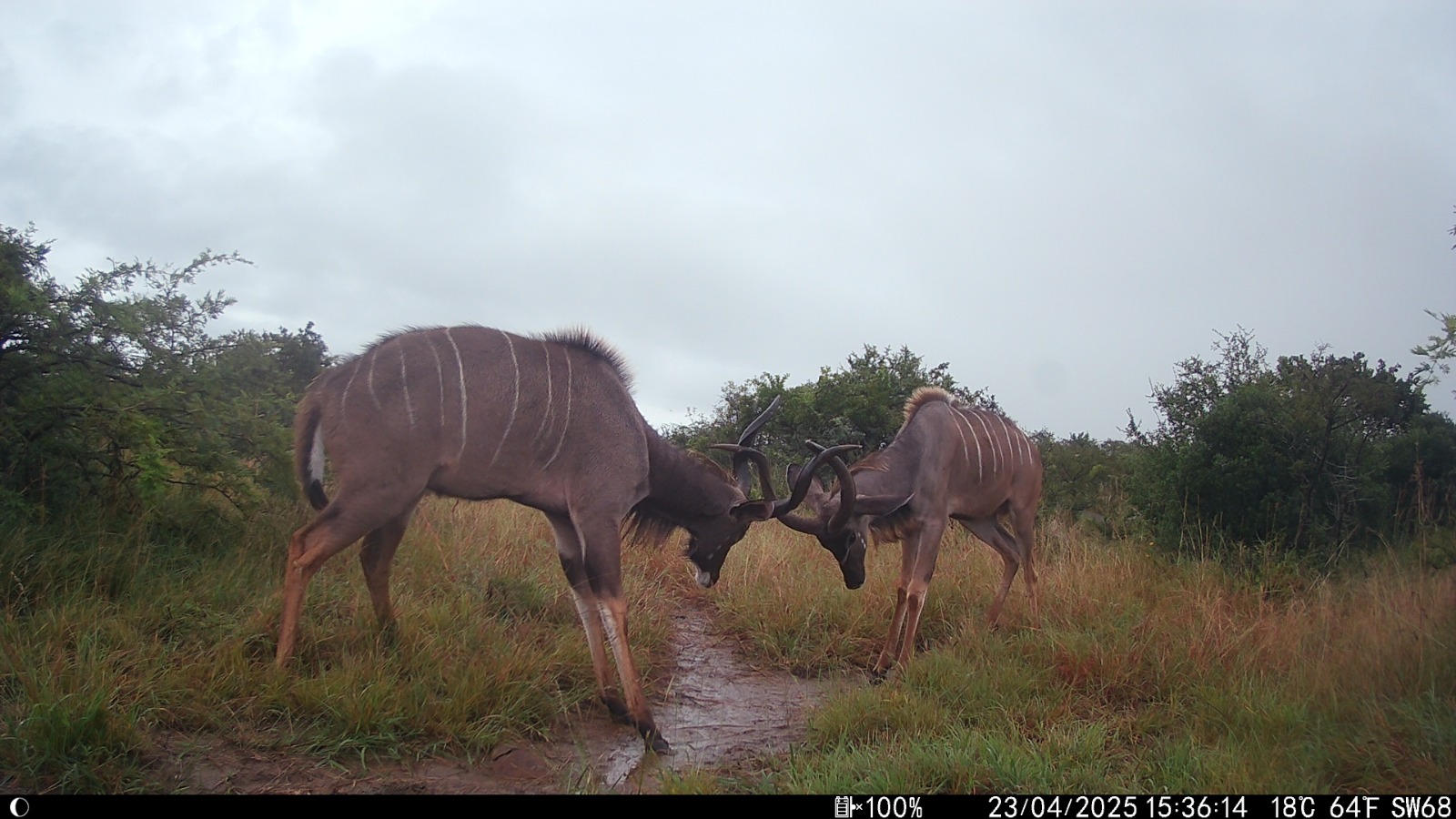
These young kudu males are engaged in a bout of sparring, a common behaviour where they practice their fighting skills and test each other's strength without serious intent. This spontaneous moment, witnessed only by the camera trap, gives us a rare, intimate look at their growth and social dynamics.
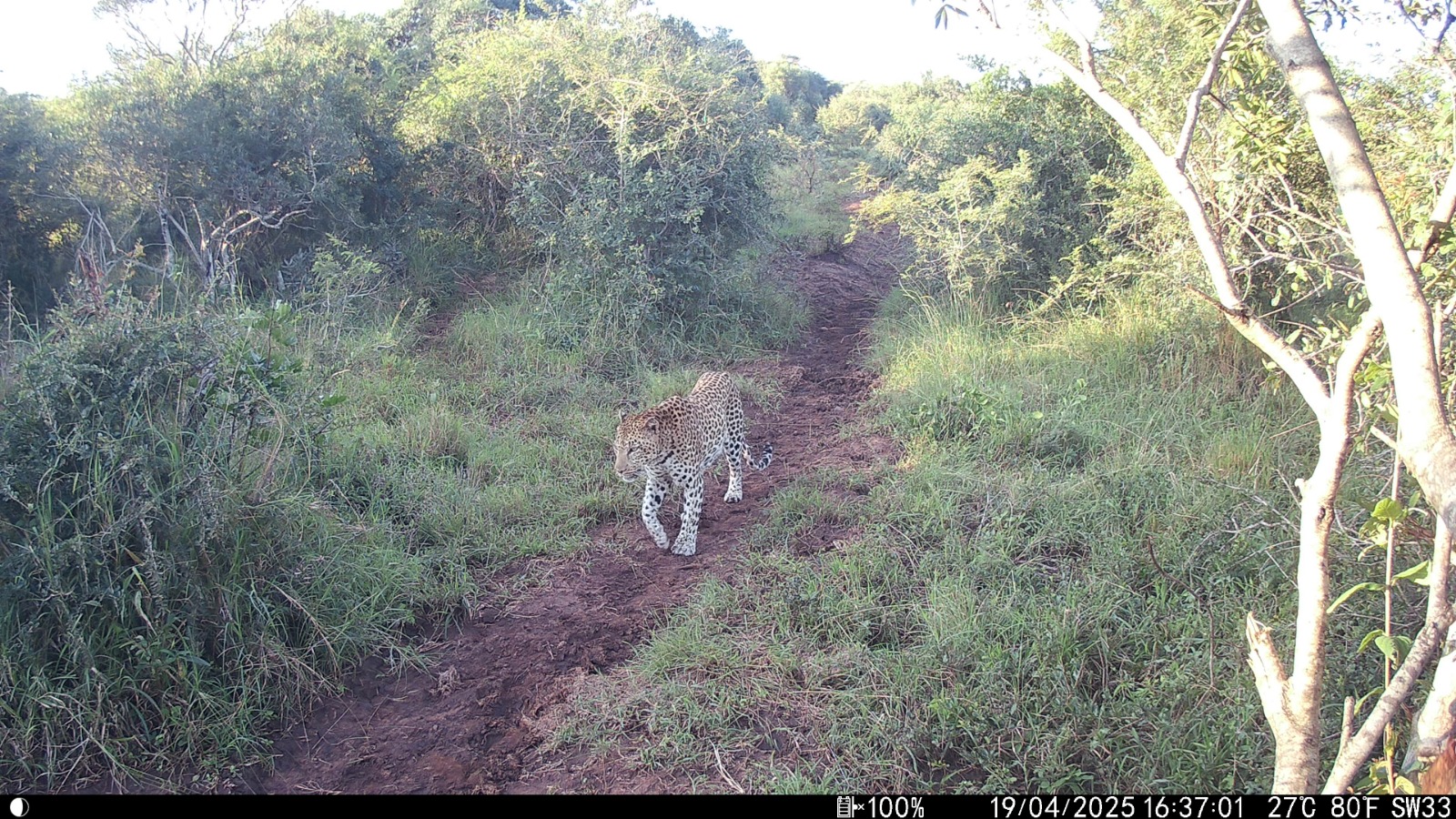
Leopard
The elusive Leopard is a master of camouflage, often going completely unnoticed in its environment. They are incredibly strong climbers and frequently hoist their large kills up into trees to protect them from scavengers like Lions and Hyaenas.
Honey Badger
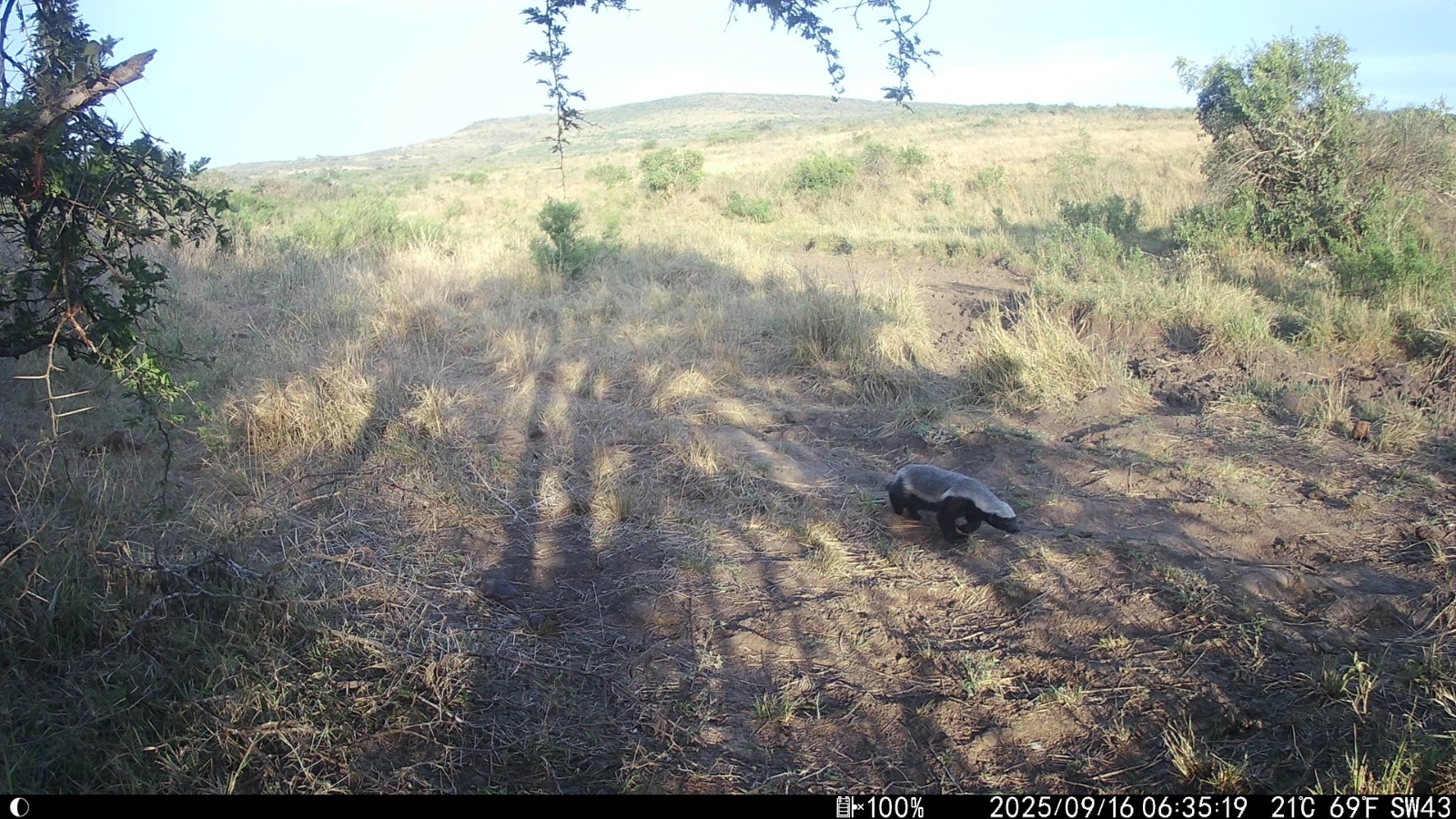
Honey Badgers are known for being one of the most fearless animals in Africa. They possess a thick skin, remarkable strength, and a tenacious attitude, enabling them to stand their ground against much larger predators.
Southern Ground Hornbill
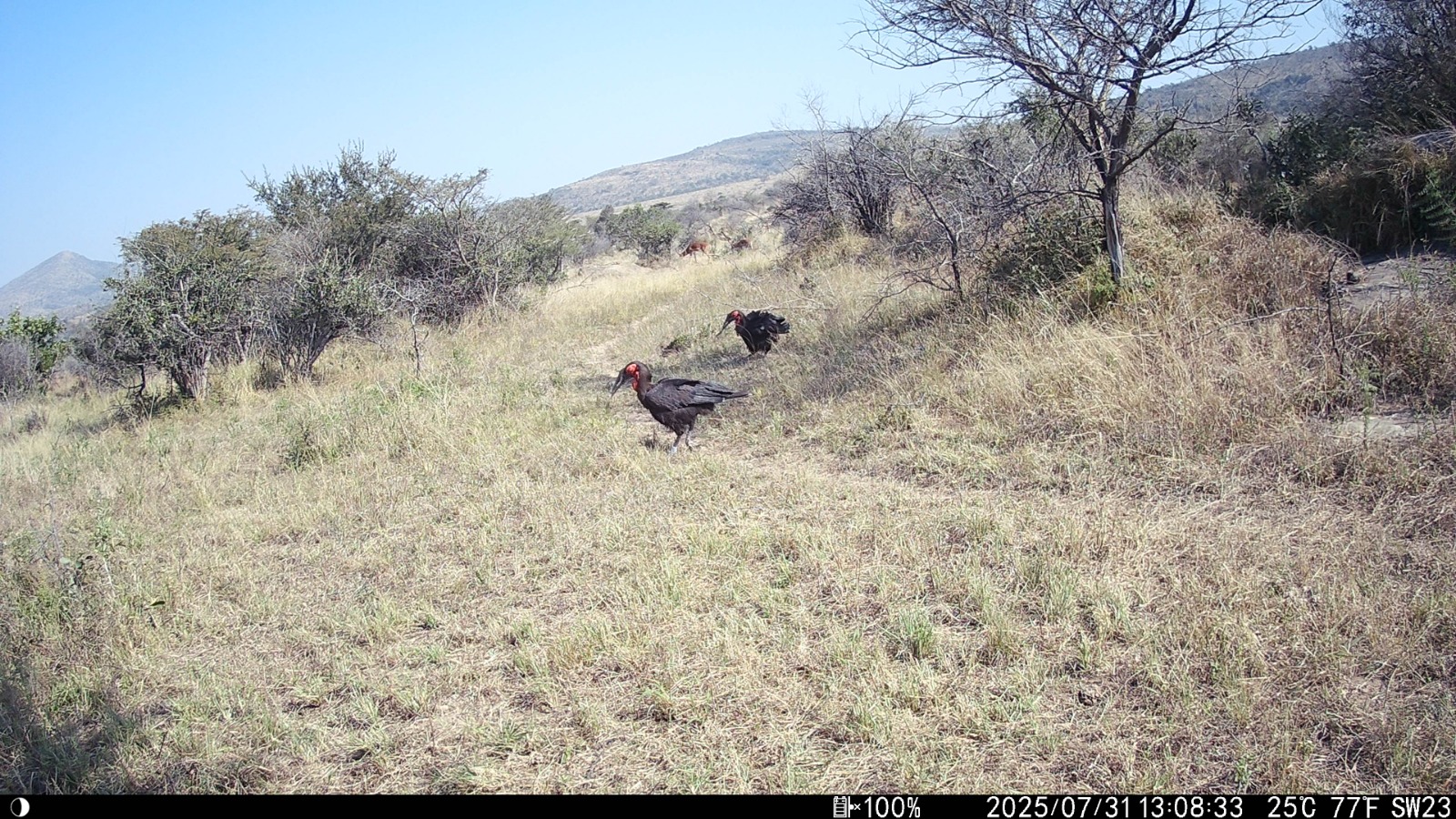
The Southern Ground Hornbill is one of the largest and most distinctive birds in the reserve. They are vital ecological indicators and breed cooperatively, with the dominant pair being assisted by several helpers in raising usually just a single chick.
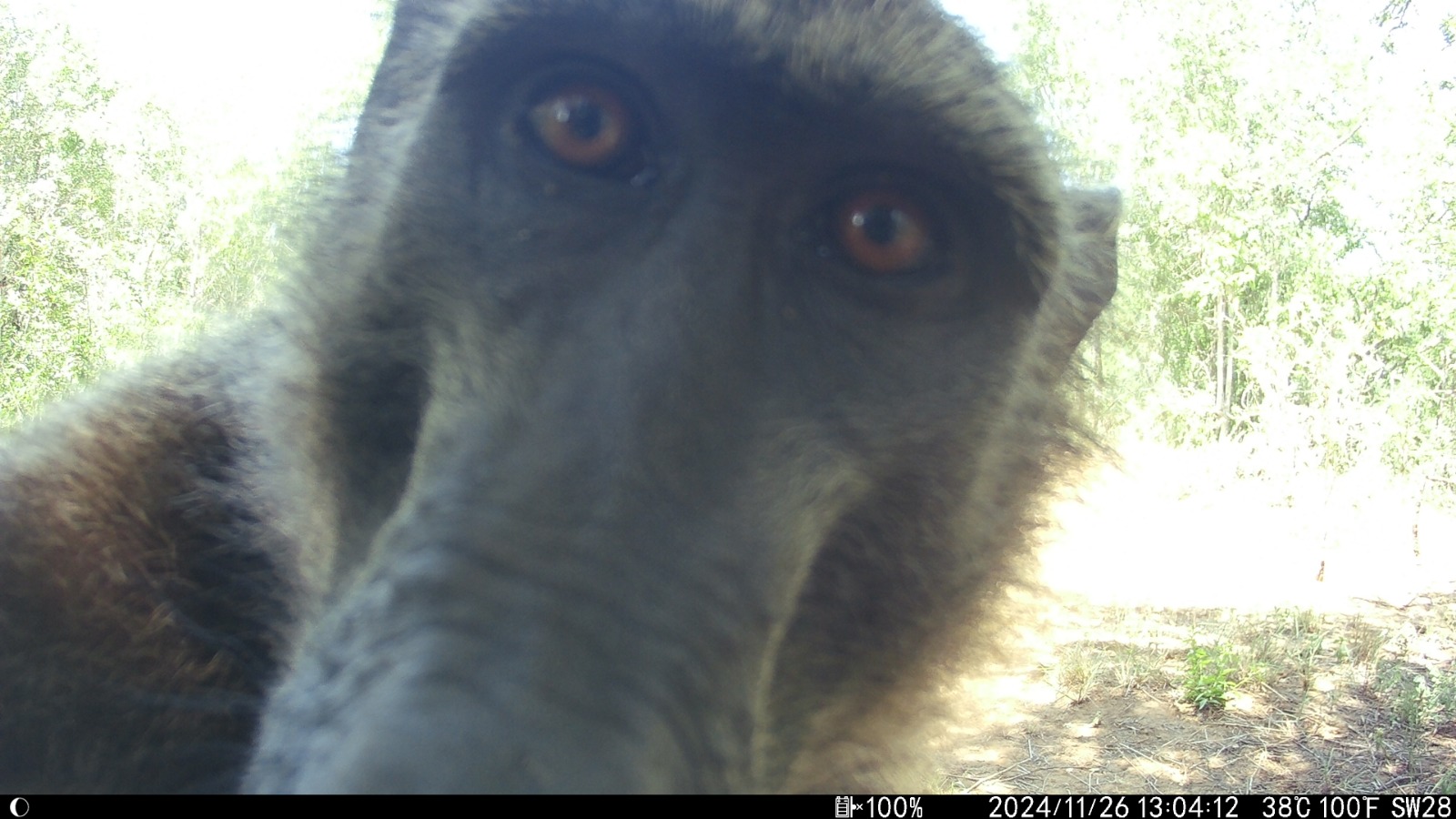
Baboon
Baboons are highly social primates, living in large, complex troops with clear social hierarchies. Their intelligence and varied diet allow them to thrive in diverse environments, making them incredibly adaptable. Pictured is a chacma baboon, taking a closer look at the camera.
Giraffe
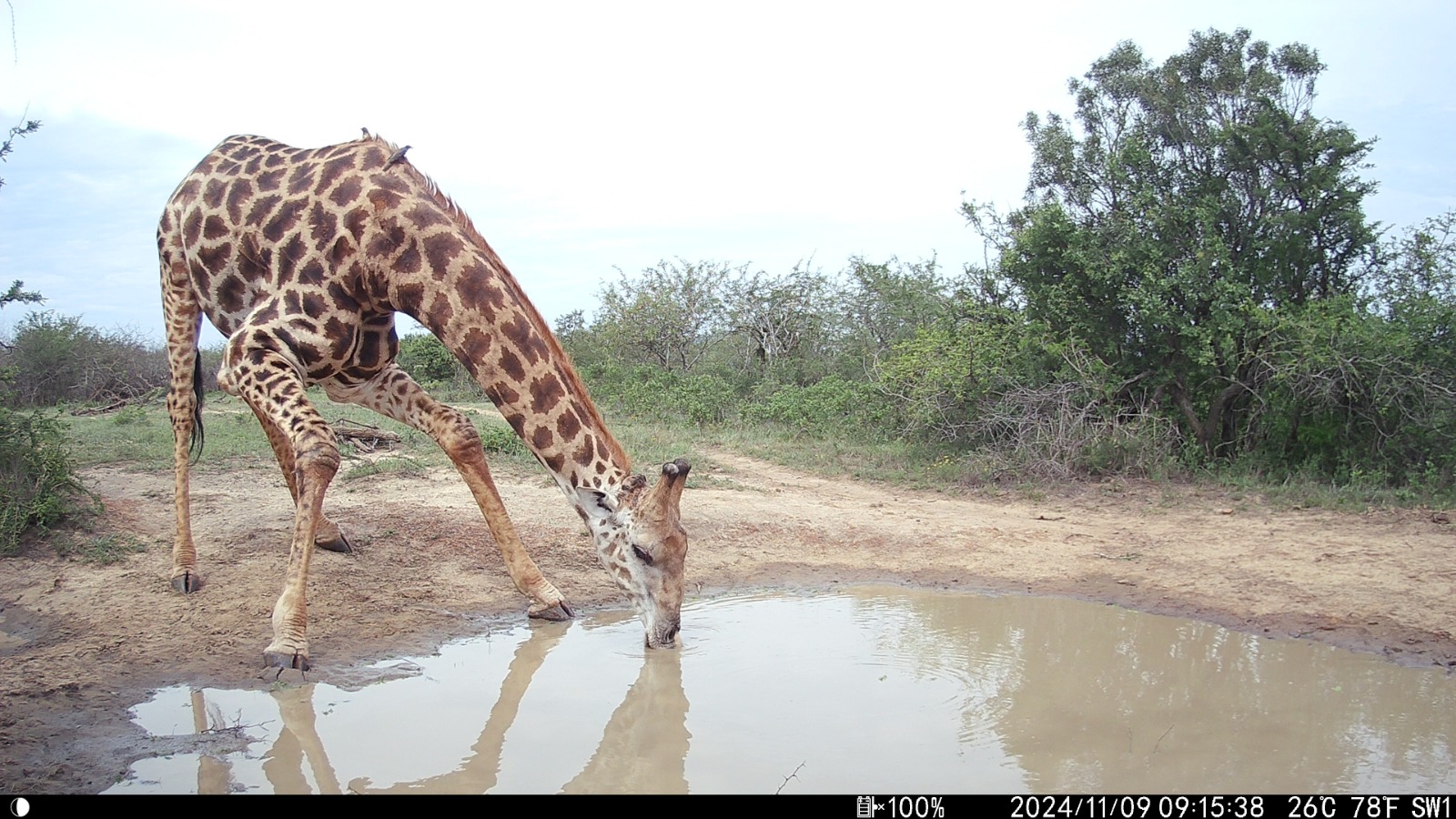
The majestic giraffe has the longest neck of any mammal, but like humans, it still only has seven cervical vertebrae. They spend most of their lives standing up.
Secretary Bird
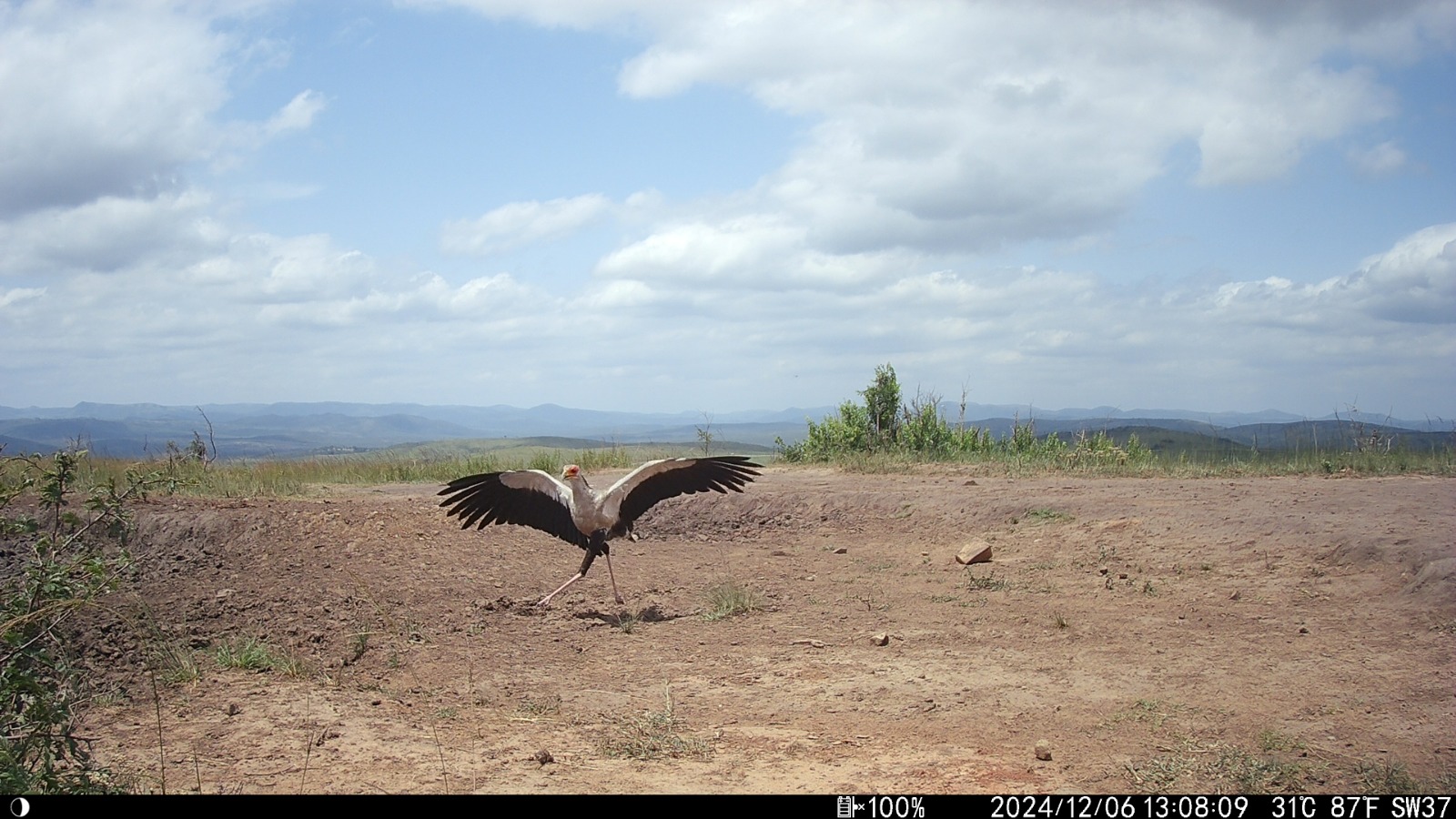
Sadly, the iconic secretary bird is globally classified as Endangered on the IUCN Red List, facing rapid population decline due to habitat loss and degradation of its native grasslands. This species, known for hunting prey like snakes by stomping, is a critical indicator of grassland health.
Rhino
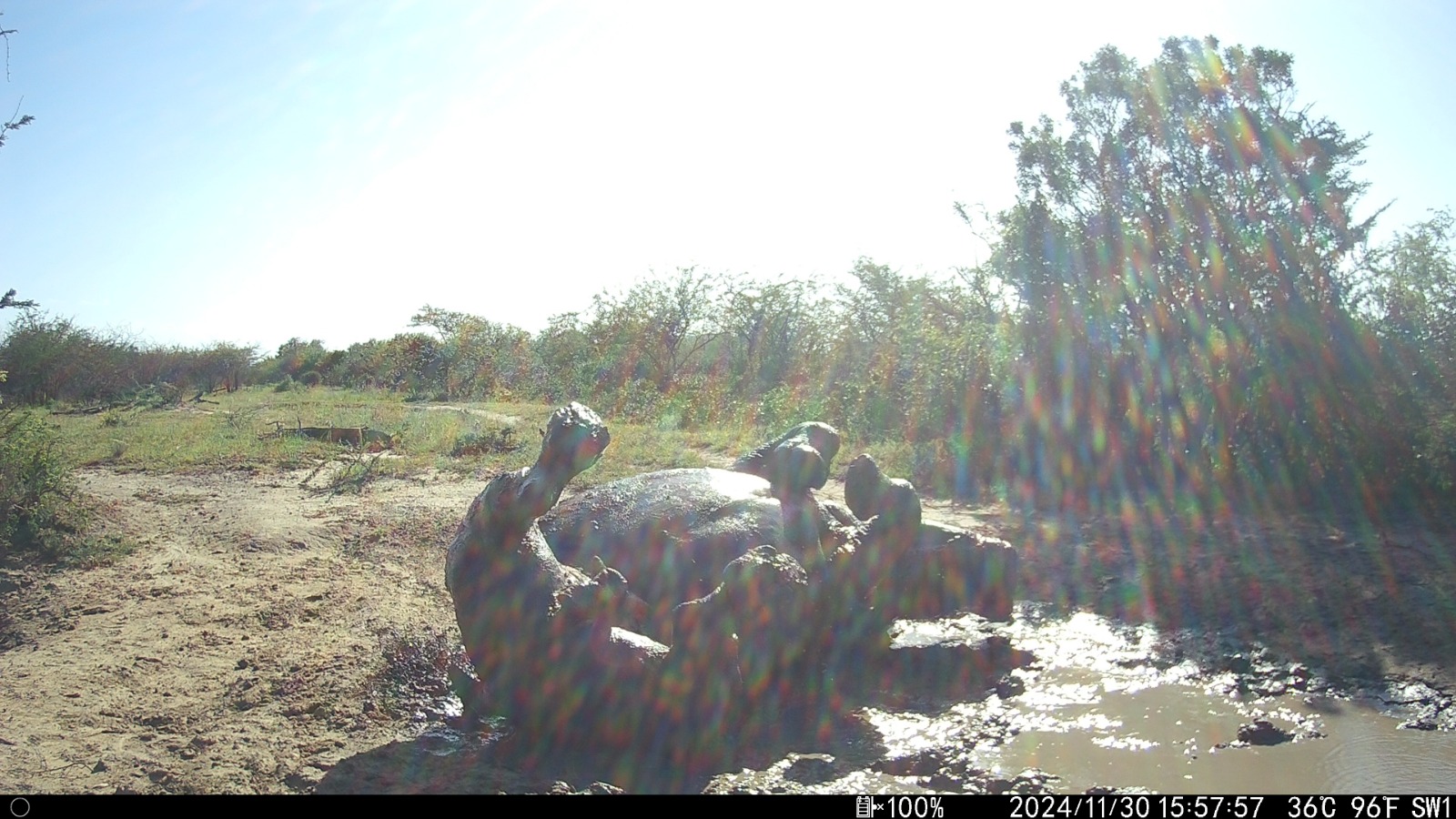
We are always excited to see Rhinos on our cameras. White Rhinos in particular are a massive conservation success story. Hluhluwe-iMfolozi Park served as the last refuge for the Southern White Rhino when their numbers dropped to fewer than 100 individuals globally in the early 1900s.
Thanks to decades of dedicated protection, the subspecies was brought back from the brink and is now classified as Near Threatened, though poaching remains a threat to this day.
In collaboration with CNRS and Ezemvelo KZN Wildlife, supported by BNP Paribas Foundation
Post by HiP Boundary Support Coordinator & Camera Trap Project Technician, Migail Nieman
.jpeg)


.jpg)
(1).avif)
.avif)