There are few places left in Southern Africa where you can still look up at a wild, open sky and know that a Regionally Critically Endangered Bearded Vulture might be moving through the valleys below the ridgelines, searching for food, navigating invisible air currents, and returning to a cliff nest that has been used for generations. The Maloti-Drakensberg Park is one of those places. Recognised as a UNESCO World Heritage Site, this dramatic mountain landscape in KwaZulu-Natal is not only breathtaking, it is a critical refuge for threatened species and one of the most important Vulture breeding regions in South Africa.
Wildlife ACT’s Southern Drakensberg Conservation Program operates in and around this protected area, supporting the conservation of two cliff-nesting Vulture species that urgently need protection: the Regionally Critically Endangered Bearded Vulture and the Vulnerable Cape Vulture. This is not a traditional safari or a “come for the views” experience. It is conservation fieldwork in a rugged environment, shaped by the realities of breeding season, mountain weather, and the urgent need for accurate data and fast response.
If you want to spend Bearded Vulture breeding season doing something that matters, this is where you start.
Why the Maloti-Drakensberg Park is a frontline for Vulture conservation
The Maloti-Drakensberg Park World Heritage Site spans an enormous mountain system along KwaZulu-Natal’s southwestern border with Lesotho. It is celebrated for its high-altitude wetlands, endemic flora, exceptional scenery, and the San rock art that traces human history in this landscape across millennia. It is also an Important Bird Area and a key part of the Lesotho Highlands Endemic Bird Area, which matters because the Drakensberg is not just a pretty place to visit. It is an ecological stronghold.
For cliff-nesting Vultures, this region offers what few landscapes still can: rugged nesting habitat, wide foraging ranges, and relatively intact systems that support long-lived scavengers. During breeding season, these mountains become even more important. Nesting pairs rely on stable conditions, safe flight corridors, and minimal disturbance to successfully raise young. When pressures increase, whether from poisoning, electrocution, collision risk, or food shortages, the survival of chicks and fledglings can shift quickly.
This is why consistent field monitoring and targeted conservation action in the Drakensberg has real weight.
.jpg)
The Southern African Bearded Vulture Population and Why It Is at Risk
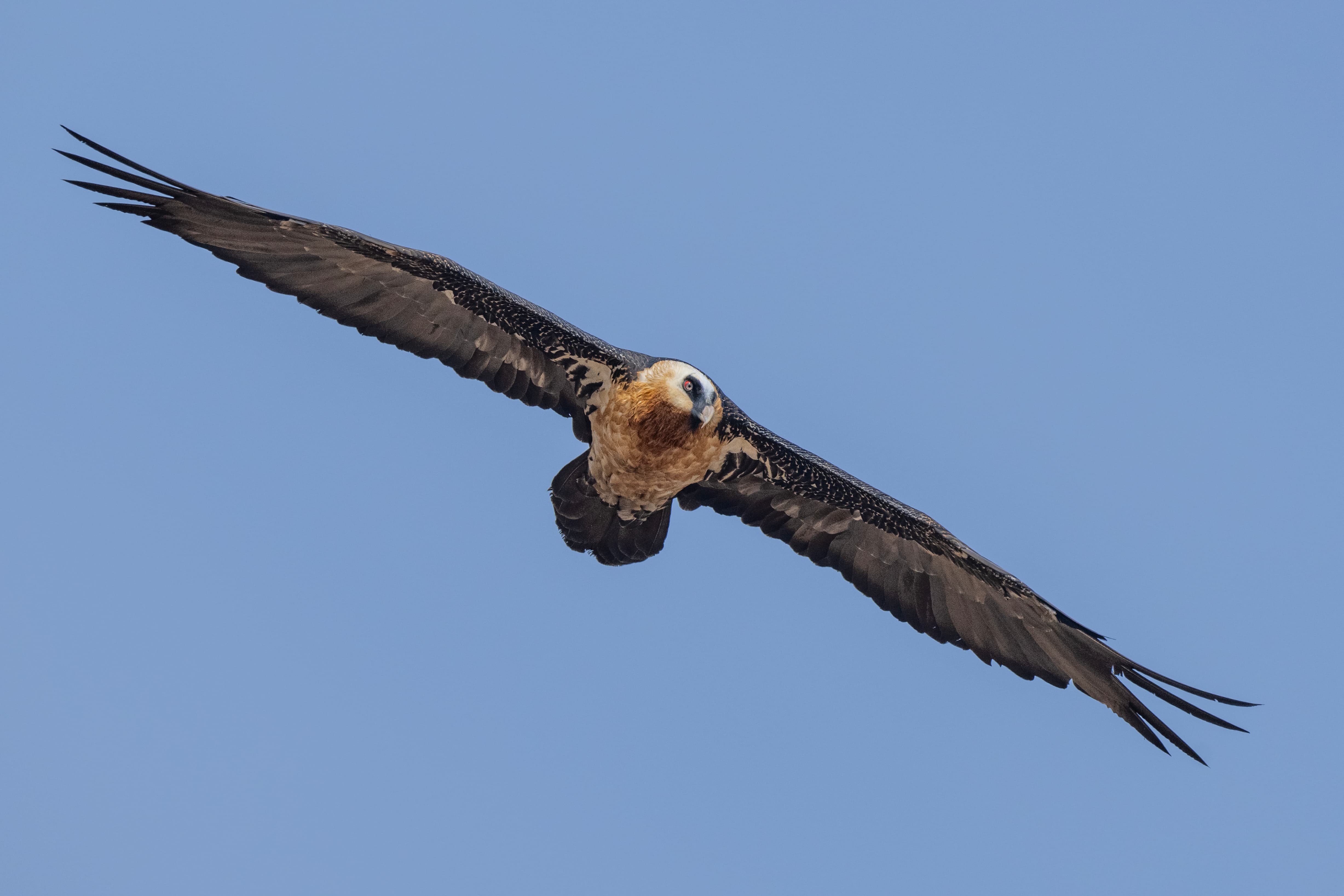
The Bearded Vulture is classified as Regionally Critically Endangered in Southern Africa. Over the past century, this species has experienced a drastic decline, resulting in a geographically isolated population largely restricted to the Maloti-Drakensberg mountain range.
There are an estimated 50 to 100 breeding pairs remaining in South Africa and Lesotho, with roughly 320 individuals across the regional population. This small and isolated population makes the Southern African Bearded Vulture particularly vulnerable to additional pressures.
The species faces numerous threats. Poisoning remains one of the greatest dangers, often linked to poisoned carcasses intended for other predators. Vultures, as highly efficient scavengers, are particularly susceptible to these events. Collisions with powerlines, electrocution, habitat loss, decreasing food availability, belief-based use, and human disturbance near nesting sites further contribute to ongoing population decline.
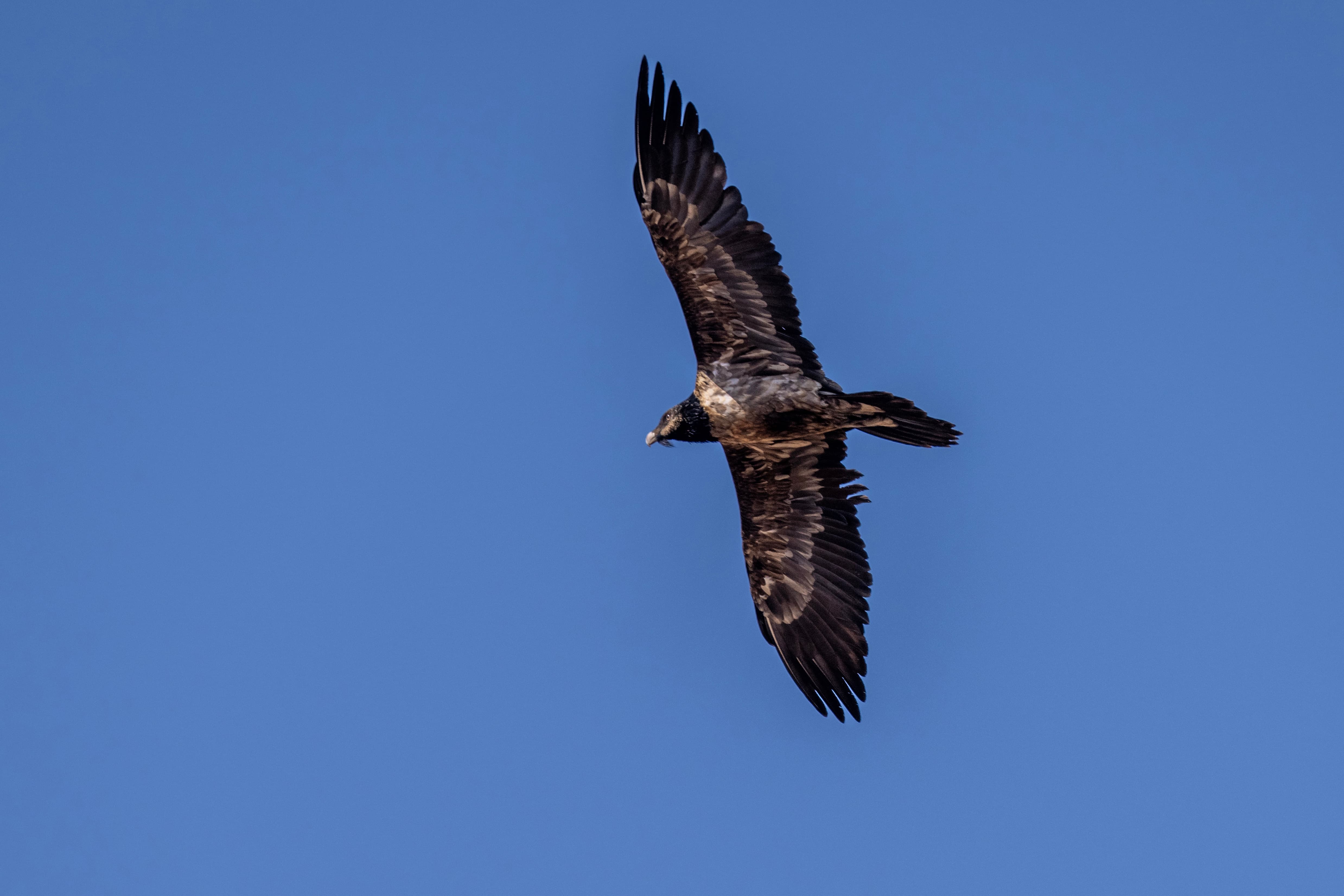
The Maloti-Drakensberg mountain range now represents the final regional stronghold for the Southern African population. Protecting breeding pairs in this landscape is critical to preventing regional extinction.
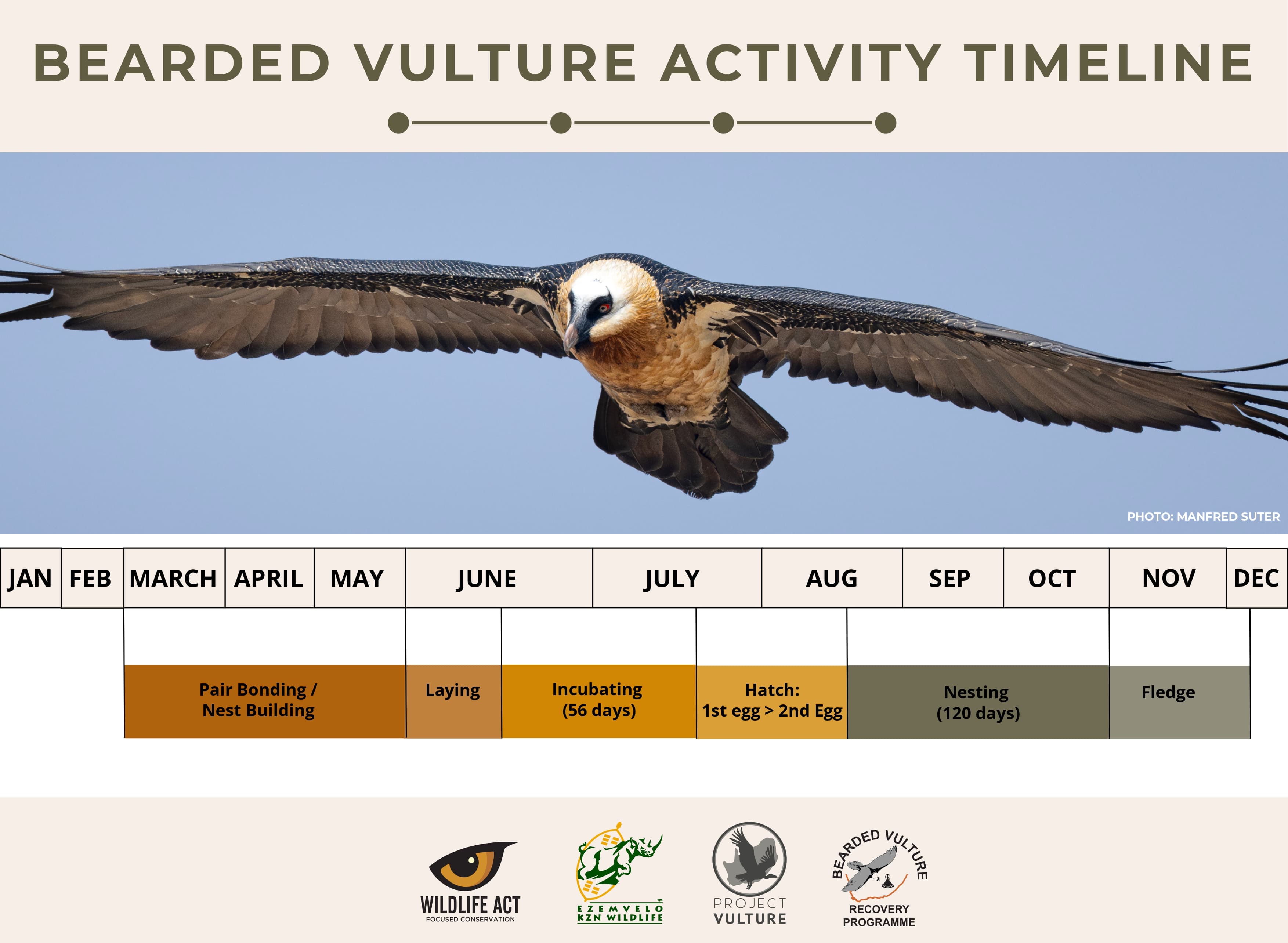
The Bearded Vulture is a cliff-nesting species that lays one or two eggs during winter. Hatchlings remain dependent on their parents for an extended period, making breeding success essential for long-term population stability. With such a small number of breeding pairs remaining, every successful nest contributes directly to the survival of the regional population.
This is why consistent nest monitoring and threat mitigation during the breeding season are central to conservation efforts in the Southern Drakensberg.
Why Breeding Season Monitoring Is Critical in the Southern Drakensberg
The arrival of the colder winter months marks the onset of the breeding season for all South Africa’s Vulture species. In the Southern Drakensberg, this period runs primarily from May to November and represents the most intensive and important monitoring window of the year.
The Bearded Vulture is a cliff-nesting species, selecting rocky ledges on sheer mountain faces for breeding. They lay one or two eggs during winter, and hatchlings remain dependent on their parents for an extended period. With only 50 to 100 breeding pairs remaining in South Africa and Lesotho, each breeding attempt is significant for the survival of the regional population.
Breeding sites are vulnerable. Human disturbance, food shortages, poisoning incidents, and landscape-level threats can all influence breeding success. In a population this small, even minor disruptions can have measurable impacts over time.
This is why nest monitoring in the Southern Drakensberg is essential. Monitoring confirms breeding activity, documents incubation and chick development, and records nest outcomes across the season. These observations contribute to understanding breeding success rates and long-term population trends.
Countless, mostly cold hours of monitoring lie ahead each season. Field teams position themselves at safe vantage points, using optics to observe activity without disturbing the birds. The work requires patience, physical resilience, and strict adherence to ethical monitoring protocols. Nest site locations are treated as sensitive information and are never shared publicly to prevent disturbance or exploitation.
Consistent monitoring during the breeding season ensures that potential threats are identified early and that conservation interventions can be informed by accurate, current data. In the final regional stronghold of the Southern African Bearded Vulture population, this work forms a critical line of defence for the species.
Collaborative Conservation: Driving the Recovery of the Southern African Bearded Vulture
The recovery of the Southern African Bearded Vulture is the result of coordinated, long-term collaboration across borders, organisations, and disciplines. It is not a single project. It is a structured recovery program guided by policy, science, and shared responsibility.
Wildlife ACT is a founding member of the Bearded Vulture Task Force, the steering committee of the Bearded Vulture Recovery Program. This Task Force was established to implement a Conservation Action Plan for the species and to ensure that recovery goals are consistently pursued across the Bearded Vulture’s regional range.
Over time, this coordinated effort evolved into a bilateral Southern African Bearded Vulture Recovery Strategy and Action Plan between South Africa and Lesotho. The Recovery Strategy provides a comprehensive long-term framework, supported by detailed action plans, with the clear objective of stabilising and recovering the regional population to acceptable levels by 2030.
-2.jpg)
In 2024, a major milestone was achieved with the publication of the Biodiversity Management Plan for South African Vultures. This national plan consolidates conservation planning across all Vulture species in South Africa and represents a significant step forward for coordinated Vulture conservation at a national scale. Wildlife ACT is a contributor to this Biodiversity Management Plan, reinforcing its role in shaping and delivering science-based recovery actions for Vultures beyond the Bearded Vulture alone.
Within this collaborative framework, field-based nest monitoring in the Southern Drakensberg is not isolated work. It feeds directly into the Recovery Strategy and broader national conservation objectives. Data collected during breeding season supports population monitoring, informs management decisions, and strengthens cross-border recovery efforts.
This work also supports the Bearded Vulture Breeding Program and Bred 4 the Wild, which forms part of the wider recovery approach aimed at securing the long-term survival of the species in Southern Africa.
In the final regional stronghold of the Southern African Bearded Vulture population, collaboration is not optional. It is the mechanism through which recovery becomes possible.

What Volunteers Do During Bearded Vulture Breeding Season
The Southern Drakensberg Conservation Program focuses on protecting Endangered Vultures, specifically the Regionally Critically Endangered Bearded Vulture and the Vulnerable Cape Vulture. During breeding season, volunteers become part of a small, dedicated team of up to three individuals supporting daily, on-the-ground conservation work in this high-altitude landscape.
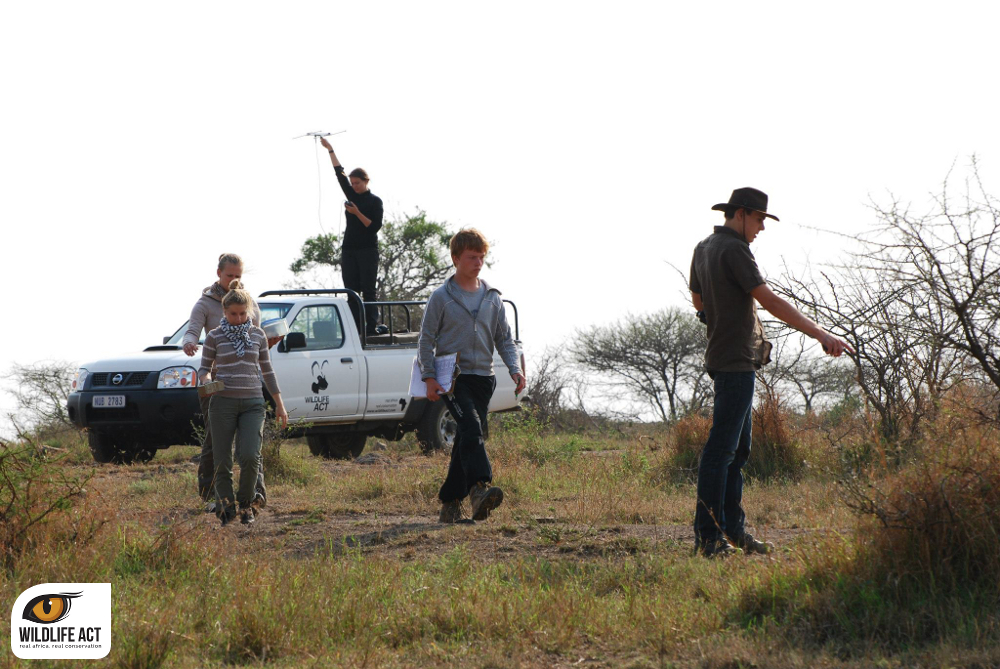
Volunteers work alongside Vulture conservation experts, assisting with Vulture nest monitoring to promote breeding success. This involves hiking to established vantage points and conducting long hours of observation using optics to record Vulture activity without disturbing nesting pairs. Monitoring confirms breeding behaviour, incubation, chick development, and nest outcomes, contributing to long-term population data.

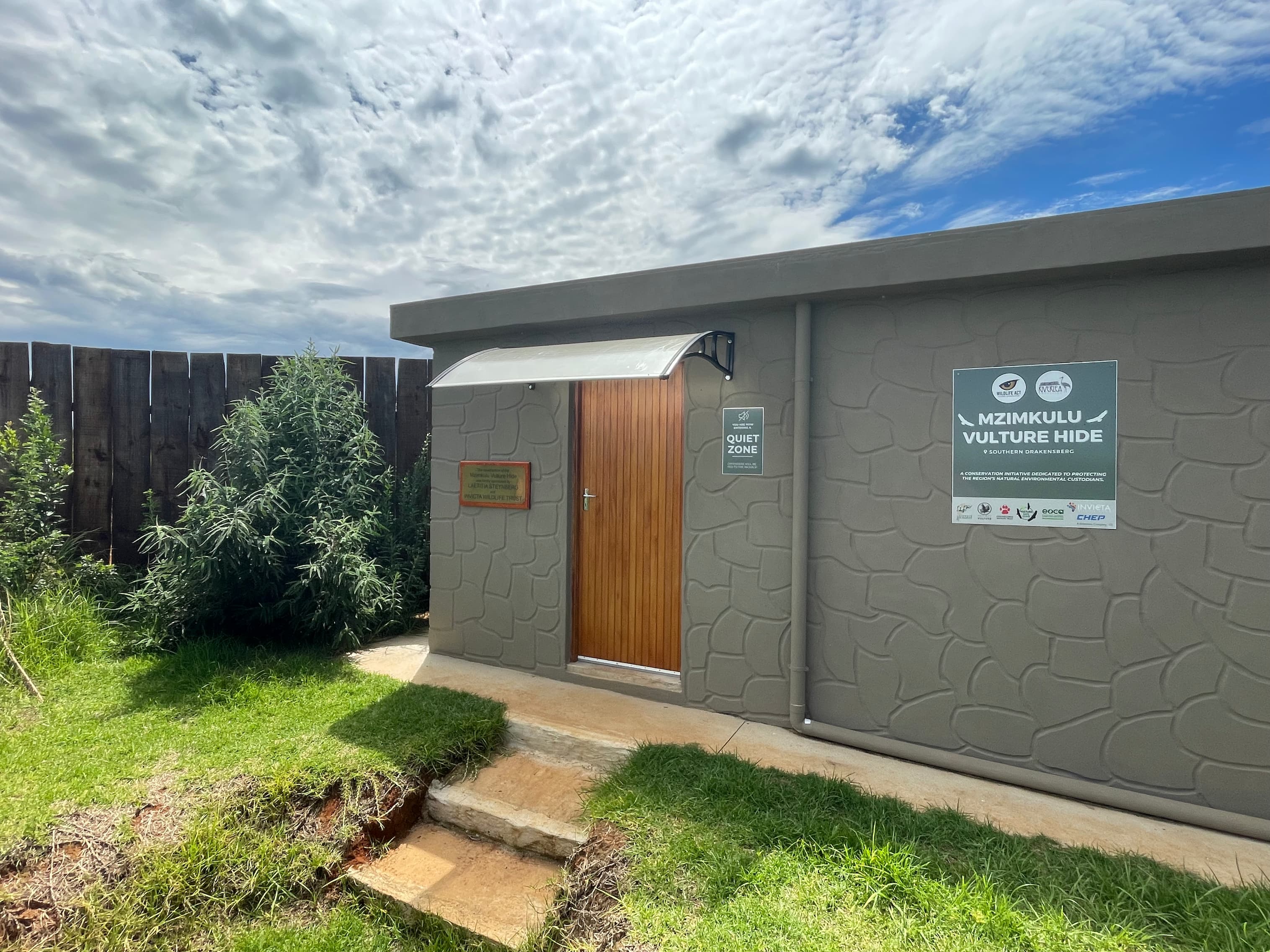
A core component of the program is the management and maintenance of Vulture-safe feeding sites. Volunteers assist in transporting uncontaminated carcasses to the Mzimkulu Vulture Hide safe feeding site and supporting its operation. These feeding sites are intentionally placed to provide a safe and sustainable supplementary food source for Vultures, reducing poisoning risks and supporting fledgling Vultures during food shortages.
At the feeding site, volunteers monitor Vulture activity visually and through camera traps. This includes maintaining camera trap systems, changing batteries and memory cards, and cataloguing footage for long-term monitoring. The Mzimkulu Vulture Hide, fitted with one-way glass, allows for close observation while ensuring minimal disturbance to the birds.
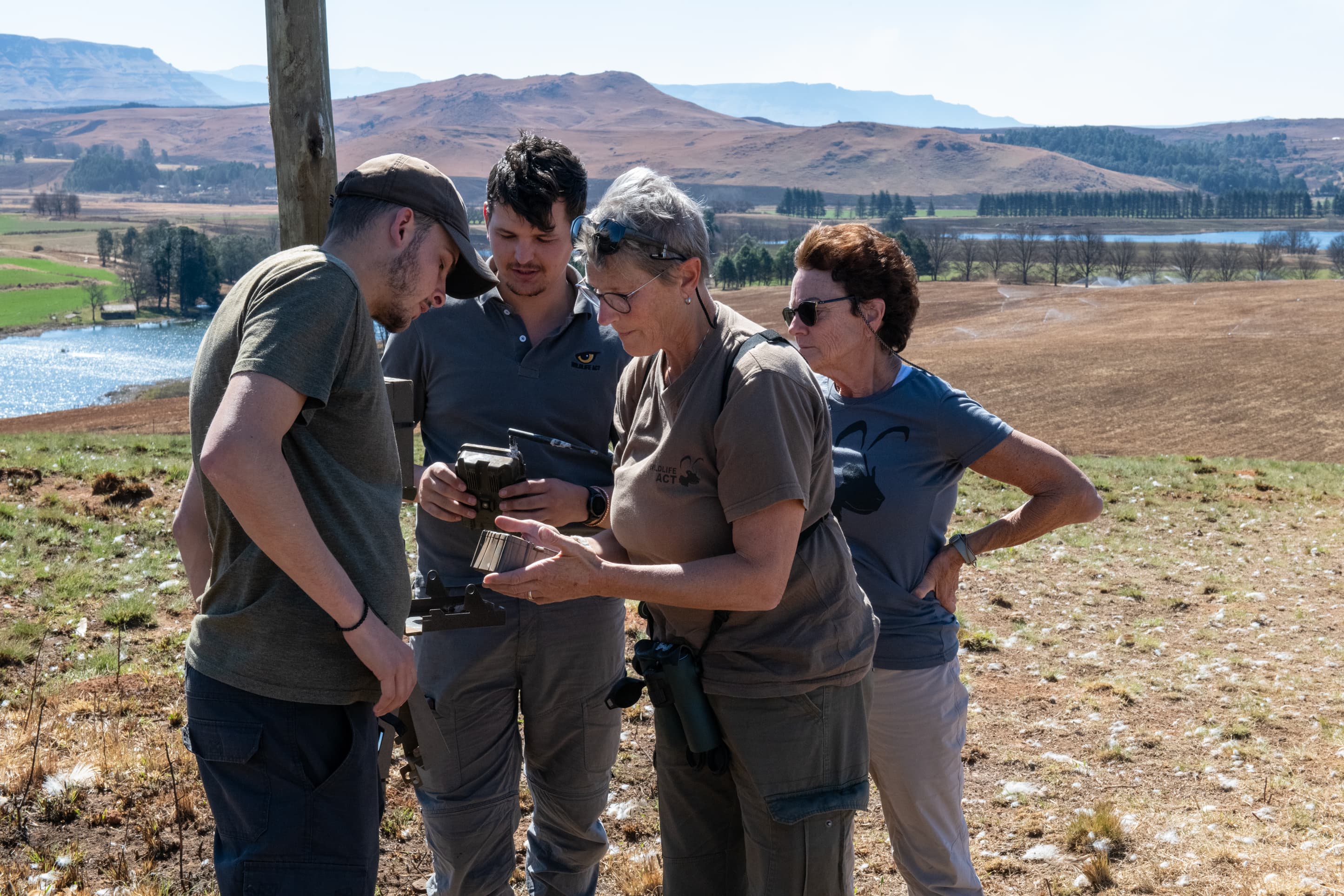
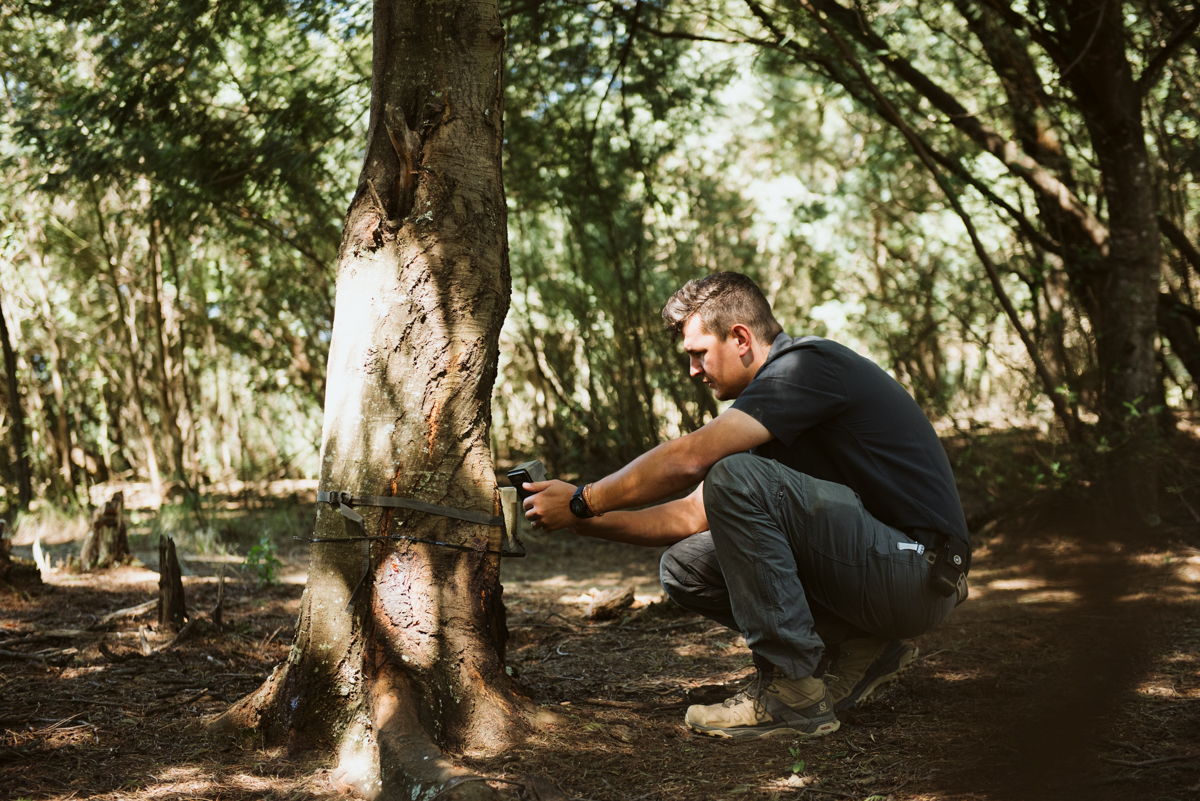
Volunteers also support a long-term remote camera trap survey conducted across the Maloti-Drakensberg Park World Heritage Site. This survey provides insight into ecosystem health and the status of multiple species within the landscape. Work includes scouting suitable locations, setting up and maintaining camera stations in remote areas, clearing vegetation where necessary, downloading footage, and ensuring accurate data recording.
Beyond direct Vulture conservation, volunteers assist with protected area boundary support. This includes responding to emergencies related to species concerns such as injuries, poisonings, or human-wildlife conflict, as well as supporting alien plant control in vulnerable areas. The program operates both within the World Heritage Site and in surrounding buffer zones, working collaboratively with local landowners and communities.
This is hands-on conservation in a rugged mountain environment. It often involves physical tasks, scenic mountain hikes, early mornings, and long days in the field. The work is practical, data-driven, and delivered within a structured conservation framework aligned with national Vulture recovery strategies.
During breeding season, every monitoring session, every feeding site check, and every recorded sighting contributes directly to the protection of one of Southern Africa’s most threatened raptors.
Supporting the Wider Conservation of the Maloti-Drakensberg Landscape
While the Southern Drakensberg Conservation Program places strong emphasis on the Regionally Critically Endangered Bearded Vulture, its impact extends far beyond a single species. The Maloti-Drakensberg Park World Heritage Site is one of South Africa’s largest protected areas, spanning over 240,000 hectares along the border with Lesotho. It shelters exceptional biodiversity, including over 2,000 plant species, more than 250 endemic plant species, nearly all of KwaZulu-Natal’s subalpine and alpine vegetation, and expansive high-altitude wetlands.
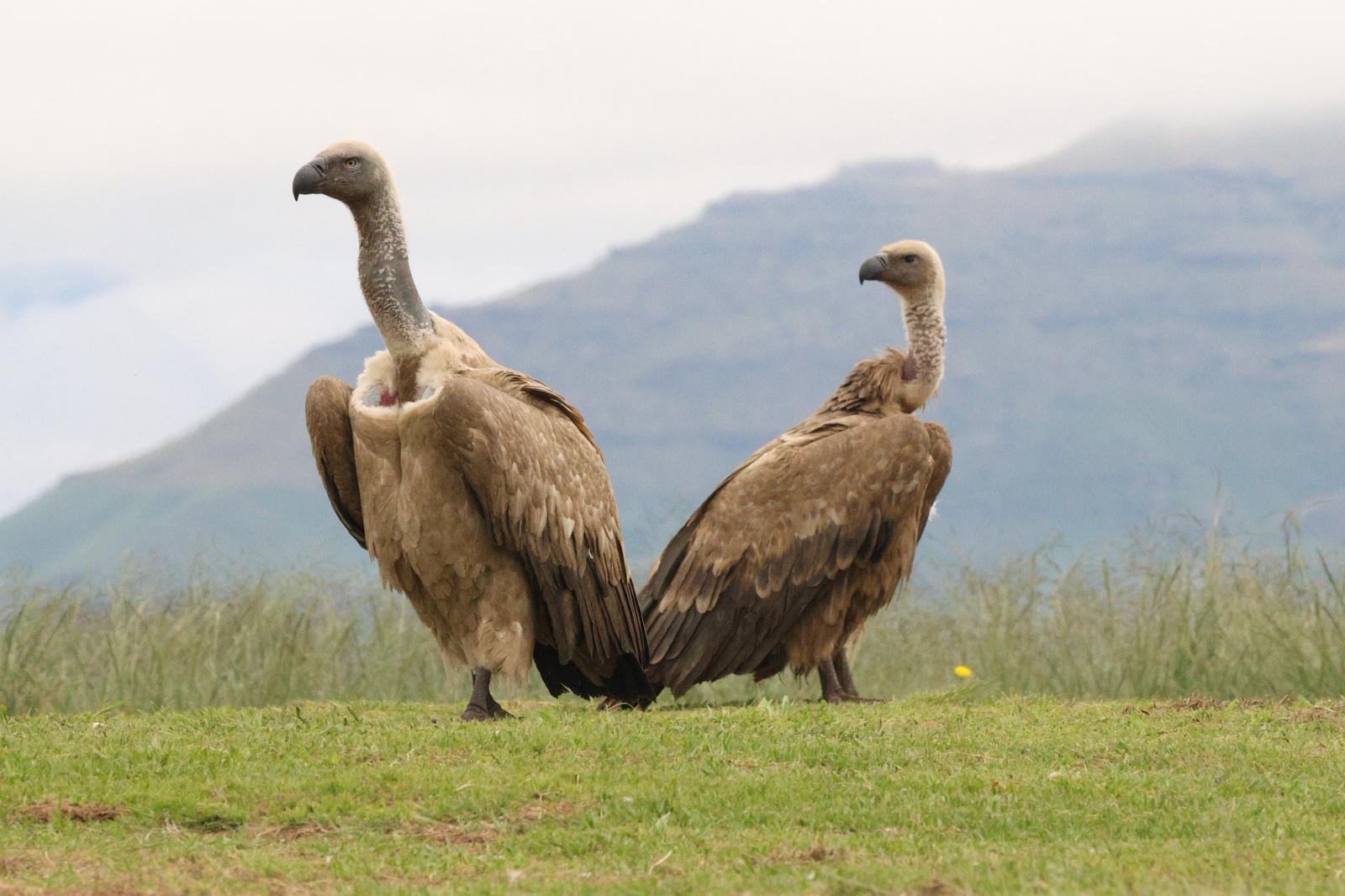
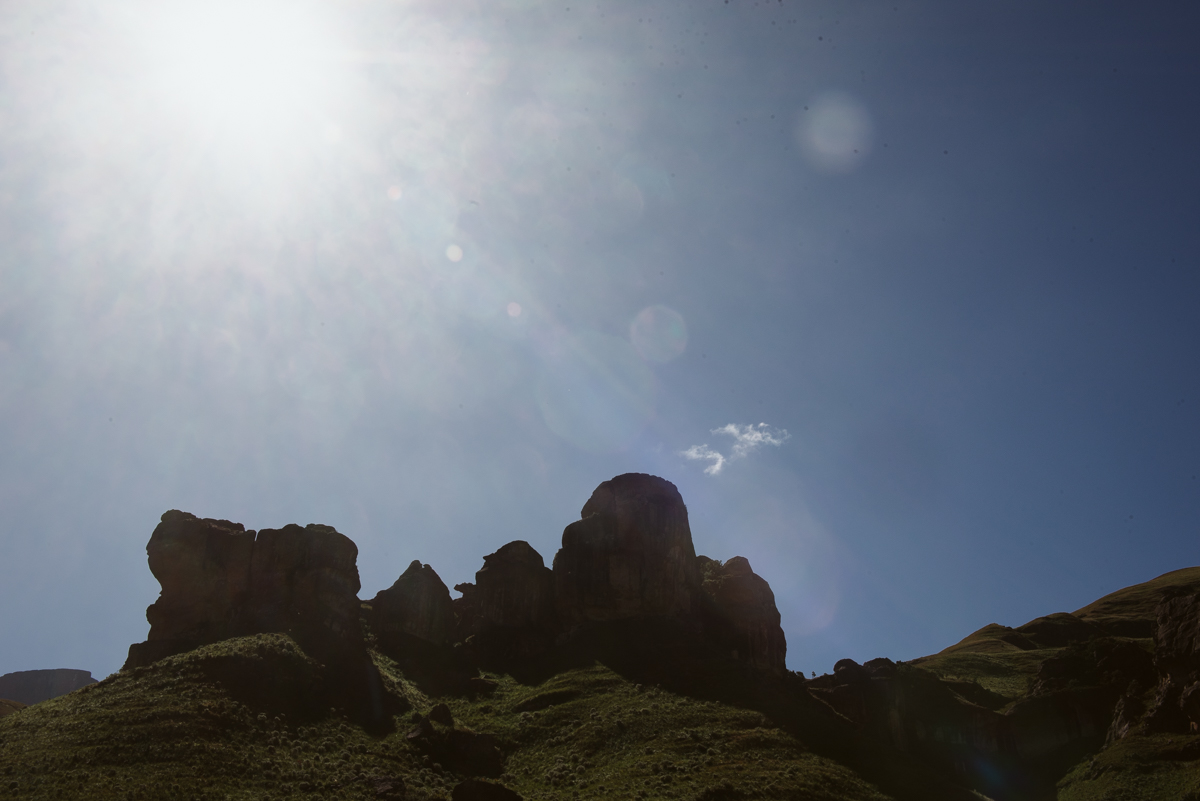
Recognised as an Important Bird Area, the region plays a crucial role in the Lesotho Highlands Endemic Bird Area. Its rugged cliffs, open grasslands, and high-altitude ecosystems provide essential habitat not only for Bearded Vultures, but also for the Vulnerable Cape Vulture and a range of regionally significant species.
The Cape Vulture remains one of the most important scavengers in Southern Africa. Although its population is larger than that of the Bearded Vulture, it continues to face serious threats, including poisoning, collisions with energy infrastructure, electrocution, and habitat pressures. Approximately 4,500 breeding pairs remain in South Africa. Maintaining stable breeding colonies and safe foraging areas in landscapes such as the Southern Drakensberg is essential to preventing further decline.
The program’s Vulture-safe feeding sites play a critical role in supporting both species. By providing uncontaminated carcasses in strategically managed locations, these sites reduce poisoning risk and provide supplementary food during periods of scarcity. Monitoring activity at these sites also strengthens understanding of local population health and feeding behaviour across species.
Beyond Vulture conservation, the long-term remote camera trap survey across the Maloti-Drakensberg Park provides insight into the broader health of the ecosystem. These surveys capture data on multiple species, helping to monitor biodiversity trends and inform conservation strategies within this UNESCO World Heritage Site. From large mammals to smaller carnivores and avifauna, the data contributes to understanding how species are utilising the landscape over time.
The program also supports conservation in surrounding buffer zones, working with local landowners and communities to monitor nests, manage feeding sites, and respond to conservation needs beyond protected area boundaries. This integrated approach reflects the reality that Vultures and other species move freely across landscapes, requiring coordinated management both inside and outside formally protected areas.
By supporting Vulture conservation, biodiversity monitoring, and protected area boundary efforts, the Southern Drakensberg Conservation Program contributes to the overall ecological stability of one of Southern Africa’s most important mountain systems.
Life at the Southern Drakensberg Conservation Program
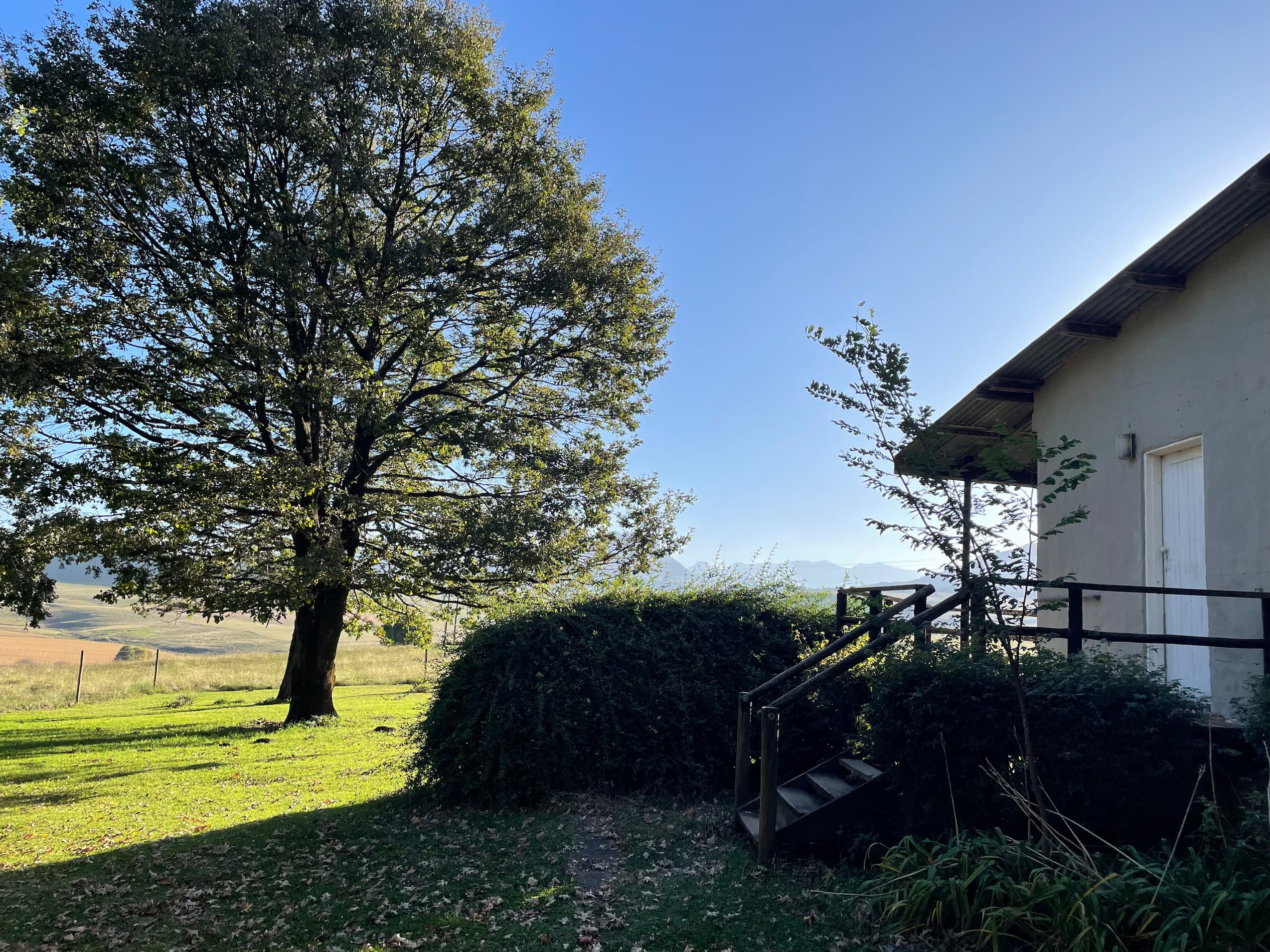
Volunteering in the Southern Drakensberg means living and working in a rugged mountain environment. The project is based in the buffer zone surrounding the Maloti-Drakensberg Park World Heritage Site, with volunteers staying in a farmhouse near Underberg. The setting is defined by dramatic peaks, rolling farmland, open skies, and rapidly changing mountain weather.
-2.jpg)
Accommodation is practical and comfortable, designed to support fieldwork rather than luxury. Volunteers live in shared spaces and are immersed in the rhythm of daily conservation operations. Being less isolated than some remote protected areas, the location allows for occasional trips into town, while still maintaining a strong focus on field-based conservation work.
Days typically begin early. Breeding season monitoring requires positioning at vantage points before thermal currents build and Vultures begin moving across the landscape. Some mornings involve hiking to observation points where vehicles become distant specks below. Once in position, long periods of observation follow. Patience is essential. A single confirmed nest exchange, where adult birds swap incubation duties, can make hours of waiting worthwhile.
Other days may focus on maintaining the Vulture-safe feeding site at the Mzimkulu Vulture Hide. Volunteers assist with transporting and distributing feed, monitoring Cape and Bearded Vulture activity, recording data, and managing camera trap systems. The hide, fitted with one-way glass, allows for close observation while ensuring minimal disturbance to the birds.
Work extends beyond Vultures alone. Camera trap checks require hiking through open grassland, navigating rocky slopes, and working in high-altitude conditions. Vegetation clearing, memory card retrieval, data cataloguing, and equipment maintenance form part of daily responsibilities. Afternoon tasks often include data entry, equipment checks, and planning for the next day’s monitoring priorities.
Mountain weather is unpredictable. Volunteers must prepare for intense sun, strong winds, sudden rain, and near-freezing winter conditions. Physical resilience and adaptability are important. The work can be dirty, messy, and demanding, but such is the nature of working with Vultures and contributing to their protection.
The reward is not guaranteed sightings or constant activity. It is the quiet satisfaction of contributing to long-term conservation goals. Watching a Bearded Vulture soar above the cliffs, observing a Cape Vulture kettle forming over the feeding site, or confirming nest activity after hours of observation carries weight because it forms part of a structured recovery effort.
Life at the Southern Drakensberg Conservation Program is defined by purpose, collaboration, and direct engagement with one of Southern Africa’s most important mountain ecosystems.
Frequently Asked Questions
When is Bearded Vulture breeding season in the Southern Drakensberg?
The primary breeding season monitoring period runs from May to November. This is when Bearded Vultures lay eggs, incubate, and raise chicks on cliff ledges within the Maloti-Drakensberg mountain range. It is the most intensive monitoring period of the year and the most critical time for nest observations.
How fit do I need to be to join the Southern Drakensberg Conservation Program?
A moderate to high level of fitness is required. The project involves hiking in mountainous terrain, sometimes at altitude, and working in variable weather conditions. Volunteers may carry equipment to vantage points and spend extended periods in the field. Physical resilience and comfort outdoors are important.
What will I be doing during my placement?
Volunteers assist with Vulture nest monitoring, maintaining Vulture-safe feeding sites, supporting long-term camera trap surveys, and helping with protected area boundary support. Tasks include observation sessions, data recording, camera trap maintenance, transporting feed, vegetation clearing, and equipment upkeep. Work is practical, structured, and aligned with national Vulture recovery strategies.
Will I handle or interact directly with Vultures?
No. Wildlife ACT follows strict ethical monitoring protocols. Volunteers do not handle Vultures or conduct close interactions. Nest monitoring is done from safe distances using optics, and feeding site observations are conducted from the hide to ensure minimal disturbance. In very rare circumstances, volunteers may assist with fitting monitoring devices to birds.
What is a Vulture-safe feeding site?
A Vulture-safe feeding site is an intentionally managed site that provides uncontaminated carcasses as a safe and sustainable supplementary food source. These sites reduce poisoning risks and support Vultures during food shortages. At the Southern Drakensberg Conservation Program, volunteers assist with maintaining and monitoring the Mzimkulu Vulture Hide feeding site.
What species will I work with besides the Bearded Vulture?
In addition to the Regionally Critically Endangered Bearded Vulture, volunteers support conservation efforts for the Vulnerable Cape Vulture. The long-term camera trap survey also monitors a range of other species within the Maloti-Drakensberg Park World Heritage Site, contributing to broader biodiversity monitoring in the region.
Where is the project based?
The project operates in and around the Maloti-Drakensberg Park World Heritage Site in KwaZulu-Natal, near Underberg. Volunteers stay in a farmhouse located in the buffer zone surrounding the protected area.
How long can I join for?
Placements are structured in two-week cycles. Volunteers can join for a single cycle or extend for multiple cycles, depending on availability. Longer stays during breeding season allow for deeper involvement in monitoring and greater continuity of fieldwork.
How does this work contribute to national conservation efforts?
Wildlife ACT is a founding member of the Bearded Vulture Task Force and a contributor to the Biodiversity Management Plan for South African Vultures published in 2024. Data collected through nest monitoring, feeding site management, and biodiversity surveys contributes to the Southern African Bearded Vulture Recovery Strategy and broader Vulture conservation planning.
How do I apply?
Prospective volunteers complete an online application through Wildlife ACT. A member of the reservations team will then make contact to discuss availability, placement details, and suitability for the project. The process ensures volunteers are well-prepared for the physical and practical demands of the program.
How to Get Started with Wildlife ACT
If you are ready to contribute to the protection of the Regionally Critically Endangered Bearded Vulture during its most critical season, the next step is simple.
Wildlife ACT placements at the Southern Drakensberg Conservation Program operate in structured two-week cycles. This ensures continuity of monitoring, consistency in data collection, and meaningful integration into the field team. Volunteers are welcome to join for a single cycle or extend for multiple cycles, depending on availability and commitment.
To begin the process, complete the online application through Wildlife ACT’s website. Once submitted, a member of the reservations team will contact you to discuss availability, placement details, and suitability for the project. This conversation ensures that you are fully prepared for the physical demands, field conditions, and conservation responsibilities of the program.
The Southern Drakensberg Conservation Program works with small teams of up to three volunteers at a time. This allows for focused training, hands-on participation, and direct involvement in daily monitoring activities. Spaces are limited, particularly during the peak breeding season from May to November.
By joining during breeding season, you become part of a structured recovery effort aligned with national Vulture conservation strategies and the Southern African Bearded Vulture Recovery Strategy. Your contribution supports nest monitoring, feeding site management, biodiversity surveys, and the protection of one of Southern Africa’s most threatened raptors in its final regional stronghold.
The future of the Southern African Bearded Vulture depends on consistent, science-based conservation delivered across this mountain landscape. If you are prepared for purposeful fieldwork in a high-altitude environment and want to contribute to measurable conservation outcomes, the Southern Drakensberg is ready for you.
.jpeg)