Header image credit: Casey Pratt / Love Africa Marketing
Mountain ecosystems are among the most ecologically important landscapes on Earth, supporting high levels of biodiversity, endemism, and ecological complexity. Their steep environmental gradients create diverse habitats over short distances, allowing a wide range of species to coexist.
The Maloti-Drakensberg mountain system, spanning South Africa and Lesotho, is one of Africa’s most significant high-altitude ecosystems. It provides critical habitat for species such as the Bearded Vulture and Cape Vulture, while also supporting a wide range of grassland, wetland, and montane biodiversity. As environmental pressures increase, conservation monitoring plays a central role in understanding and protecting these ecosystems.
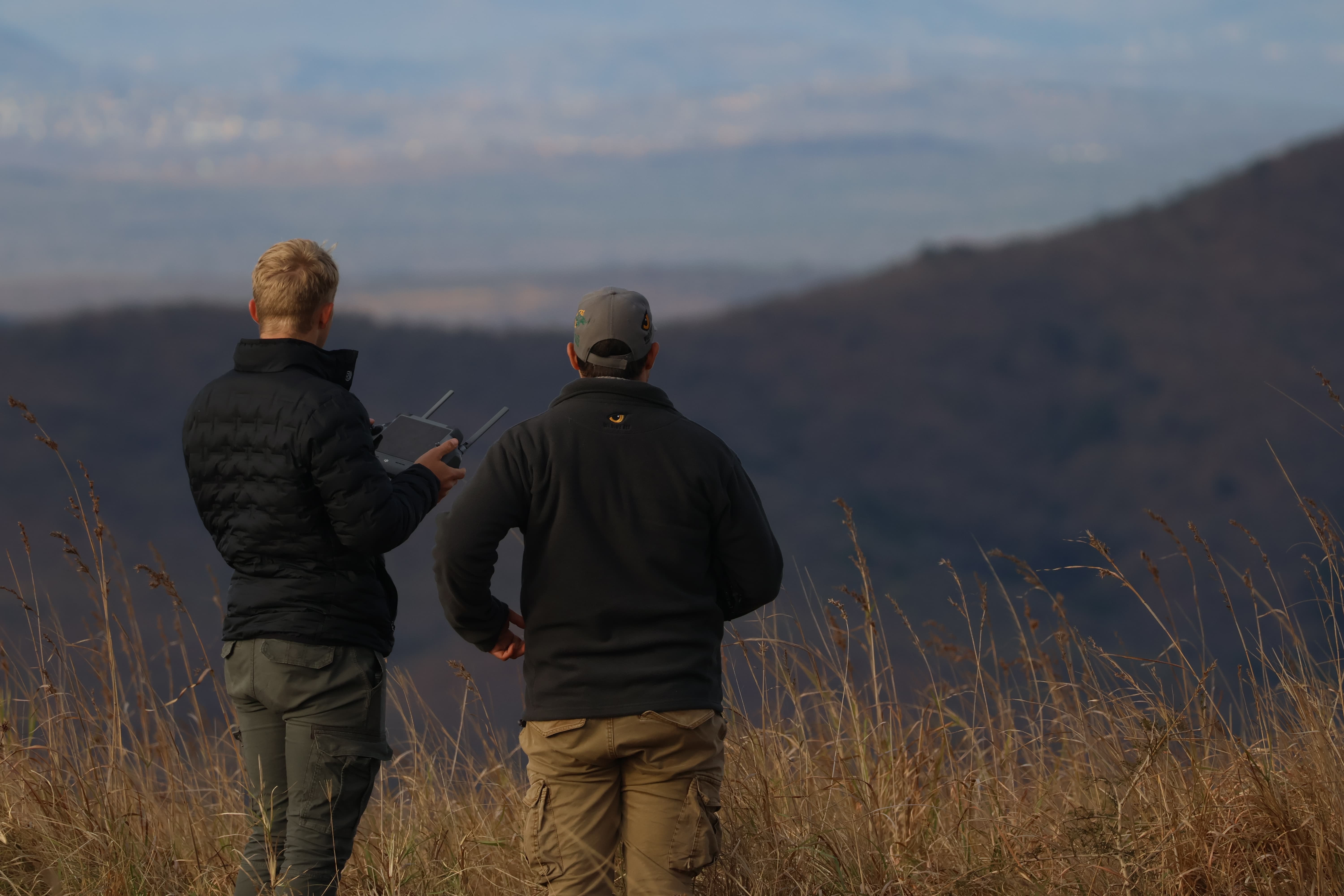
Wildlife ACT has a team of professional conservationists that is based in this area. Up to three wildlife conservation volunteers at a time may join the project, assisting with a variety of important tasks including data collection, daily monitoring, conducting field surveys, and supporting ongoing research.
The Maloti–Drakensberg: One of Southern Africa’s Most Important Mountain Ecosystems
.jpg)
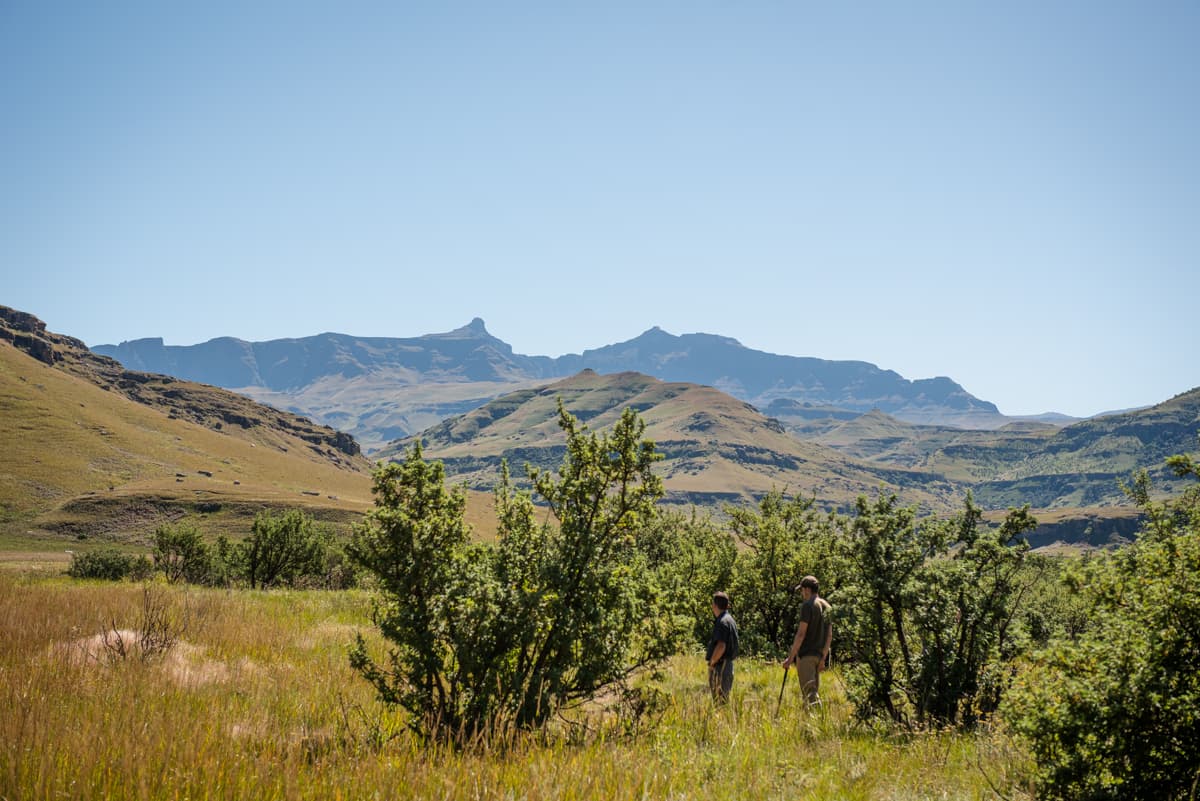
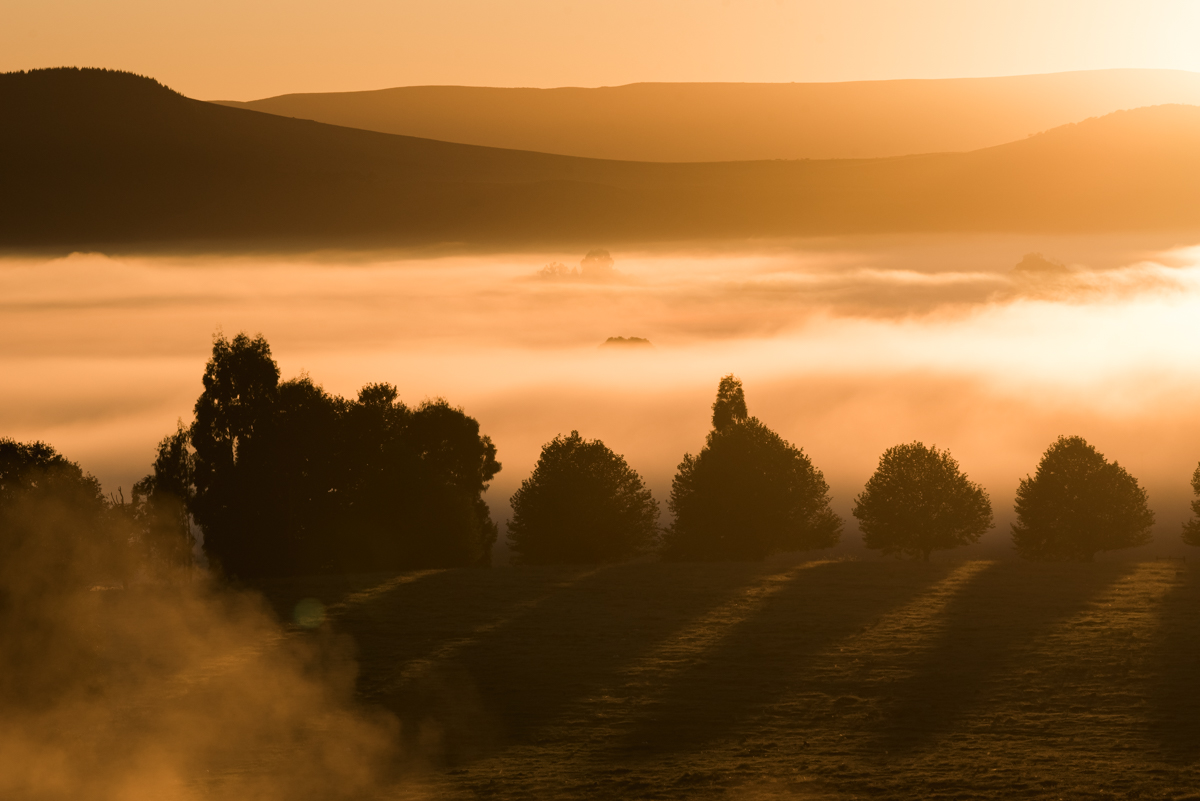
The Maloti–Drakensberg mountain range forms a dramatic escarpment stretching across eastern South Africa and Lesotho, with peaks rising above 3,000 metres. This high-altitude landscape is characterised by steep cliffs, rolling grasslands, and deep valleys that create a mosaic of habitats.
Much of the region is protected within the Maloti–Drakensberg Park World Heritage Site, recognised for both its biodiversity and cultural significance. However, like many mountain ecosystems, the site faces growing pressures from climate change, land use impacts, and invasive species, which continue to influence its long-term ecological integrity.
Importantly, the Drakensberg functions as a connected ecological landscape. Wildlife moves across protected areas, communal lands, and private properties, making landscape-level conservation essential. This connectivity allows species to access breeding sites, feeding areas, and seasonal habitats, reinforcing the region’s importance as a conservation stronghold.
Through Wildlife ACT’s Southern Drakensberg Conservation Project, volunteers contribute directly to protecting this landscape. Working alongside Vulture conservation experts, participants assist with nest monitoring to support breeding success, camera trap surveys, Vulture Safe Feeding Site maintenance, and, where required, emergency responses to mitigate threats such as poisoning and electrocution. This hands-on conservation volunteering experience in the Drakensberg provides a practical way to support long-term ecosystem monitoring while gaining real field experience.
The Role of the Drakensberg in Supporting Vulture Populations
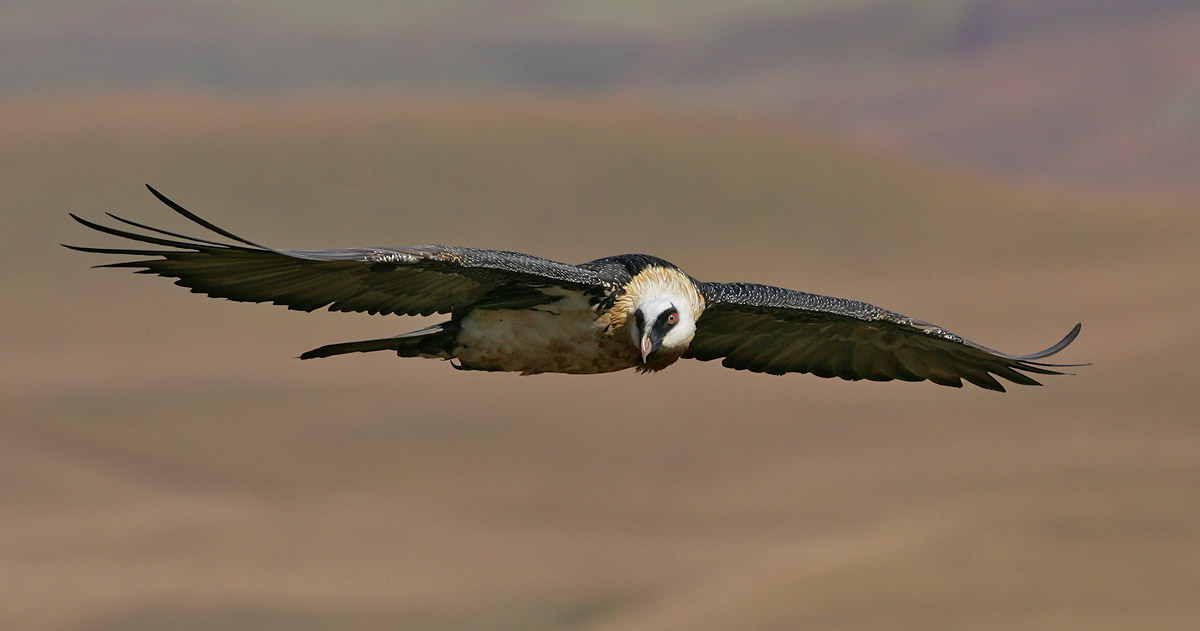
The Drakensberg is one of the most important regions for Vulture conservation in southern Africa. Its steep cliffs provide ideal nesting sites for cliff-nesting species such as the regionally Critically Endangered Bearded Vulture and the Vulnerable Cape Vulture.
The open, high-altitude landscapes surrounding these cliffs are well suited to soaring birds, allowing Vultures to travel efficiently across large areas in search of food. These conditions, combined with suitable foraging habitat, make the region critical for both breeding and survival.
Stable breeding sites are particularly important for Vultures, which are slow-breeding birds and rely on consistent nesting success to maintain their populations. In a region where only a limited number of breeding pairs remain, the Drakensberg represents a vital refuge for these species.
Download a free poster of South Africa’s Vulture species and learn how to identify these essential scavengers in the wild.
A Landscape That Supports Many Species
While Vultures are a focal point of conservation in the Drakensberg, the region supports a wide range of other species adapted to mountain environments. Birdlife is particularly diverse, with species such as the southern bald ibis and various grassland specialists relying on these high-altitude habitats.
The ecosystem also supports mammals such as serval, caracal, and aardvark, as well as a variety of smaller and less visible species. These species are connected through complex ecological relationships, from predator-prey dynamics to nutrient cycling.
Vultures themselves play a crucial ecological role as scavengers, helping to remove carcasses and recycle nutrients back into the ecosystem. Protecting them contributes to the overall health and stability of the ecosystem.
Conservation Challenges Facing Mountain Ecosystems
(1).jpg)
Despite their importance, mountain ecosystems like the Drakensberg face increasing conservation pressures. Land use changes, including agriculture and infrastructure development, can alter habitat availability and disrupt ecological processes.
Climate change is also expected to have significant impacts in mountain systems, where species are often restricted to narrow elevation ranges and have limited ability to shift habitats. Changes in temperature and rainfall patterns may affect breeding cycles, food availability, and species distribution.
Many species including Vultures are at risk due to human activities as well as human development and encroachment. It has been found that human activities, including poisoning (either intentional or unintentional), as well as power line collisions, are likely to be having a considerable effect on survival in this small and declining Bearded Vulture population.
Why Long-Term Monitoring Is Essential in Mountain Landscapes
Studying wildlife in mountainous environments presents distinct challenges. The terrain is difficult to access, weather conditions are unpredictable, and species often occur at low densities across large areas.
For this reason, long-term monitoring is essential. Repeated observations over time allow conservationists to track population trends, monitor breeding success, and detect changes that may not be visible in short-term studies.
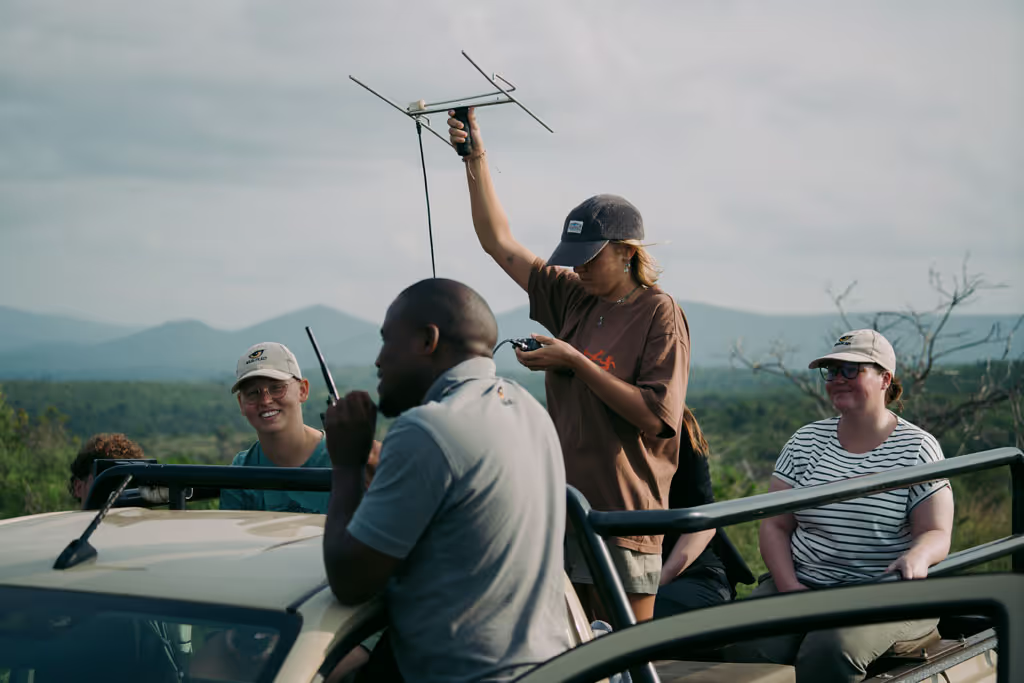
Monitoring also helps build an understanding of how ecosystems change across seasons. In dynamic environments like the Drakensberg, data collected throughout the year is critical for interpreting wildlife behaviour and environmental shifts. As a volunteer, you will assist Wildlife ACT field monitors with essential daily monitoring work such as data collection and camera trap maintenance.
Without consistent monitoring, conservation efforts risk being based on incomplete information. With it, decisions can be grounded in evidence and adapted as conditions change.
The Wildlife ACT Southern Drakensberg Conservation Project
.jpg)
The Wildlife ACT Southern Drakensberg Conservation Project operates within this complex and important landscape, contributing directly to its protection through structured monitoring and conservation work.
The project focuses on monitoring Vulture populations, including nest observation, movement tracking, and feeding site management. It also supports broader biodiversity monitoring through camera trap surveys and field observations, helping to build a comprehensive understanding of the ecosystem.
Data collected through this work contributes to regional conservation initiatives, including collaborations with organisations such as the Bearded Vulture Task Force and provincial conservation authority Ezemvelo KZN Wildlife. By generating reliable, long-term datasets, the project supports conservation planning and management across the landscape.
Supporting Conservation in the Drakensberg Through Volunteering
Volunteers play an important role in supporting conservation work in the Drakensberg. By assisting with monitoring programs, they contribute to data collection, wildlife observation, and ecological research.
Working alongside experienced field teams, their involvement supports ongoing conservation efforts while providing valuable insight into how mountain ecosystems function.
For those interested in conservation, this offers a practical opportunity to gain experience in field-based monitoring and contribute to real-world conservation outcomes.
Here’s an idea of what your daily life as a volunteer at our Vulture Conservation Project in the Southern Drakensberg will look like.
How to Join the Wildlife ACT Southern Drakensberg Project
Joining the Southern Drakensberg Conservation Project is a straightforward process. Applications can be made directly through Wildlife ACT’s website, where you can review project details, availability, and requirements.
By participating, you contribute directly to conservation work in one of South Africa’s most important ecosystems, supporting the monitoring and protection of Endangered Vultures.
Learn more or apply here.
Frequently Asked Questions About Drakensberg Conservation
Why is the Drakensberg important for wildlife conservation?
The Drakensberg supports unique biodiversity, provides critical habitat for threatened species, and functions as an important ecological corridor across southern Africa.
What species live in the Drakensberg mountains?
The region supports species such as the Bearded Vulture, Cape Vulture, Southern Bald Ibis, Serval, and a range of grassland and montane specialists.
Why are Vultures important in mountain ecosystems?
Vultures play a key role in nutrient cycling by removing carcasses, helping to maintain ecosystem health and reduce disease risk.
How does monitoring help protect wildlife?
Monitoring provides data on population trends, breeding success, and threats, allowing conservationists to make informed decisions and respond to changes over time.
Can volunteers support conservation in the Drakensberg?
Yes. Volunteers assist with monitoring programmes, data collection, and biodiversity surveys, contributing directly to conservation efforts in the region.
References
BIOPAMA. (2020) Maloti-Drakensberg Park – Conservation Outlook Assessment. Available at: https://rris.biopama.org/sites/default/files/2020-12/Maloti-Drakensberg%20Park%20-%202020%20COA%20-%20en.pdf
Krüger, S.C. and Amar, A. (2017) Ecology and management of the Bearded Vulture in southern Africa. Available at https://projectvulture.org.za/wp-content/uploads/2021/12/Ecology-and-management-of-BV_Krueger-and-Amar.pdf
IUCN. (n.d.) Maloti-Drakensberg Park – World Heritage Outlook. Available at: https://worldheritageoutlook.iucn.org/explore-sites/maloti-drakensberg-park
TFCA Portal. (n.d.) Maloti-Drakensberg Transfrontier Conservation Area. Available at: https://tfcaportal.org/tfcas/maloti-drakensberg-transfrontier-conservation-area
UNESCO World Heritage Centre. (n.d.) Maloti-Drakensberg Park. Available at: https://whc.unesco.org/en/list/985
Wildlife ACT. (n.d.) Nature’s clean-up crew: The environmental importance of vultures and the urgent need for their conservation. Available at: https://www.wildlifeact.com/blog/natures-clean-up-crew-the-environmental-importance-of-vultures-and-the-urgent-need-for-their-conservation
Wildlife ACT. (n.d.) Vulture conservation and volunteer programme in South Africa. Available at: https://www.wildlifeact.com/volunteer/program/vulture-conservation-south-africa
Wits University. (2022) Climate change to impact mountains on a global scale. Available at: https://www.wits.ac.za/news/latest-news/research-news/2022/2022-11/climate-change-to-impact-mountains-on-a-global-scale.html

.jpeg)