Interest in wildlife conservation volunteering has grown rapidly in recent years. Travellers, students, and early career conservationists are increasingly seeking opportunities to contribute meaningfully to wildlife protection while gaining experience in the field.
However, not all wildlife volunteer programs contribute equally to conservation outcomes. Some programs prioritise wildlife encounters or tourism experiences rather than genuine conservation objectives. Ethical wildlife conservation volunteering takes a different approach. It focuses on supporting long-term conservation programs, contributing to scientific monitoring, and protecting ecosystems in ways that are grounded in research and responsible management.
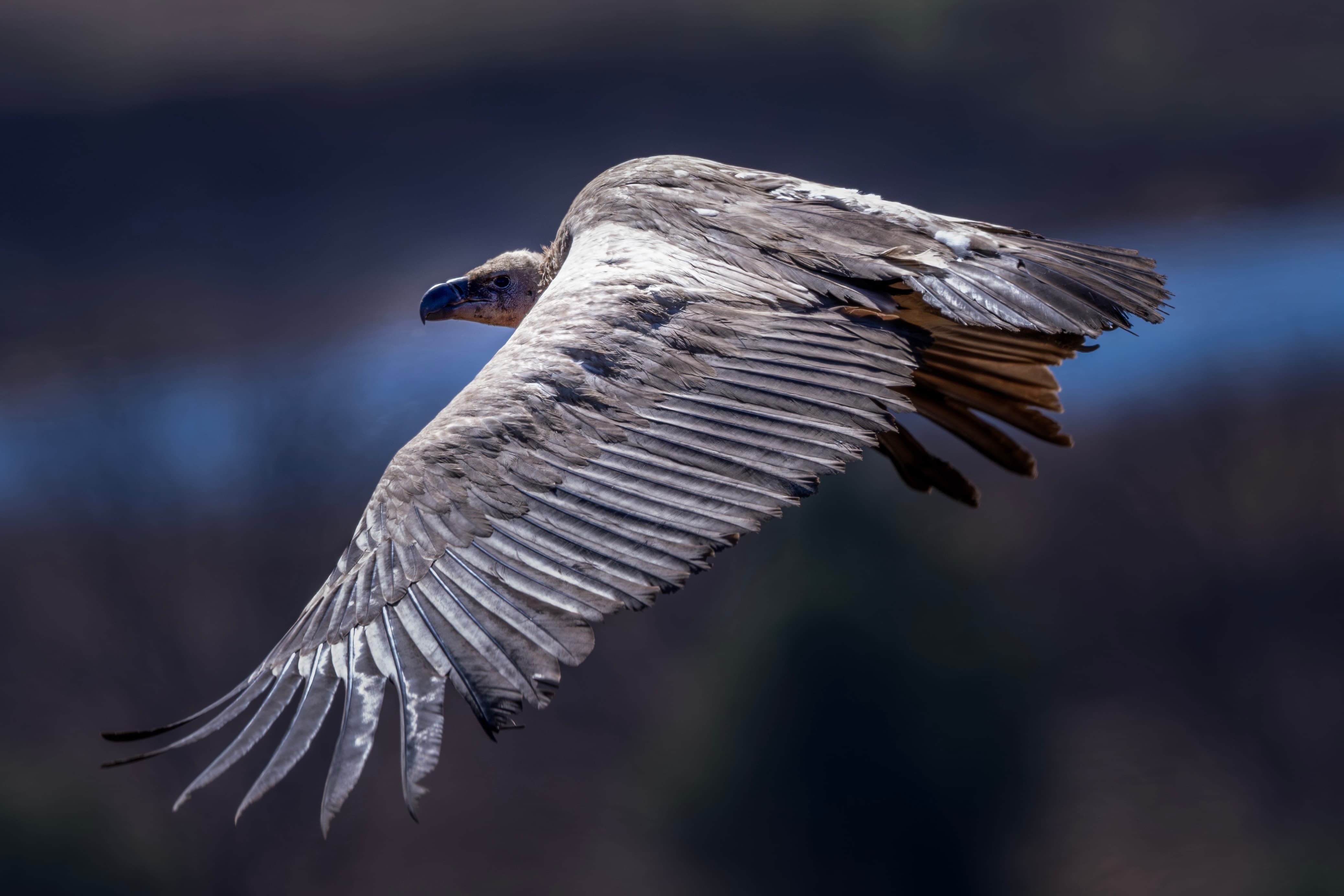
The Southern Drakensberg Conservation Program offers an example of what responsible wildlife conservation volunteering can look like in practice. Located within the Maloti–Drakensberg landscape of KwaZulu-Natal, this program focuses on the long-term monitoring and protection of threatened Vulture species and the broader mountain ecosystem. The region is one of the most important remaining strongholds for cliff-nesting Vultures in southern Africa, supporting species such as the Regionally Critically Endangered Bearded Vulture and the Vulnerable Cape Vulture.
Rather than being designed around tourism experiences, the program is structured around long-term conservation priorities. Volunteers support professional conservation teams through monitoring work, field observations, and data collection that contribute directly to regional conservation efforts.
Understanding how programs like this operate helps illustrate what ethical wildlife conservation volunteering should look like in practice.
Why Ethical Wildlife Conservation Volunteering Matters
Wildlife conservation tourism has the potential to support meaningful conservation work when it is designed responsibly. Volunteers can contribute valuable support to conservation teams working in remote landscapes, helping increase monitoring capacity and supporting long-term ecological research.
However, conservation volunteering must always prioritise wildlife protection and ecosystem integrity. Ethical programs are guided by ecological objectives rather than visitor experiences. Their primary purpose is to support conservation outcomes, not to provide guaranteed wildlife encounters or entertainment.
Responsible wildlife conservation programs operate within clearly defined conservation frameworks. These frameworks identify priority species, conservation threats, and long-term monitoring objectives. Field activities are then designed to contribute to these goals through structured ecological research and species monitoring.
When volunteers join these programs, they are integrated into real conservation work that already exists. Their role is to assist trained conservation practitioners with monitoring tasks, data collection, and field logistics that strengthen ongoing conservation efforts.
By contributing to programs built on strong scientific foundations, volunteers help support conservation outcomes that extend far beyond the duration of their stay.
How Responsible Wildlife Conservation programs Are Designed
Ethical wildlife conservation volunteering begins with the design of the conservation program itself. Responsible projects are built around conservation priorities rather than tourism experiences. Volunteers are then integrated into activities that support long-term ecological monitoring and conservation objectives.
Conservation Objectives Guide the program
Responsible conservation programs begin with clearly defined ecological goals. In the Southern Drakensberg, these objectives focus primarily on the monitoring and protection of threatened Vulture populations and the conservation of the broader mountain ecosystem.
The Maloti–Drakensberg landscape provides critical nesting cliffs and expansive foraging areas for both Bearded Vultures and Cape Vultures. With fewer than fifty to 100 known breeding pairs of Bearded Vultures remaining in the region, the protection of this landscape is essential for the species’ long-term survival.
Conservation activities in the region therefore focus on understanding Vulture breeding success, monitoring nest sites, and supporting initiatives that help maintain safe feeding opportunities within the landscape.
Projects Are Embedded in Long-Term Conservation Work
Ethical conservation programs contribute to conservation initiatives that operate over many years. Long-term monitoring allows conservation practitioners to identify changes in wildlife populations, detect emerging threats, and develop management strategies that support species recovery.
In the Southern Drakensberg, monitoring programs include the observation of active and historic Vulture nesting sites, the management of safe supplementary feeding sites, and the use of remote camera trap surveys to better understand wildlife presence and ecosystem health across the landscape.
These activities form part of a broader conservation effort led by Wildlife ACT in collaboration with the Drakensberg Conservation Initiative and Ezemvelo KZN Wildlife. The program also works alongside research partners such as the University of KwaZulu-Natal, ensuring that monitoring data contributes directly to conservation management and policy decisions within the World Heritage Site.
Scientific Monitoring Shapes Daily Fieldwork
In responsible conservation programs, daily field activities are guided by structured monitoring protocols. These protocols ensure that wildlife observations and ecological data are collected consistently and accurately.
Field teams conduct regular nest observations during the Vulture breeding season, monitor activity at supplementary feeding sites, and maintain remote camera trap stations placed throughout the landscape. Data collected during these activities contributes to long-term datasets that help conservation teams track population trends and understand how species are using the landscape.
This approach ensures that conservation work remains evidence-based and that management decisions are informed by reliable ecological data.
Volunteers Support Professional Conservation Teams
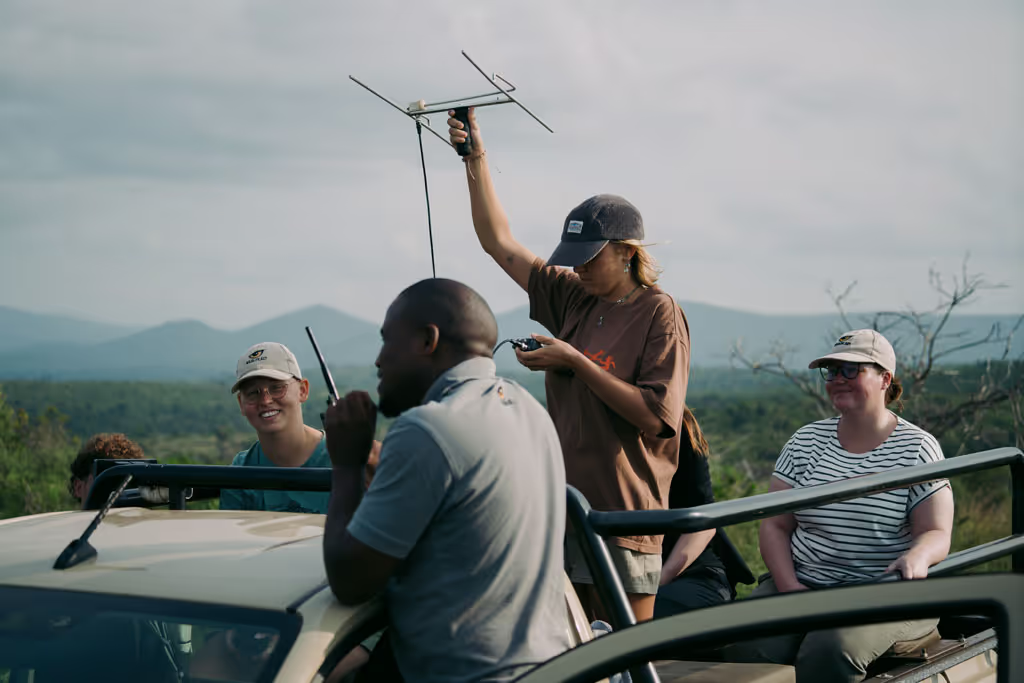
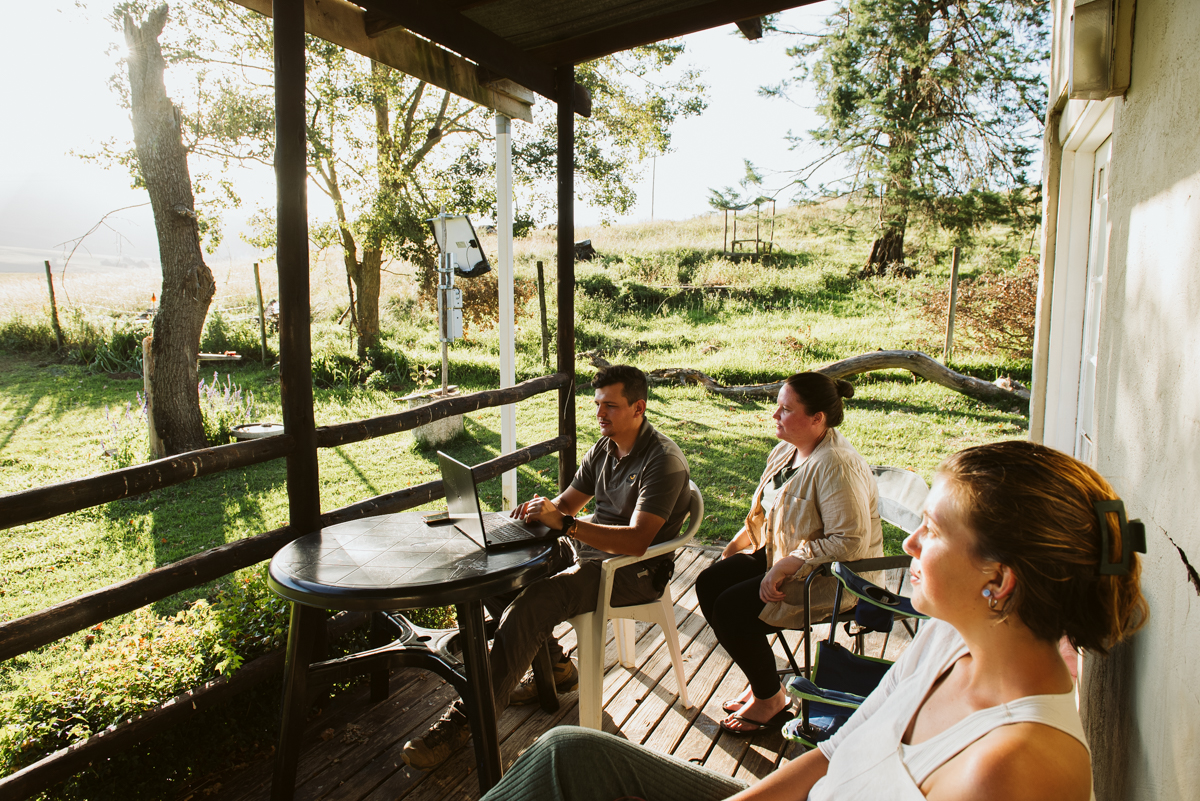
Volunteers play an important role in strengthening the capacity of conservation teams working in remote landscapes. In the Southern Drakensberg, participants work alongside Wildlife ACT’s Vulture conservation team and assist with field observations, monitoring tasks, and data recording.
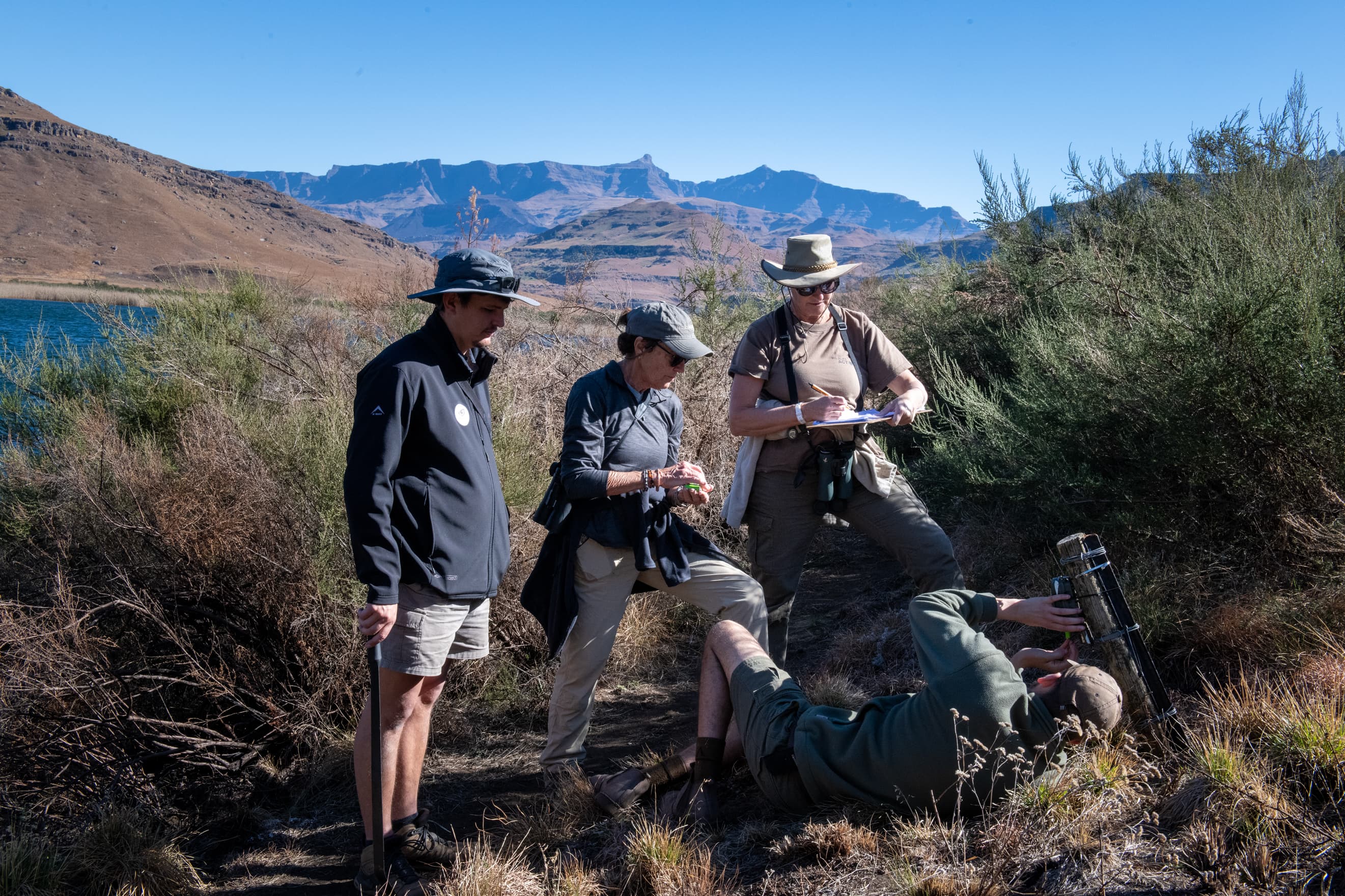
Activities may include hiking to remote nest observation sites, helping maintain camera trap stations, assisting with monitoring at safe Vulture feeding sites, and supporting field logistics. Volunteers also help catalogue photographic records from camera traps and feeding sites, contributing to long-term monitoring datasets.
By supporting trained conservation practitioners in the field, volunteers help expand the monitoring capacity of conservation programs operating in large and often difficult-to-access mountain landscapes.

What Responsible Conservation Work Looks Like in the Drakensberg
Responsible conservation work in the Southern Drakensberg is shaped by ecological priorities rather than visitor experiences. The program focuses on strengthening conservation capacity across a vast and often difficult-to-access mountain landscape that supports important populations of threatened Vulture species and a wide range of other wildlife.
Fieldwork in the region centres on monitoring wildlife populations, protecting key habitats, and supporting long-term ecological research. The Southern Drakensberg Conservation Program operates within the Maloti–Drakensberg Park World Heritage Site and surrounding buffer areas, a landscape recognised internationally for its ecological and cultural significance.
Within this environment, conservation teams focus on understanding how species use the landscape, identifying emerging threats, and supporting initiatives that protect key wildlife populations. Monitoring Vulture breeding activity, managing safe feeding sites, and maintaining long-term camera trap surveys are all part of building a clearer picture of ecosystem health in the region.
Importantly, these conservation activities are not temporary projects designed for visitors. They form part of ongoing conservation programs that operate year after year. Volunteers join these programs to assist conservation teams already working in the region, contributing additional monitoring capacity and supporting long-term research efforts.
Why Monitoring Is Central to Ethical Conservation Work
Monitoring is one of the most important tools available to conservation practitioners. Without reliable data, it becomes extremely difficult to understand how wildlife populations are changing or whether conservation interventions are working.
In the Southern Drakensberg, monitoring focuses particularly on Vulture populations and the broader health of the mountain ecosystem. Observing nesting sites during the breeding season helps conservation teams track reproductive success and identify potential threats to nesting pairs. These observations require long hours of careful monitoring, often from distant vantage points that allow researchers to observe Vulture behaviour without disturbing the birds.
Safe feeding sites also play an important role in monitoring and conservation. At the Mzimkulu Vulture Hide, conservation teams manage a Vulture-safe feeding site that provides controlled supplementary food sources for scavenging birds. Monitoring activity at these feeding sites helps researchers understand how Vultures use the landscape and provides opportunities to document population trends over time.
Remote camera trap surveys complement these efforts by providing additional insights into the wider ecosystem. Camera traps positioned throughout the landscape record the presence of various species, helping conservation teams build long-term datasets that reveal patterns of wildlife activity and ecosystem health.
Together, these monitoring efforts contribute to a deeper understanding of the Maloti–Drakensberg ecosystem and provide valuable information that informs conservation planning and management decisions.
Ethical Wildlife Observation in Mountain Ecosystems
Observing wildlife responsibly is a fundamental principle of ethical conservation work. In sensitive environments such as the Drakensberg mountains, wildlife observation must be conducted in ways that minimise disturbance to animals and their habitats.
Vulture nesting sites are particularly sensitive. Many species nest on high cliff ledges that provide protection from predators and disturbance. Monitoring these sites requires careful planning to ensure that researchers and volunteers maintain appropriate distances from nests and avoid altering the birds’ natural behaviour.
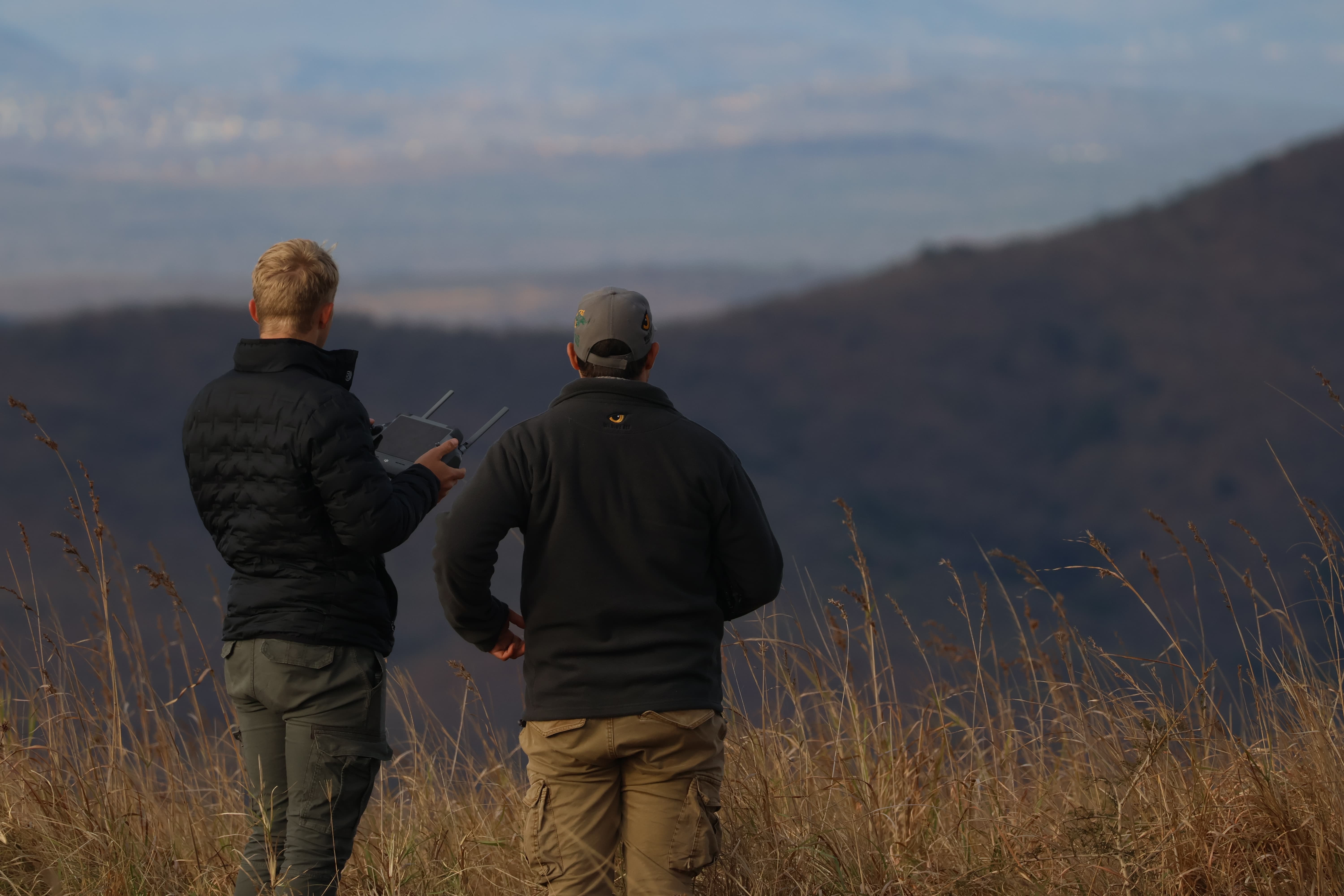
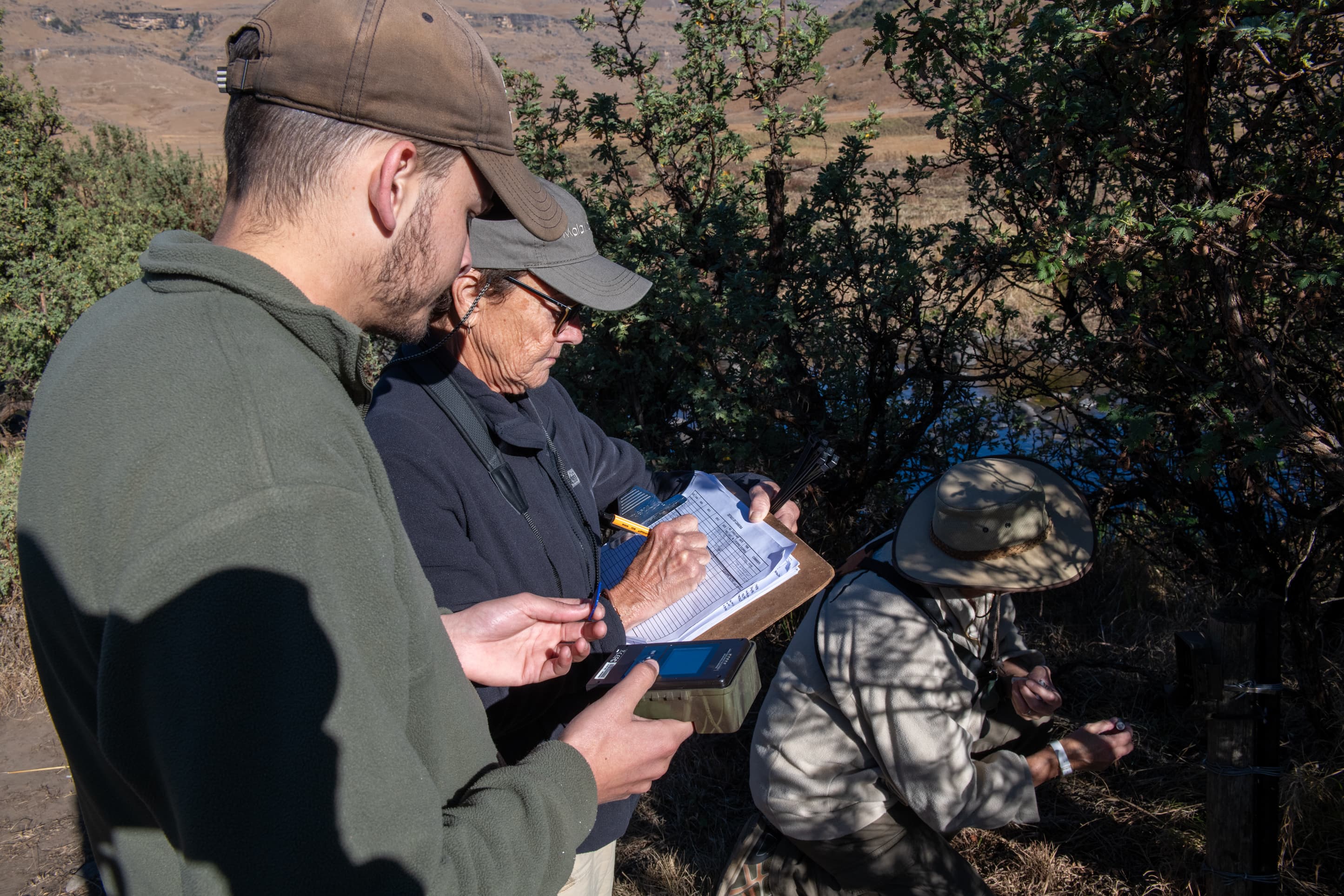
Observation work is therefore conducted from designated vantage points, often requiring long hikes through rugged mountain terrain. These monitoring sessions allow conservation teams to record breeding activity, feeding behaviour, and interactions between birds while ensuring that nesting pairs remain undisturbed.
Ethical wildlife observation also extends to how researchers interact with the broader landscape. Field teams take care to minimise their impact on fragile habitats, avoid unnecessary disturbance, and ensure that monitoring activities support conservation objectives rather than interfere with natural ecological processes.
This approach allows conservation teams to gather valuable ecological data while maintaining the integrity of the mountain ecosystem.
The Role of Volunteers in Ethical Conservation programs
Volunteers contribute to conservation programs by supporting trained conservation practitioners working in the field. In remote landscapes such as the Southern Drakensberg, additional field capacity can make a significant difference to the scope and effectiveness of monitoring programs.
Participants in the Southern Drakensberg Conservation Program assist with a variety of field activities that support Vulture conservation and broader ecosystem monitoring. One of the most important responsibilities involves assisting with Vulture nest monitoring. During the breeding season, volunteers join conservation teams on mountain hikes to observation points where they help monitor Vulture activity at nesting sites.

Volunteers also assist with the maintenance and monitoring of the Mzimkulu Vulture-safe feeding site. This involves helping transport carcasses to the feeding site, monitoring Vulture activity, and maintaining camera traps that record bird behaviour at the site. Camera trap maintenance includes replacing batteries, changing memory cards, and cataloguing images that contribute to long-term monitoring datasets.
Another key component of the program is the long-term camera trap survey conducted across the Maloti–Drakensberg Park World Heritage Site. Volunteers help conservation teams scout suitable camera trap locations, install and maintain monitoring stations, clear vegetation that may obstruct cameras, and assist with downloading and organising footage for analysis.
In addition to these monitoring activities, volunteers may assist with protected area boundary support. This can include responding to conservation emergencies involving injured wildlife or suspected poisoning incidents, as well as helping control invasive alien plants in vulnerable habitats.
Through these activities, volunteers gain direct experience in ecological monitoring while supporting conservation teams working to protect one of southern Africa’s most important mountain ecosystems.
Supporting Long-Term Conservation in the Drakensberg
The Southern Drakensberg Conservation Program contributes to broader conservation initiatives aimed at protecting wildlife and ecosystems across the Maloti–Drakensberg region. This landscape supports a wide range of biodiversity and plays a critical role in regional conservation planning.
By strengthening monitoring capacity in remote areas, the program helps conservation practitioners build long-term ecological datasets that improve understanding of species populations and ecosystem dynamics. Data collected through nest monitoring, feeding site observations, and camera trap surveys contributes to ongoing research and conservation management efforts.
The program operates as a collaborative initiative involving Wildlife ACT, the Drakensberg Conservation Initiative, and Ezemvelo KZN Wildlife. Research partnerships with the University of KwaZulu-Natal further support the scientific foundations of the work being conducted in the region.
These collaborations ensure that monitoring data contributes directly to conservation planning and policy decisions within the Maloti–Drakensberg Park World Heritage Site and surrounding protected areas.
Through long-term partnerships and consistent monitoring work, conservation teams are able to respond more effectively to emerging threats and support the long-term protection of threatened species such as Bearded Vultures and Cape Vultures.
Learn more about the Bearded Vulture breeding cycle:
Choosing a Responsible Wildlife Conservation program
For individuals interested in volunteering for conservation projects, choosing the right program is an important step. Ethical wildlife conservation programs are designed around conservation objectives rather than tourism experiences.
One of the most important indicators of a responsible program is its connection to established conservation organisations. Projects that operate in partnership with protected area authorities, research institutions, or recognised conservation organisations are more likely to contribute meaningfully to conservation outcomes.
Prospective volunteers should also look for programs that prioritise monitoring and ecological research. Monitoring work forms the foundation of effective conservation management, helping practitioners understand how species populations are changing and how ecosystems are responding to environmental pressures.
Another important consideration is how wildlife interactions are managed. Ethical conservation programs do not prioritise close encounters with wildlife or activities that interfere with natural animal behaviour. Instead, observation and monitoring activities are conducted in ways that minimise disturbance and support scientific data collection.
By choosing programs that operate within these principles, volunteers can ensure that their participation contributes to genuine conservation outcomes rather than simply providing wildlife experiences.
How to Volunteer with Wildlife ACT in the Southern Drakensberg
Individuals interested in contributing to Vulture conservation in South Africa can join the Southern Drakensberg Conservation Program through Wildlife ACT’s volunteer program.
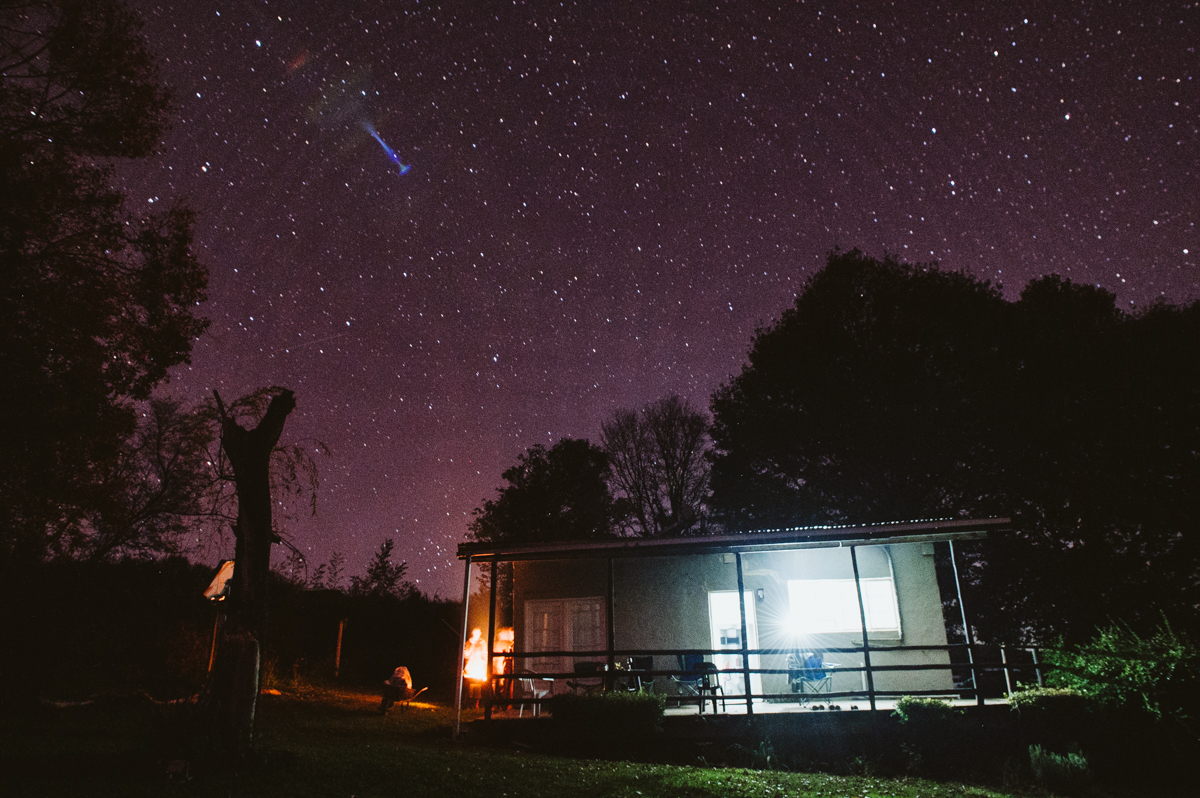
Participants typically join the program for structured placements that allow them to assist with ongoing monitoring activities alongside experienced conservation practitioners. Volunteers become part of a small field team working in one of southern Africa’s most dramatic mountain landscapes.
During their time on the program, volunteers assist with Vulture nest monitoring, support the management of the Mzimkulu Vulture-safe feeding site, help maintain camera trap monitoring stations, and contribute to biodiversity monitoring activities across the landscape.
The program provides an opportunity to gain practical experience in conservation fieldwork while supporting long-term efforts to protect threatened Vulture populations and the wider mountain ecosystem.
More information about joining the program can be found here:
https://www.wildlifeact.com/volunteer/program/vulture-conservation-south-africa
Frequently Asked Questions About Ethical Wildlife Volunteering
What makes a wildlife volunteer program ethical?
An ethical wildlife volunteer program prioritises conservation outcomes above tourism experiences. Projects are guided by ecological objectives, contribute to long-term conservation initiatives, and ensure that wildlife observation and monitoring are conducted responsibly.
Do ethical conservation programs allow direct interaction with wildlife?
Ethical conservation programs generally avoid direct interaction with wild animals. Wildlife observation is conducted at appropriate distances to ensure that natural behaviours are not disturbed and that animal welfare remains the top priority.
How do volunteers support conservation monitoring?
Volunteers assist conservation teams with field observations, ecological monitoring, camera trap maintenance, and data recording. These activities help increase the monitoring capacity of conservation teams working across large landscapes.
Why is monitoring important for wildlife conservation?
Monitoring allows conservation practitioners to track changes in wildlife populations, understand species behaviour, and detect emerging threats. Long-term monitoring datasets are essential for guiding conservation planning and management decisions.
Can volunteers contribute to real conservation work?
Yes. When programs are designed responsibly, volunteers contribute meaningful support to conservation teams. By assisting with monitoring activities and field logistics, volunteers help strengthen conservation programs operating in remote environments.
References
BirdLife International, ‘Bearded Vulture (Gypaetus barbatus)’, BirdLife International Data Zone, https://datazone.birdlife.org/species/factsheet/bearded-vulture-gypaetus-barbatus (accessed 16 March 2026).
BirdLife International, ‘Cape Vulture (Gyps coprotheres)’, BirdLife International Data Zone, https://datazone.birdlife.org/species/factsheet/cape-vulture-gyps-coprotheres (accessed 16 March 2026).
Drakensberg Experience Tourism Association, ‘Flora and Fauna of the Drakensberg’, Drakensberg Experience, https://drakensberg.org/flora-fauna/ (accessed 16 March 2026).
International Union for Conservation of Nature (IUCN), ‘The IUCN Red List of Threatened Species’, IUCN Red List, https://www.iucnredlist.org (accessed 16 March 2026).
Project Vulture, ‘The Bearded Vulture Recovery Project’, Project Vulture, https://projectvulture.org.za/our-work/reintroduction/the-bearded-vulture-recovery-project/ (accessed 16 March 2026).
Sanipass Tours, ‘Southern Drakensberg Conservation Project’, Sanipass Tours, https://sanipasstours.com/southern-drakensberg-conservation-project/ (accessed 16 March 2026).
Save Our Vultures, ‘Mzimkulu Vulture Hide’, Save Our Vultures, https://www.saveourvultures.com (accessed 16 March 2026).
The African, ‘Saving Southern Africa’s Vultures’, The African, https://theafrican.co.za/environment/2023-06-14-saving-southern-africas-vultures/ (accessed 16 March 2026).
.jpeg)