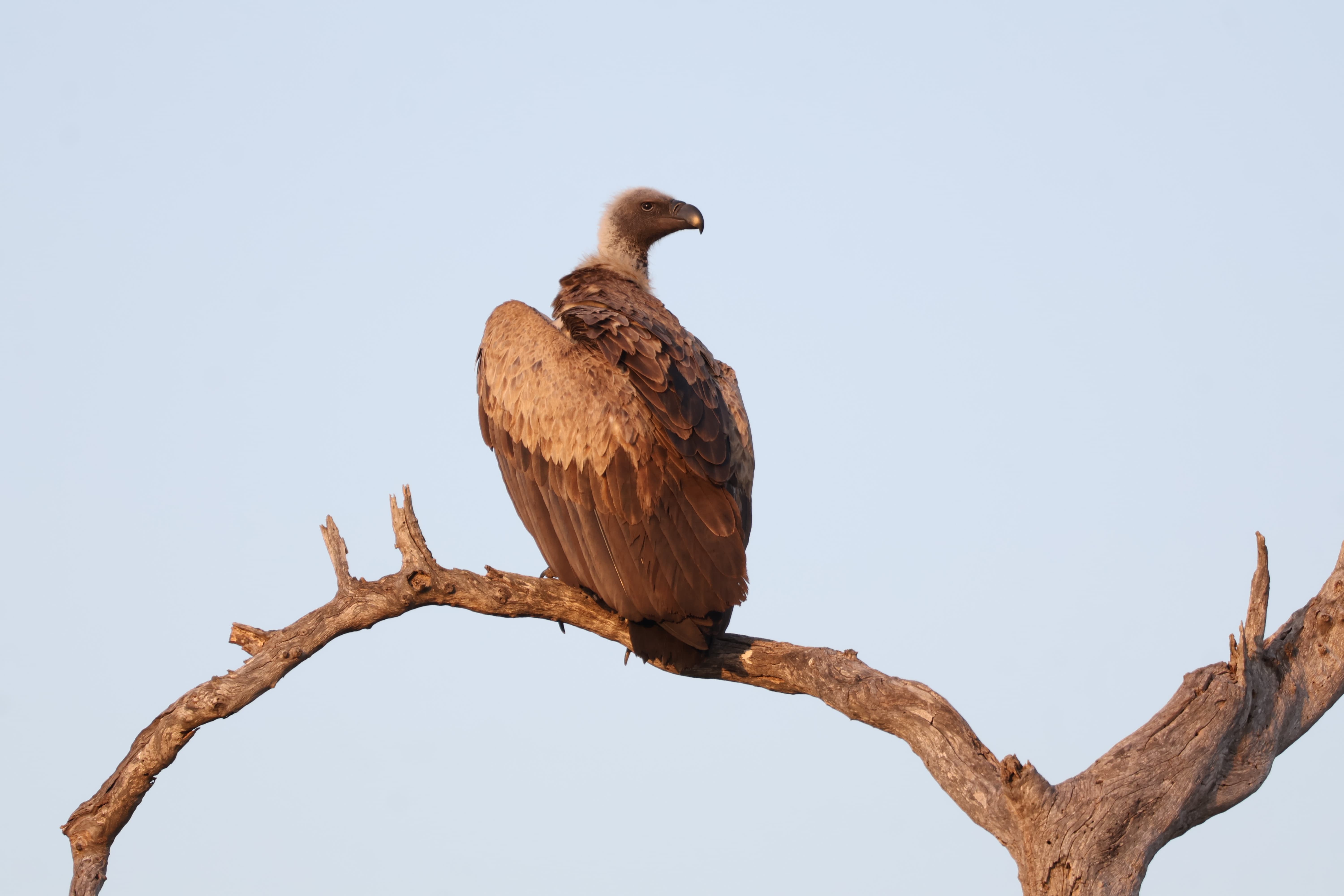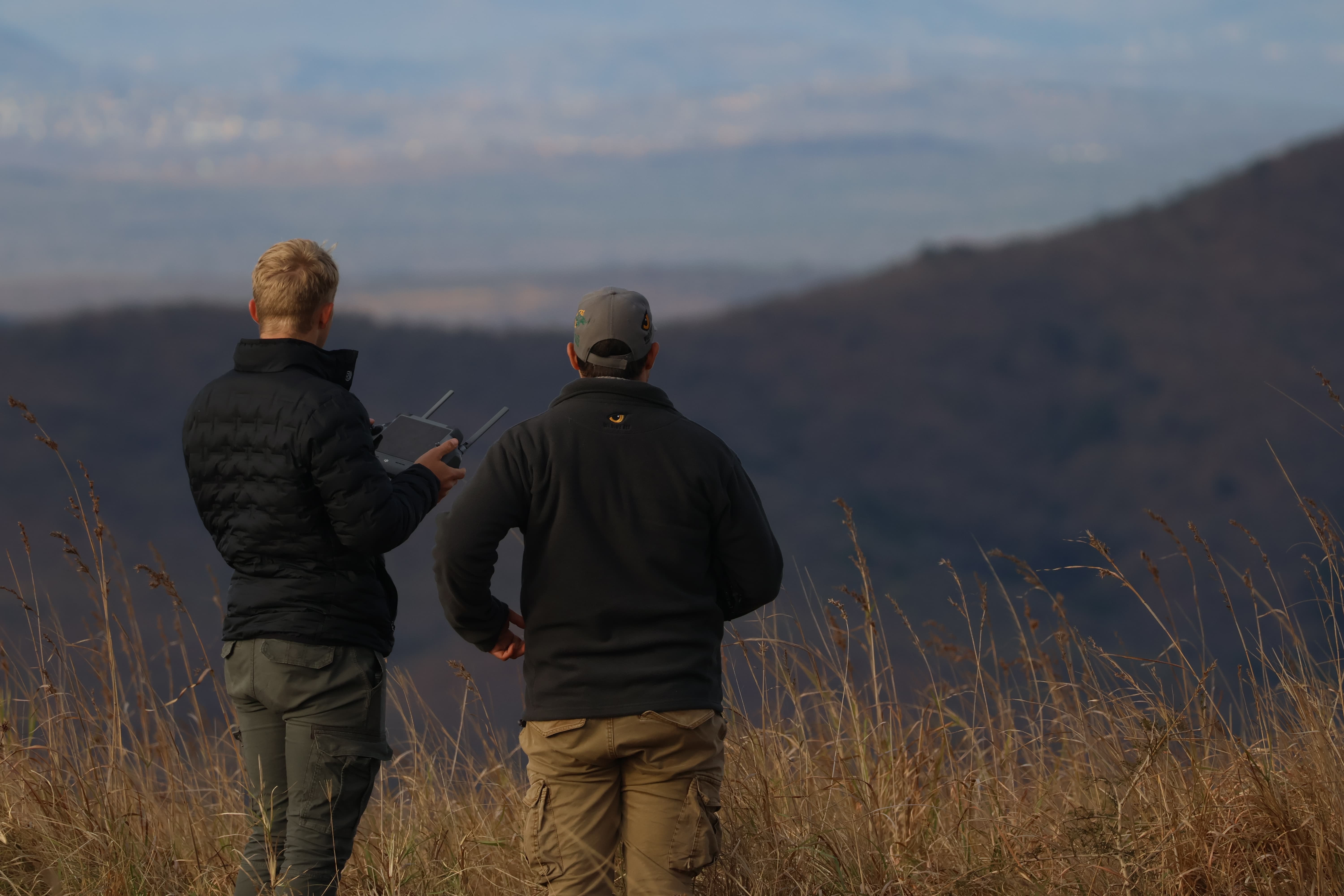
In August 2026, Wildlife ACT, in partnership with Ezemvelo KZN Wildlife, and working with drone specialists WildSky Foundation, completed a trial and first round of a new drone-based Vulture nest survey in Hluhluwe-iMfolozi Park, surveying 76 active African White-backed Vulture nests across the protected area.
The survey forms part of the ongoing Zululand Vulture Project, and marks the first time a drone has been used alongside the park’s existing aerial and ground-based nest surveys. Each nest surveyed was recorded with a precise GPS location, an estimated height above ground, the nest tree species, and images captured from multiple angles, building a far more detailed picture of where and how African White-backed Vultures are breeding across the park.
Surveying 76 nests in four days is a strong result for a first attempt, and importantly, it shows that drone technology can add real precision and speed to a monitoring programme that has, until now, relied on a single aircraft flight each year and ground teams covering the rest of the season.
Why Vulture nest surveys matter
African White-backed Vultures are Critically Endangered, and in northern KwaZulu-Natal, poisoning and other threats have driven an estimated 70 to 80% decline in breeding pairs since 2004. Reversing that trend depends on knowing exactly how the remaining population is doing each season: how many pairs are breeding, how many chicks survive to fledge, and where nesting activity is concentrated or falling away. Without that data, conservation decisions rely on guesswork rather than evidence.
As obligate scavengers, Vultures also perform a function that extends far beyond their own survival, consuming carcasses fast enough to neutralise pathogens such as anthrax, botulism, and rabies before disease can spread through wildlife, livestock, or people.
Wildlife ACT Species Conservation Director Anel Swart describes them as “the underappreciated custodians of ecosystem health,” warning that “without them, the consequences ripple far beyond the animal kingdom and into human health and the economy.”
A comparable collapse in India illustrates the scale of that risk: when Vulture populations there were nearly wiped out between 1993 and 2006, the resulting rise in disease is estimated to have cost the Indian economy USD 34 billion and contributed to around 50,000 human deaths. Every nest surveyed in Hluhluwe-iMfolozi Park is a direct contribution to preventing that outcome here.
A third method for monitoring Vulture nests
Wildlife ACT and Ezemvelo KZN Wildlife have run two annual Vulture nest surveys in Hluhluwe-iMfolozi Park for years. An aerial survey using a fixed-wing aircraft has been conducted since 2003, and a ground-truthing survey carried out by Wildlife ACT monitoring teams has run since 2022.
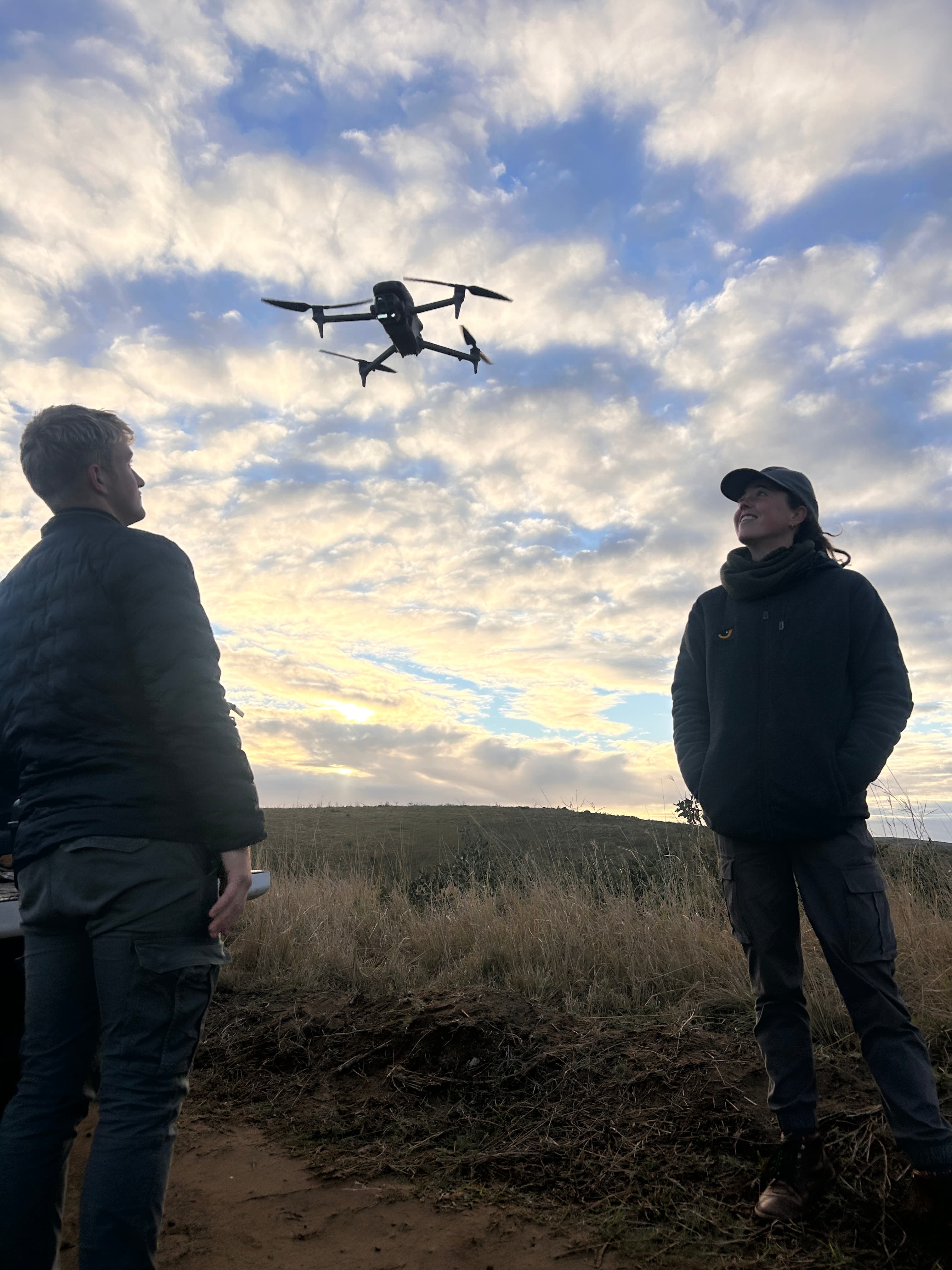
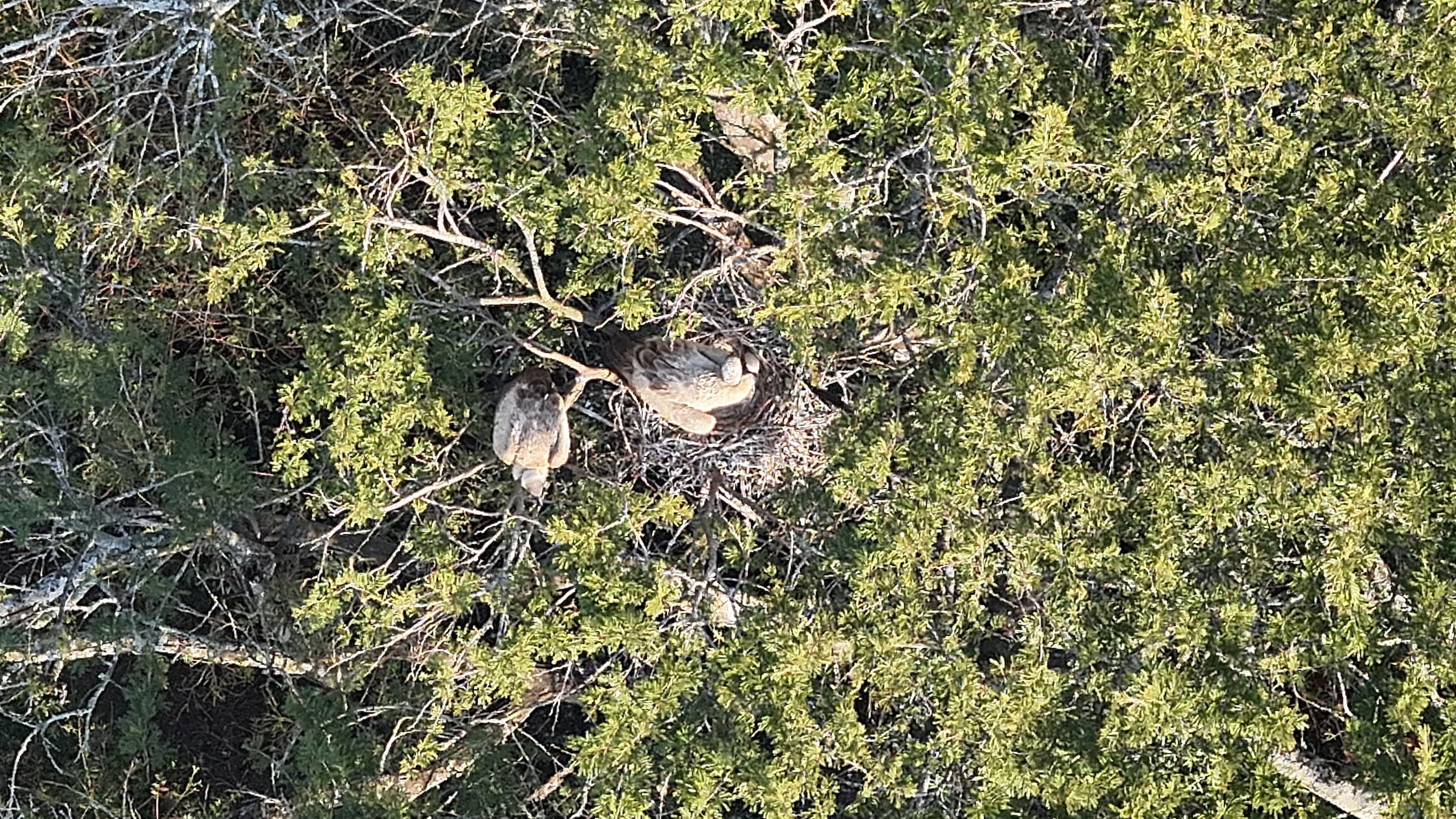
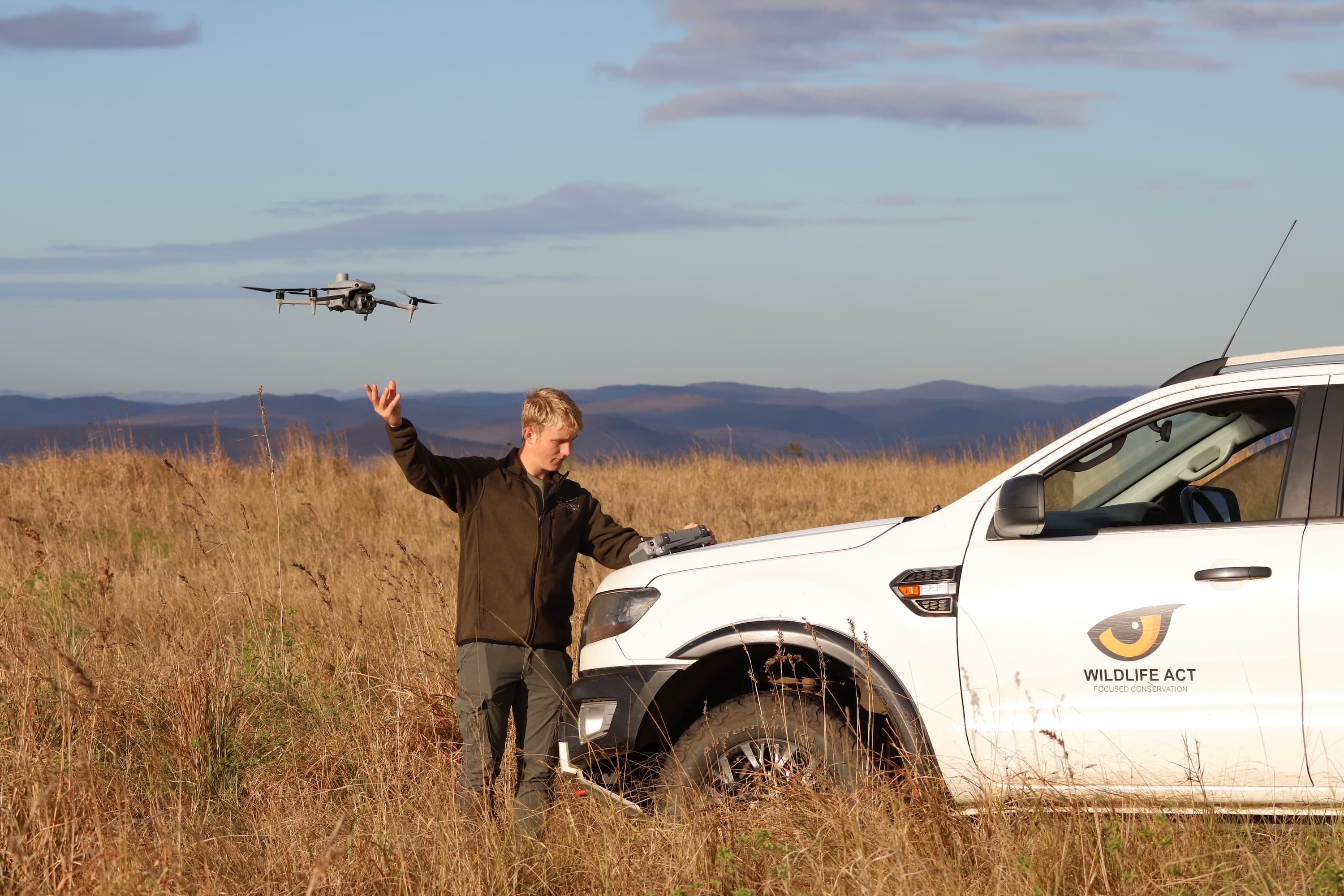
The new drone survey, developed with WildSky Foundation and guided by Ezemvelo KZN Wildlife’s ecology team, is designed to complement both, using a zoom camera, range finder, and GPS to record each nest with a level of precision neither existing method captures alone, without the cost or logistics of a manned aircraft.
Trial and first round in August 2026
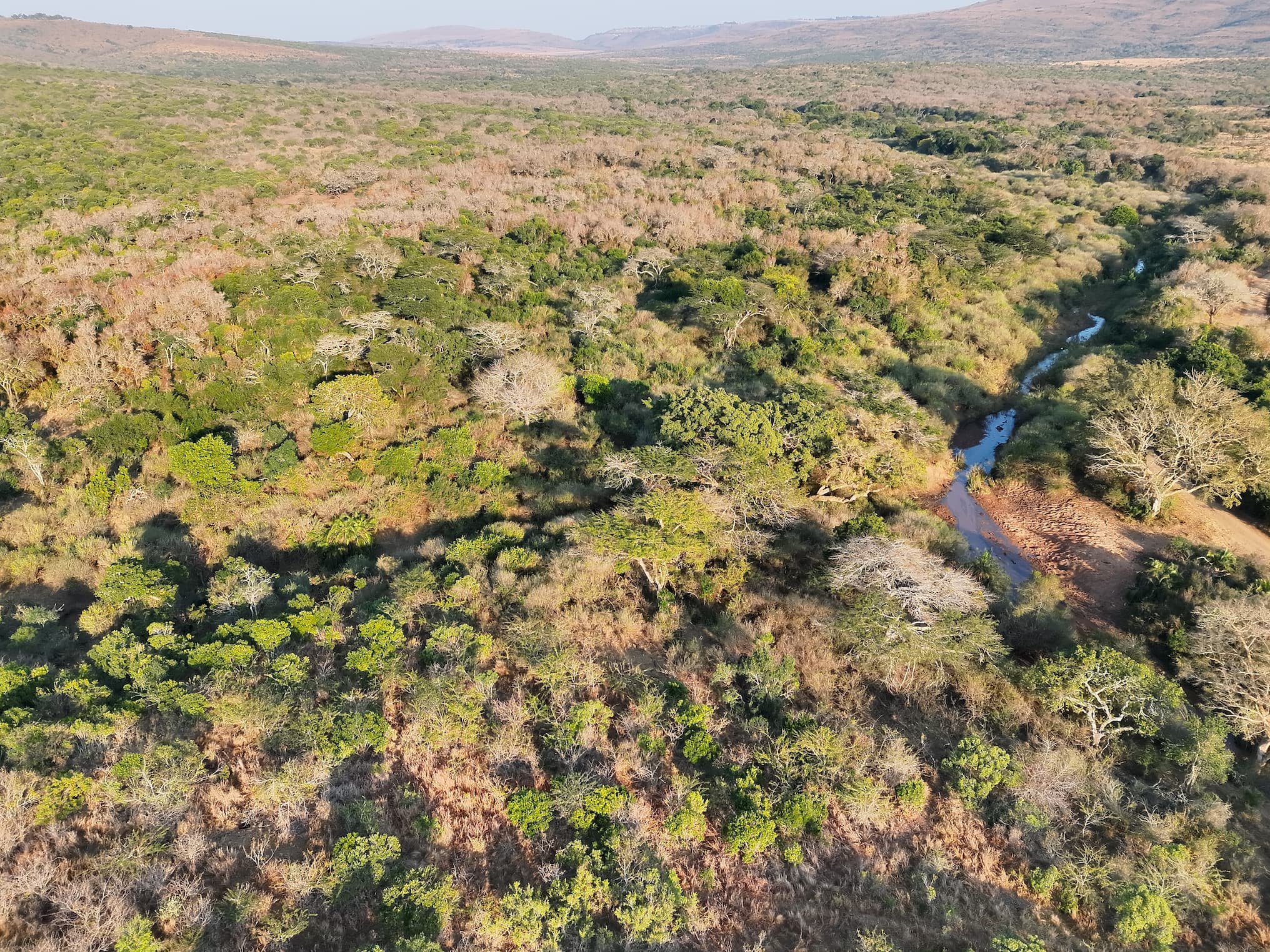
A trial survey in August tested the approach and helped the team set a realistic target for the first official round, guided by Hluhluwe-iMfolozi Park Ecologist Liza le Roux of Ezemvelo KZN Wildlife on which areas to prioritise. Twelve focus points were selected across the park, representing roughly 10% of its total nest population and offering a reliable sample of the wider colony. Despite some unfavourable weather conditions resulting in delays, the survey was completed successfully.
First round results
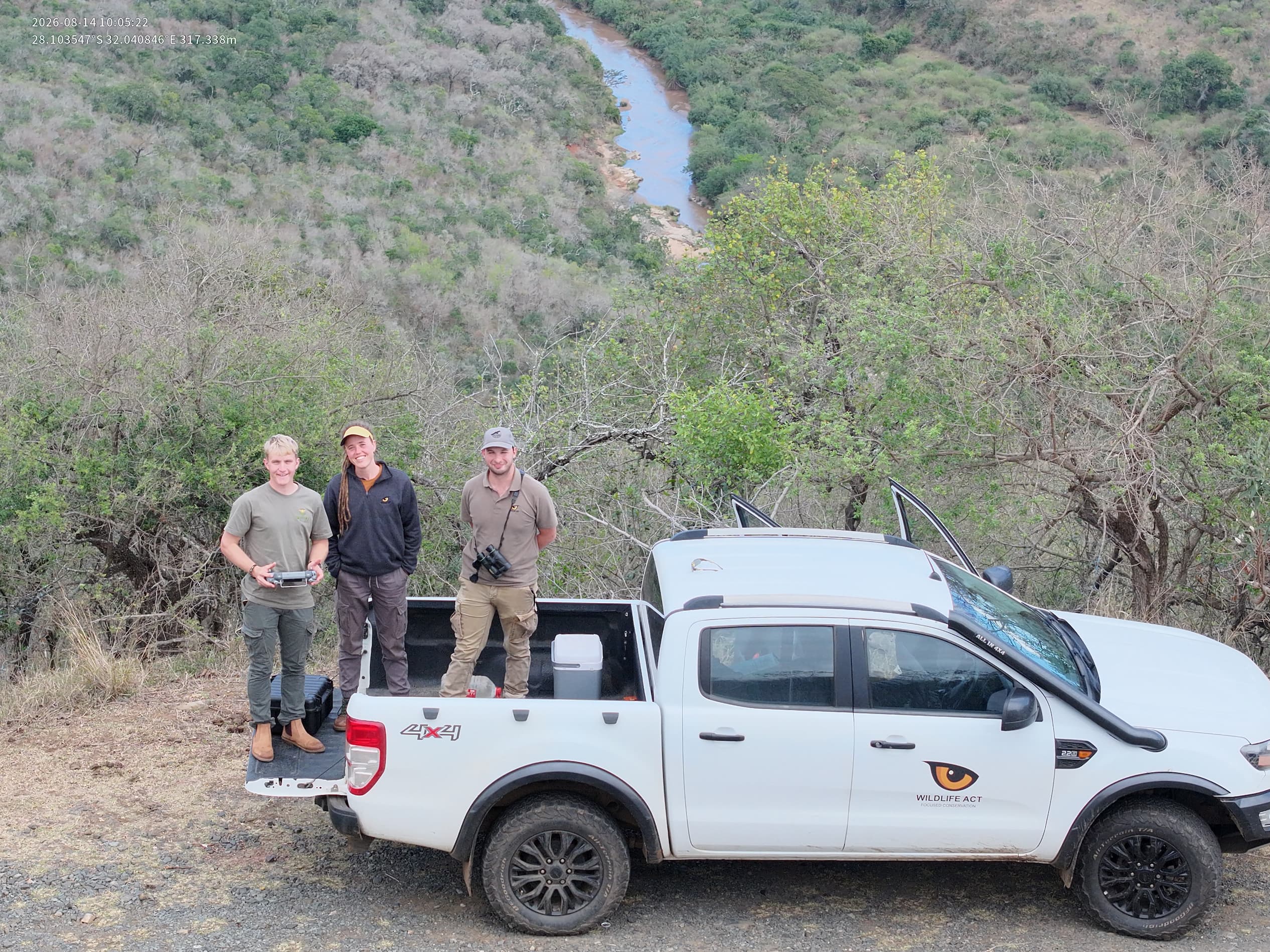
Over four days, the team spent 41 hours in the field and drove 405 km between focus points, flying 53 individual drone flights covering 193 km of airtime across 15 hours and 32 minutes.
The team surveyed 76 active nests, most in under four minutes each, without a single manned flight. The nests spanned every stage of the breeding season, from pairs still incubating eggs to adults tending chicks nearly ready to fledge, and the team even observed one pair of Vultures mating during the survey.
For a first attempt, that combination of speed, precision, and season-wide coverage is a clear signal that drone-based monitoring has a real role to play in tracking this population going forward.
What this data will support
The information gathered will help Wildlife ACT and Ezemvelo KZN Wildlife estimate African White-backed Vulture breeding success in Hluhluwe-iMfolozi Park this season, and will contribute to broader population estimates for the species across KwaZulu-Natal, alongside data from the existing aerial and ground-truthing surveys. Tracked consistently over time, this is the kind of data that shows whether conservation interventions across the province, from poisoning response to Vulture-safe infrastructure, are working.
Looking ahead
A second round of the drone survey is planned for October 2026, continuing the same monitoring across the same 76 nests through the rest of the breeding season. Wildlife ACT extends sincere thanks to Ezemvelo KZN Wildlife, particularly Liza le Roux, for their guidance and partnership, and to WildSky Foundation for their support in trialling this new survey method.
Wildlife ACT is a registered non-profit organisation. To support the Vulture Conservation Programme and help fund monitoring work like this, visit www.wildlifeact.com/donate.
References
BBC News (2024) How decline of Indian vultures led to 500,000 human deaths. Available at: https://www.bbc.com/news/articles/c28e2pvzn3lo (Accessed: 28 September 2026).
Ezemvelo KZN Wildlife (n.d.) Ezemvelo KZN Wildlife. Available at: https://www.kznwildlife.com (Accessed: 28 September 2026).
Johnson, M. and Khandelwal, S. (2025) Humans killed millions of vultures. Now people are paying the price. The Washington Post, republished by the University of Chicago Institute for Climate and Sustainable Growth. Available at: https://climate.uchicago.edu/news/humans-killed-millions-of-vultures-now-people-are-paying-the-price/ (Accessed: 28 September 2026).
Markandya, A., Taylor, T., Longo, A., Murty, M.N., Murty, S. and Dhavala, K. (2008) ‘Counting the cost of vulture decline: an appraisal of the human health and other benefits of vultures in India’, Ecological Economics, 67(2), pp. 194-204. Available at: https://www.sciencedirect.com/science/article/pii/S092180090800178X (Accessed: 28 September 2026).
Whittington, M. (2025) Vulture Conservation in South Africa: Zululand Aerial Survey 2025 Results. Wildlife ACT. Available at: https://www.wildlifeact.com/blog/vulture-conservation-in-south-africa-zululand-aerial-survey-2025-results (Accessed: 28 September 2026).
WildSky Foundation (n.d.) WildSky Foundation. Available at: https://wildskyfoundation.org (Accessed: 28 September 2026).
Wildlife ACT (2023) Conducting Vulture Nest Surveys on Hluhluwe-iMfolozi Park. Available at: https://www.wildlifeact.com/blog/conducting-vulture-nest-surveys-on-hluhluwe-imfolozi-park (Accessed: 28 September 2026).
Wildlife ACT (n.d.) Vultures. Available at: https://www.wildlifeact.com/about-wildlife-act/wildlife-species/vultures (Accessed: 28 September 2026).

.jpeg)


.jpg)