Tracking technology has changed the way we monitor and understand wildlife. It has improved our ability not just to be present with an animal in the field, but to keep a watchful eye on individuals when we are not. Fitting a single device to a Rhino, a Vulture, or an African Wild Dog lets our teams follow that animal for months, long after it has slipped over the next ridge and out of sight. Over time those signals build into something far larger than a set of dots on a map. We begin to see home ranges, movement corridors, denning sites, and the early warning signs of snaring, poisoning, or a fence breach. It is patient, unglamorous work, and it sits underneath almost every conservation decision we support.
Not all tracking devices are the same, though, and choosing the right one is part of the skill. Here are four worth knowing about, and why we reach for one over another.
Design and technology are two different things
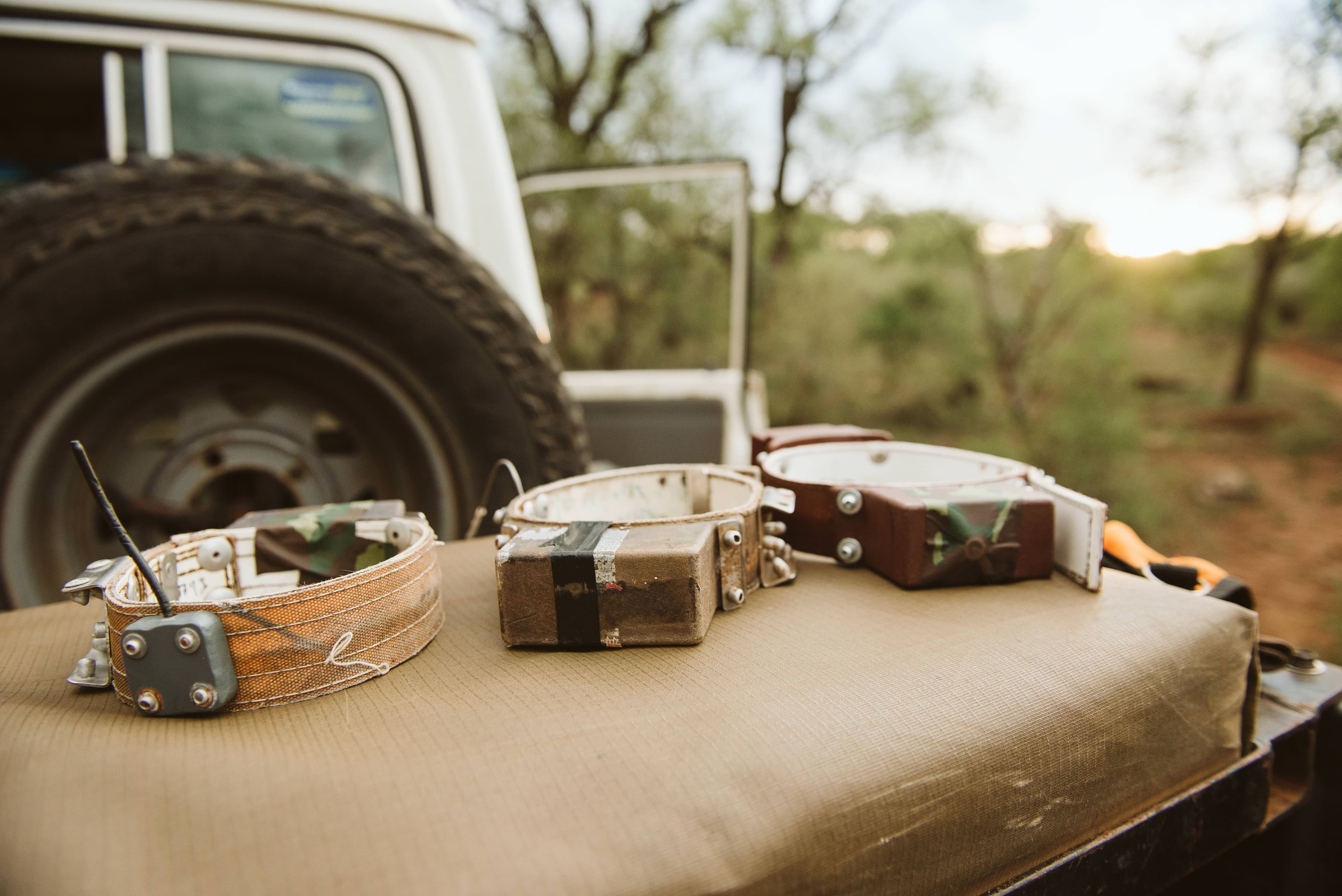
It helps to separate two questions that are easy to blur together. The first is how a device attaches to the animal, which is its design, or form factor. This is always fit for purpose and shaped around the needs of the individual we are tracking, so a backpack harness suits a bird, a pod set into the horn suits a Rhino, and a collar suits a carnivore. The second question is how the device sends its information back to us, which is the transmission technology. Amongst others, the ones we rely on most are Very High Frequency (VHF) radio, cellular networks (GSM), satellite, and Long Range (LoRa) radio.
These two questions are independent of one another, and that independence is an important distinction to make. Tracking technology is not tied to any one form factor. A collar can carry VHF, GSM, satellite, or LoRa, and the same is true of a backpack or a pod. What decides the pairing is the hardware inside the unit and the job it needs to do, which is why you can just as easily fit a satellite backpack on a Vulture or a VHF pod on a Rhino.
For the GSM, satellite, and LoRa devices, tracking happens in two steps. The unit first acquires a GPS position and then transmits that position back to us via its chosen method. Those positions feed into platforms like EarthRanger, where the data can be layered alongside other information and used for both day-to-day operational awareness and longer-term research. VHF works a little differently, as we will come to see below.
The four devices that follow each pair a form factor with a transmission type. Every combination is a deliberate choice, made species by species and landscape by landscape.
A GSM Vulture backpack
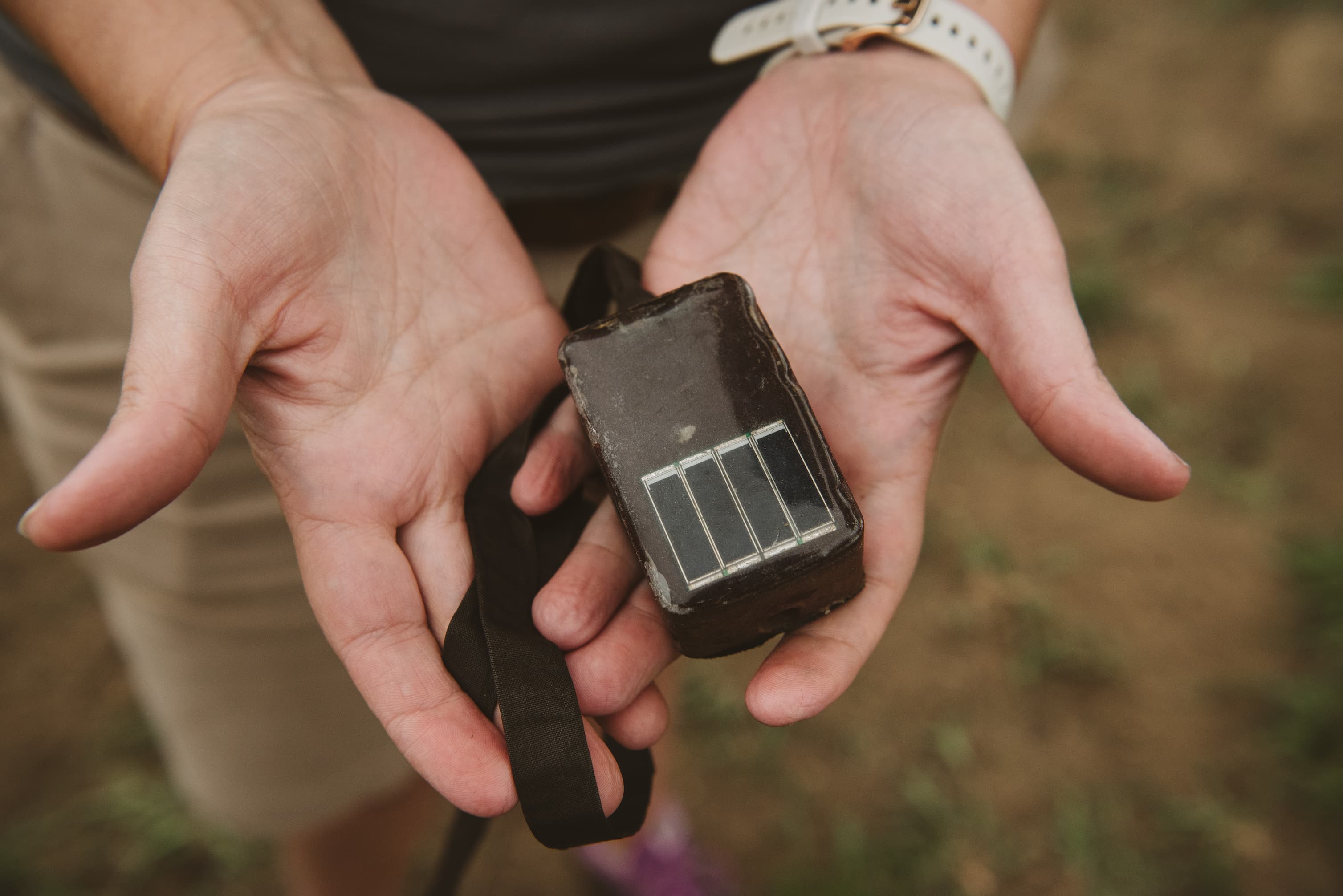
On a Vulture we use a lightweight harness that sits across the bird's back like a backpack, keeping the weight low and clear of the wings so it does not interfere with flight. The unit records GPS positions and sends them using GSM, the very same technology our mobile phones use. If a phone can pick up signal in an area, so can the tracking device. That gives us frequent, detailed location data at a relatively low running cost, in a package light enough for a bird that spends its life on the wing. The trade-off is coverage. When a Vulture moves into an area with limited signal, the data is stored on board and only sent once the bird returns to a covered area, so positions can sometimes arrive in delayed batches rather than in real time.
Copy%2520of%2520Vulture.jpeg)
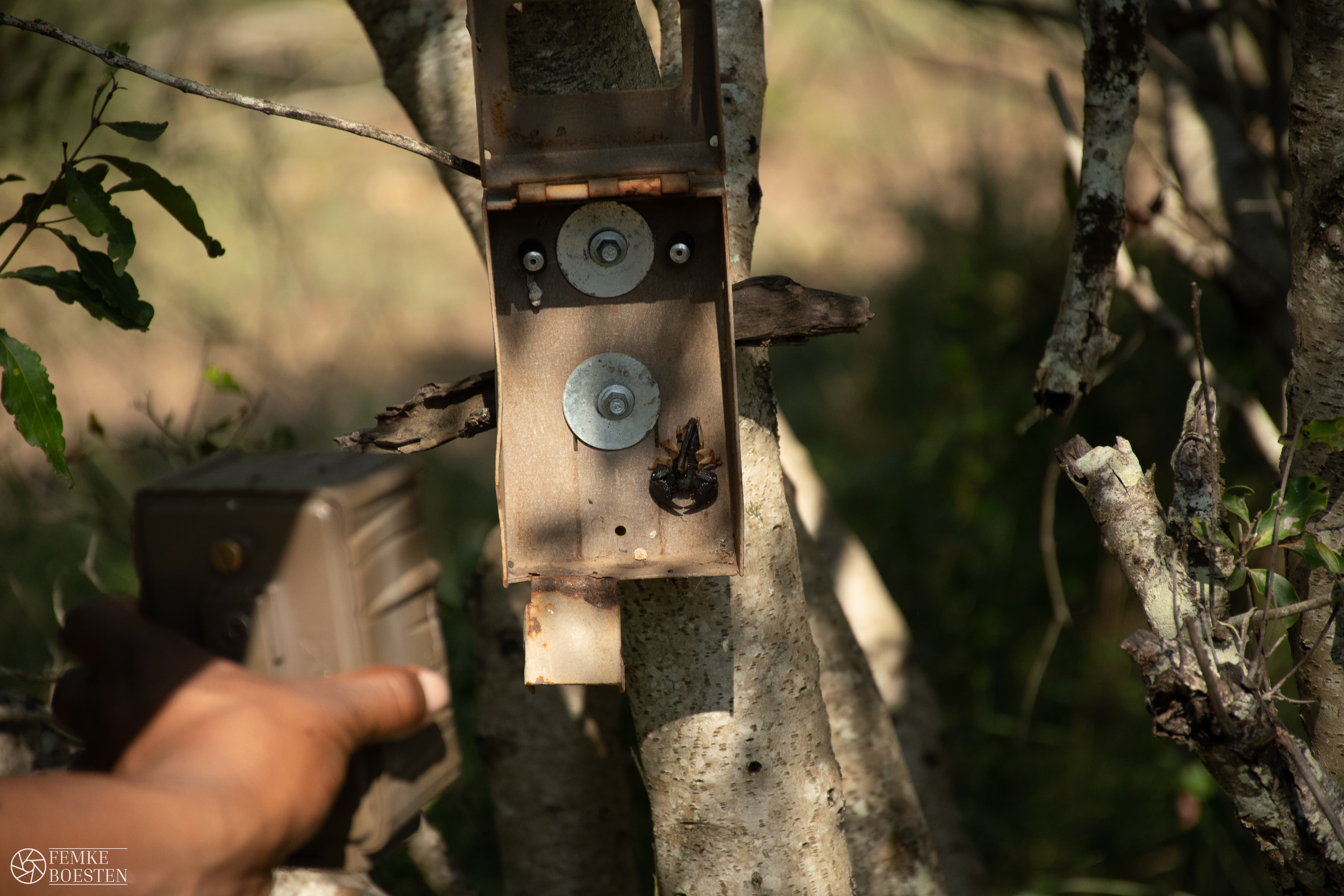
A LoRa Rhino pod
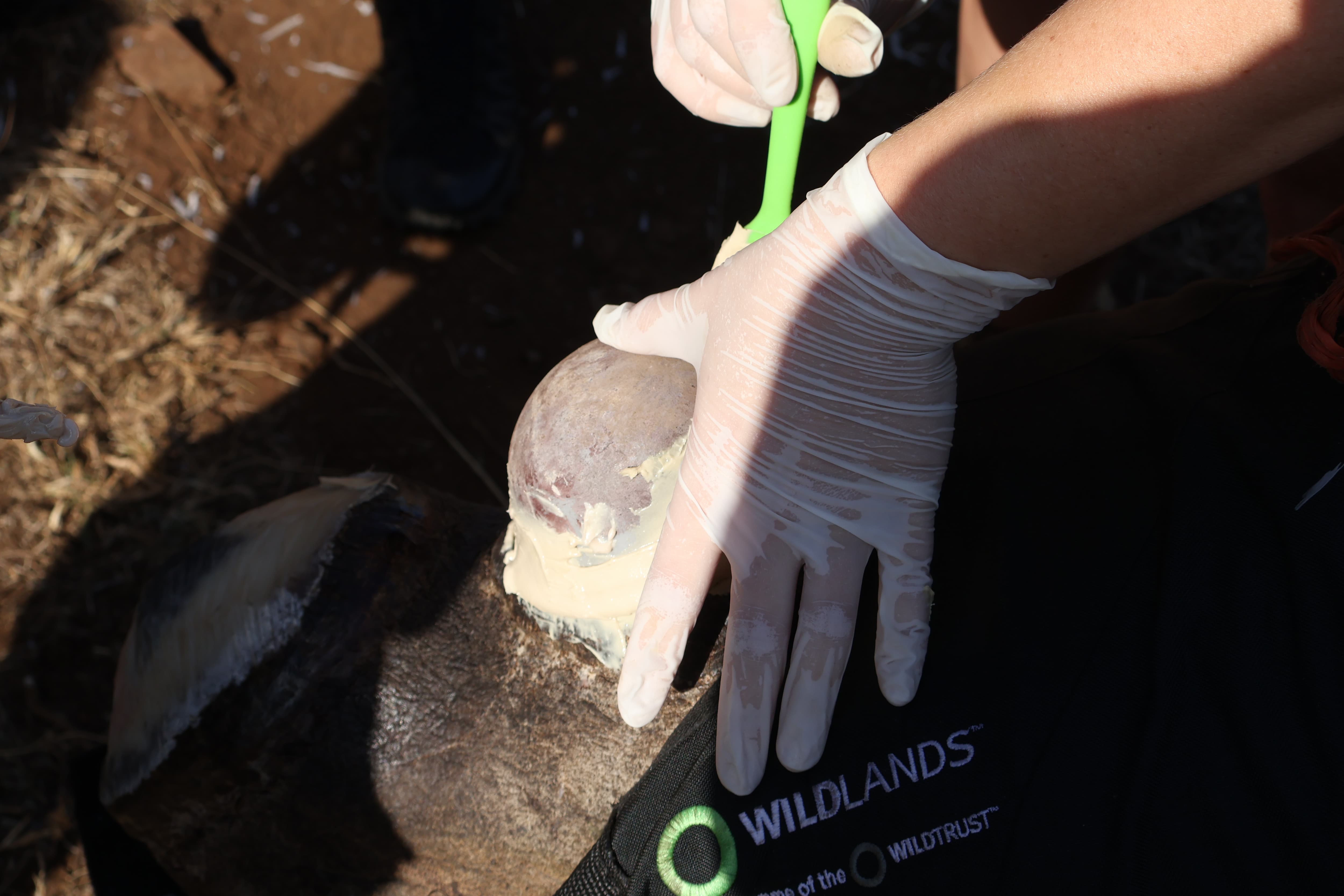
On a Rhino we skip the collar entirely and set a compact pod into the tip of the rear horn. It suits the animal's physiology and blends in far better than a collar would. From there the pod uses LoRa, a low-power, long-range radio, to relay its positions to gateways that together form a LoRaWAN network across the protected area. The result is near real-time tracking without a team having to follow on foot, drawing very little power and carrying no ongoing network or satellite fees once the gateways are in place. The catch is the network itself. It has to be built across the protected area and maintained, and if that infrastructure is not upheld, the pods have nowhere to send their data. Setting up a LoRaWAN network does carry an upfront cost, though the technology is advancing quickly and becoming more affordable all the time.
A VHF collar
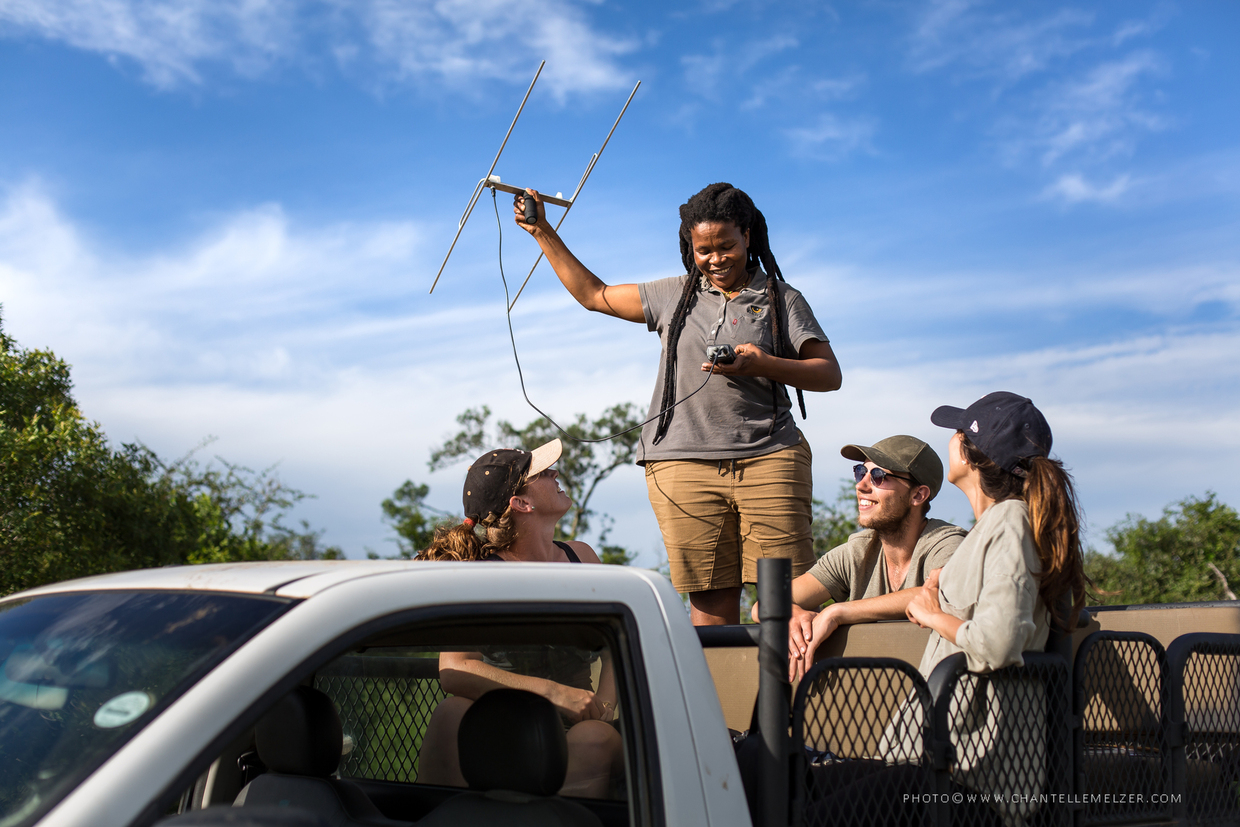
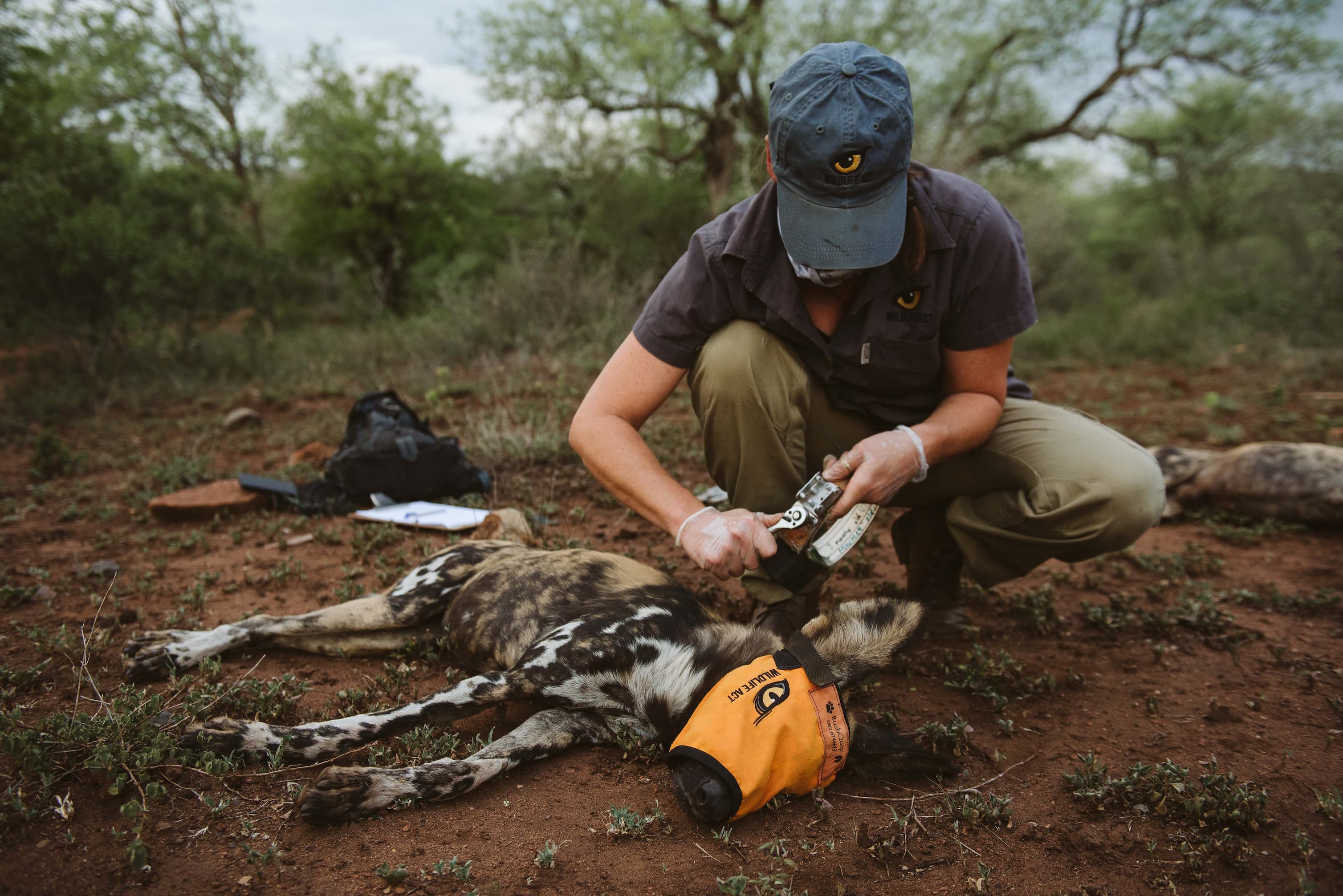
VHF is the oldest method here, and it remains tried and tested. Each collar broadcasts on its own set frequency, and that signal pulses in a way that tells us more than location alone. The beats per minute rise when the individual is on the move, slow when it is resting, and shift again if the animal stays stationary for longer than expected, which can be an early prompt to go and check on its condition. To use it, a monitor has to be in the field with a handheld antenna and receiver, homing in on the signal and reading the terrain and signal strength to pinpoint the animal. That is also its limitation. It only gives a location when someone is present and actively scanning for it, and it does not provide the fine-scale movement data that a GPS unit does. The range is short and the work is labour-intensive. What VHF offers in return is dependability. It is well made and now cheaper than the other options, needs no network, satellites, or subscription, and keeps working when GPS, cellular, or satellite data is delayed or unavailable. That reliability is exactly why it is so often the backup we rely on.
A satellite collar
A satellite collar records GPS positions and transmits them straight to orbiting satellites, which means it needs a clear line of sight to the sky to get its data out. Given that, it can report from almost anywhere. Its real strength is independence from ground infrastructure, which makes it invaluable for wide-ranging animals and for transboundary areas where there is no mobile network coverage and no gateway network to lean on. The cost is exactly that reach. You pay for every position the collar sends, so it can become expensive, and the hardware and battery tend to be heavier for the same lifespan, which matters a great deal for the animal carrying it.
Copy%2520of%2520SAT%2520Collar%25203.jpeg)
Why weight matters more than battery life
There is a constant trade-off in this work between how long a device lasts and how much it weighs. Longer battery life and satellite transmission both call for bigger batteries, and a bigger battery is a heavier load for the animal to carry. When we make the decision to fit an animal with a tracking device, another decision always runs alongside it, which is to choose the lightest, least intrusive option that can still answer the conservation question in front of us. That holds even when it means accepting a shorter battery life and fitting a replacement sooner. A device that lasts for years is of little value if it burdens the animal wearing it. Every unit is fitted during veterinary-assisted procedures, in coordination with the protected area and provincial conservation authorities, with the animal's wellbeing placed ahead of data needs.
How they work together
No single device does everything, and the real strength lies in combining them. VHF gives us certainty on the ground, GSM and satellite give us reach, and LoRaWAN gives us speed and frequency of data inside the protected area. In practice we layer them. A single group of animals may carry a mixture of VHF, LoRa, and satellite units, so we can triangulate some individuals by hand and pull movement data on others remotely. In a wide-ranging pack of African Wild Dogs, that mix lets the tracked individuals lead us to the rest of the group. If the topography swallows a LoRa signal in a valley, VHF can still find the group. If they move beyond the network entirely, the satellite units keep us connected. The right mix depends on the species, its range, the terrain, and what we most need to protect it from. Matching the tool to the animal is the real skill, and it is a judgement our field teams make every time a device goes on.
Post by Wildlife ACT Technical Solutions Coordinator: Phillip Swart
Photographs: Casey Pratt / Love Africa Marketing, Megan Whittington, Wildlife ACT Innovations
.jpeg)


%20(2).jpg)