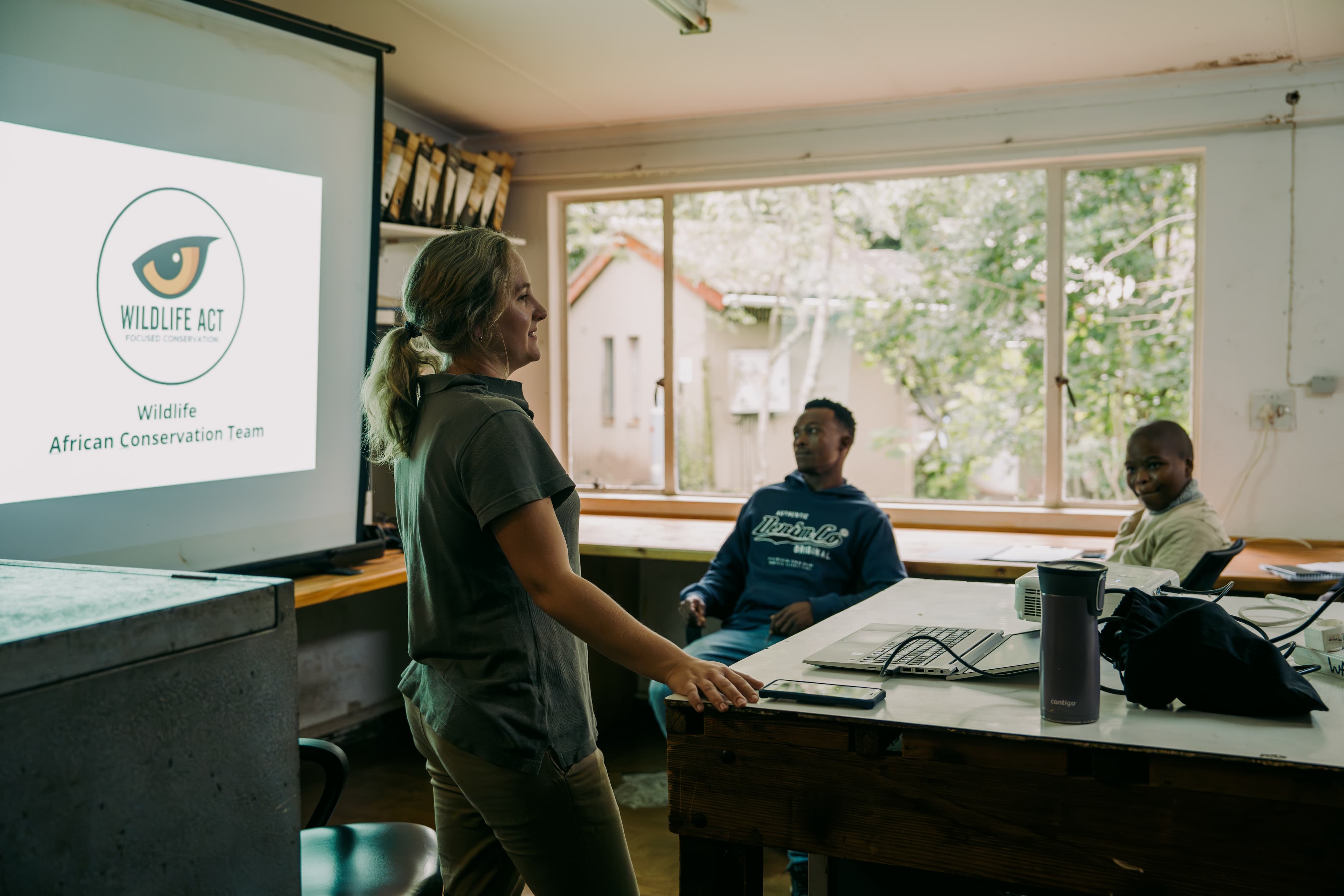
Wildlife ACT offers two field-based conservation programs in Zululand, and they are frequently compared. The African Wildlife Conservation and Habitat Management Course is a 28-day structured training program delivered entirely inside Hluhluwe-iMfolozi Park, with formal lectures, written assessments, field sessions, and a Certificate of Participation on completion. The Endangered Species Volunteer Program places participants directly inside active monitoring operations, contributing to daily field work alongside Wildlife ACT's professional monitoring teams across Hluhluwe-iMfolozi Park and Manyoni Private Game Reserve. There is no curriculum, no assessments, and no certificate.
Both programs involve working in functioning wild ecosystems with real endangered species, led by trained Wildlife ACT professionals. The difference is in what each is designed to produce and how learning is structured around the field work.
Wildlife ACT also offers the Southern Drakensberg Conservation Project, focused on Bearded Vulture and Cape Vulture conservation, and a marine conservation program on North Island in the Seychelles. This post covers the two Zululand-based options, which are the most directly comparable and the most frequently asked about.
How does the Endangered Species Volunteer Program work?
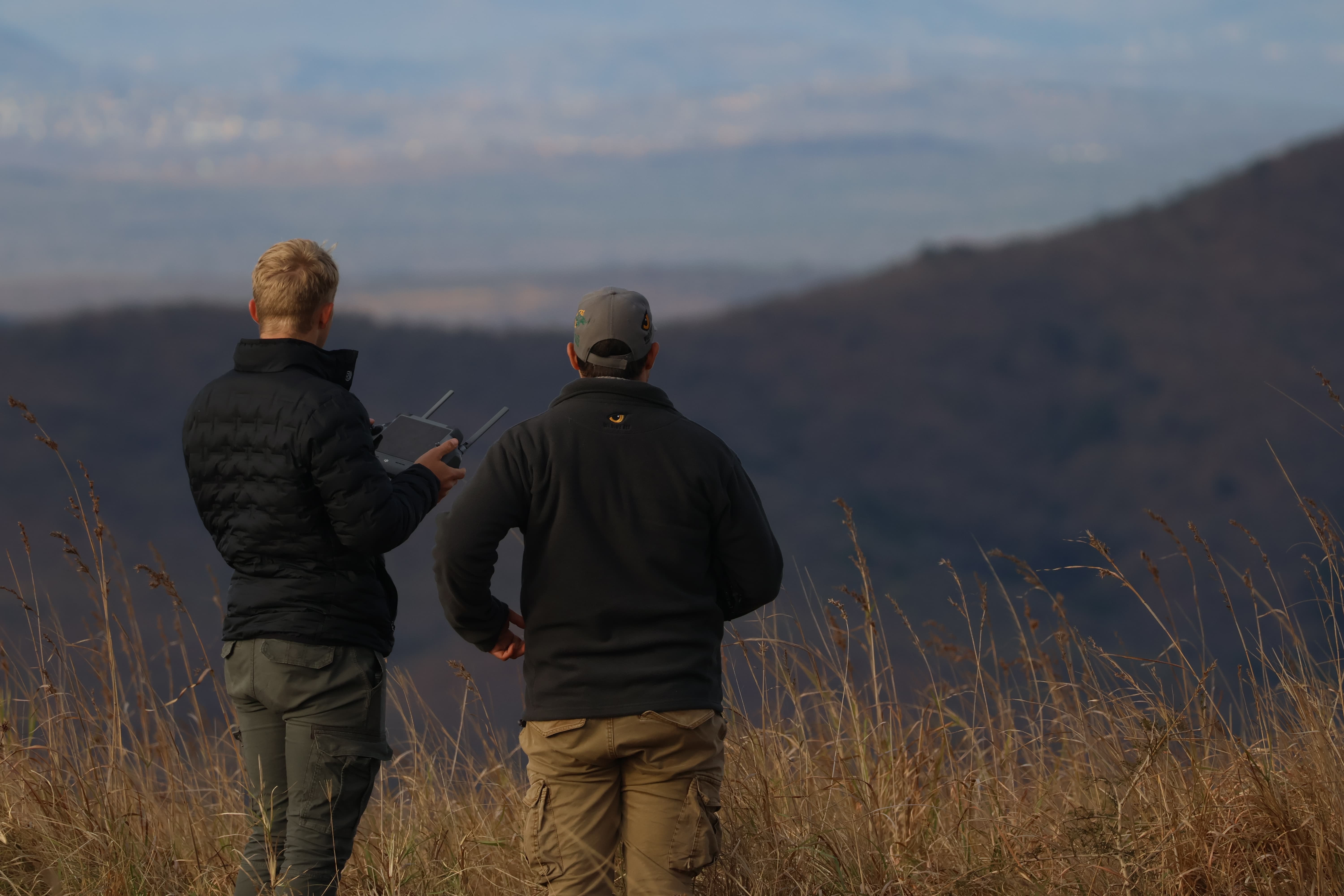
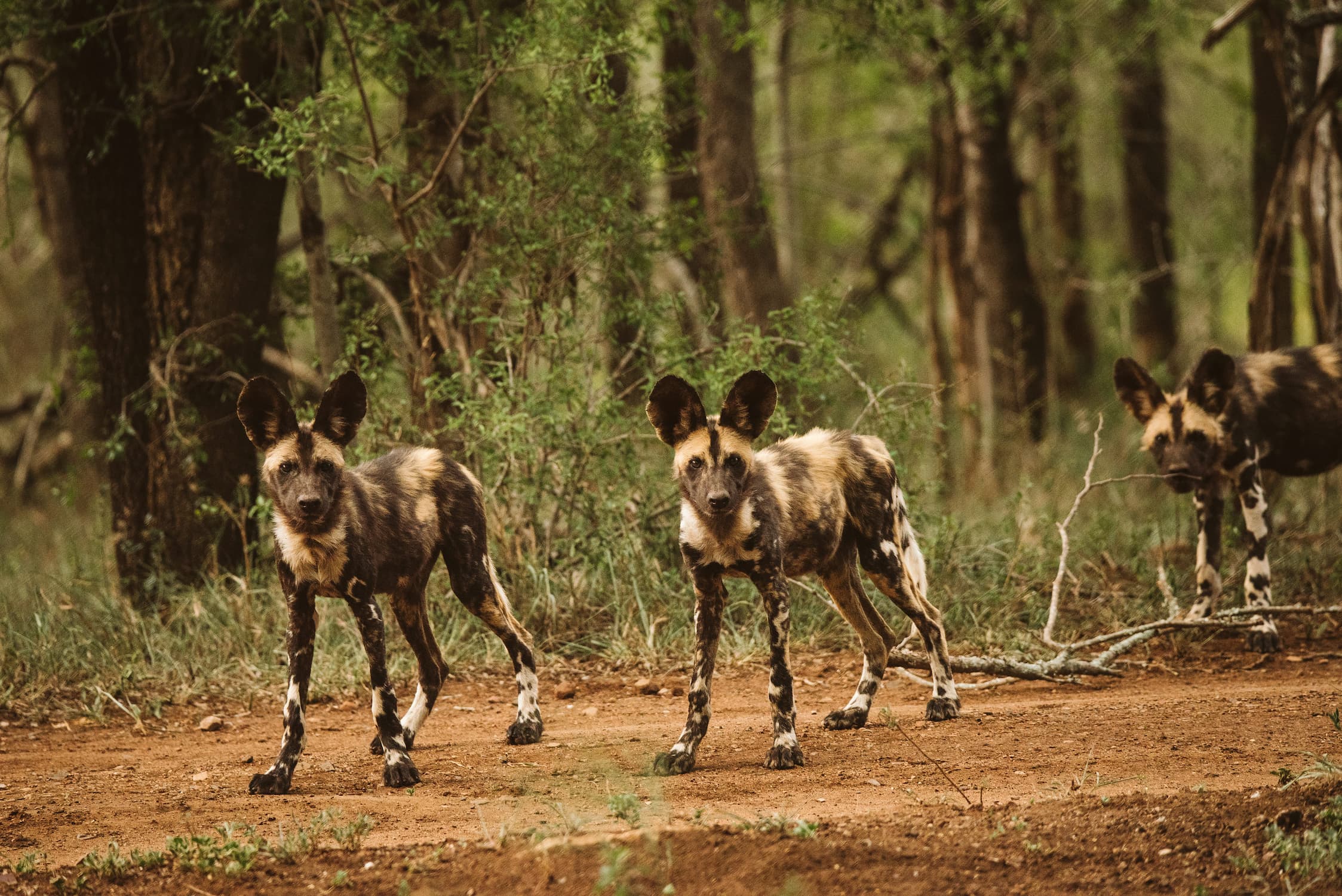
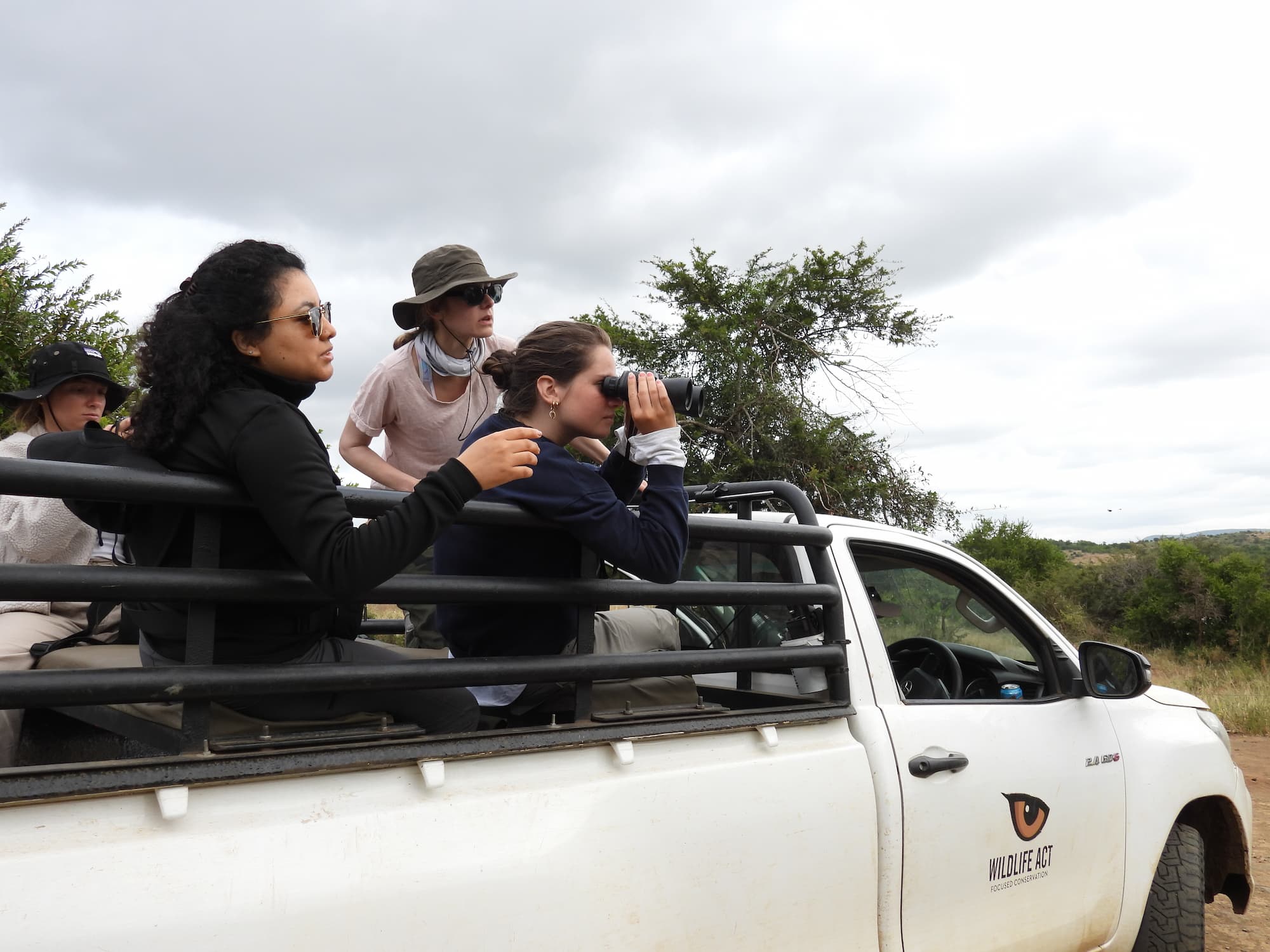
The Endangered Species Volunteer Program places participants inside active wildlife monitoring operations with no curriculum, no assessments, and no certificate. Volunteers join Wildlife ACT's Priority Species Monitors on twice-daily field sessions, assisting with monitoring of African Wild Dog, Cheetah, Lion, Leopard, Black Rhinoceros, White Rhinoceros, African Savanna Elephant, and Vulture species. Sessions run seven days a week, before sunrise and again in the late afternoon, in all weather and field conditions.
The program operates across two protected areas: Hluhluwe-iMfolozi Park, Africa's oldest proclaimed protected area, and Manyoni Private Game Reserve, a 23,000-hectare Big Five protected area in northern KwaZulu-Natal. Each site has its own species composition, terrain, and monitoring priorities. Participants may be placed at a single site or rotated depending on placement length and operational requirements.
Placements run from a minimum of two weeks, with extended stays available at a reduced rate and rolling start dates throughout the year. Group sizes are capped at six participants per site. Field skills develop through repetition and direct participation alongside experienced Wildlife ACT monitors.
The program suits people who want sustained time in the field contributing to real conservation operations, who are comfortable learning through doing, and who are looking for flexibility on timing and duration. Prior conservation experience is not required.
How does the African Wildlife Conservation and Habitat Management Course work?
The African Wildlife Conservation and Habitat Management Course combines ten formal lectures with applied field sessions, written assessments, and a Certificate of Participation, delivered over 28 days inside Hluhluwe-iMfolozi Park. It was developed from Wildlife ACT's internal staff training curriculum, established in 2019, and reflects the same standards used to prepare Wildlife ACT's professional monitoring teams. A maximum of five participants join each intake.
Lectures are delivered by active Wildlife ACT practitioners across the following topics: wildlife monitoring and telemetry, animal behaviour and ethology, tracking and spoor identification, camera trapping, wildlife capture and relocation, conservation and habitat management (two sessions), wildlife crime and the illegal trade (two sessions), and community conservation. Each lecture is scheduled to connect directly to the field work running that week.
Participants work from a 267-page Conservation Handbook and a dedicated research and methodologies workbook. Field sessions account for approximately 60% of the program. The remaining 40% covers classroom instruction, written assignments, data analysis, and weekly feedback from facilitators.
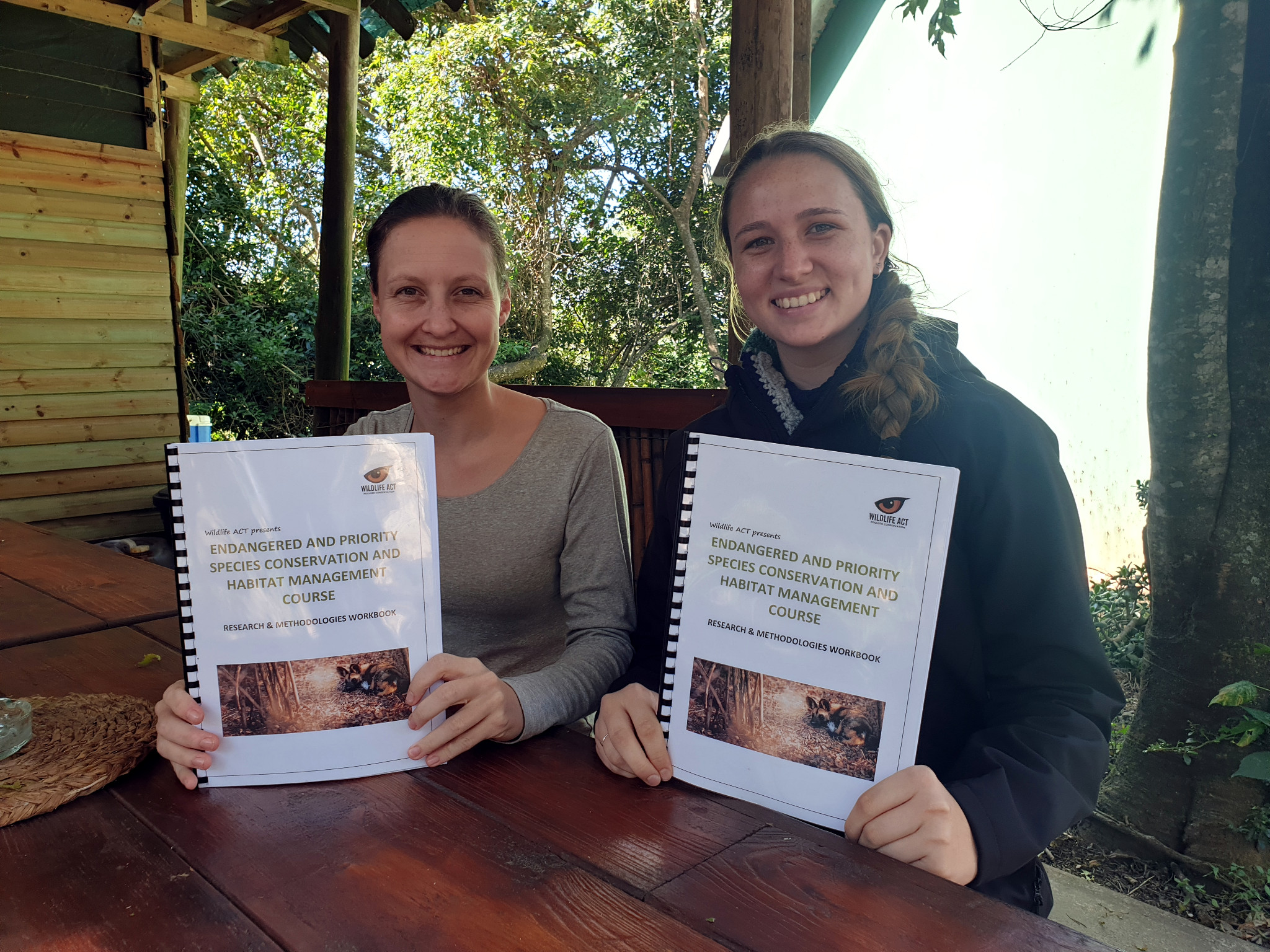
The Certificate of Participation documents the training completed and the modules covered. It is not an accredited academic qualification and does not carry university credit in its own right. It reflects completion of a professionally standards-aligned program built from Wildlife ACT's operational training framework. The course is an approved study abroad program for University of Illinois Urbana-Champaign students. Students from other institutions should consult their home institution regarding credit arrangements.
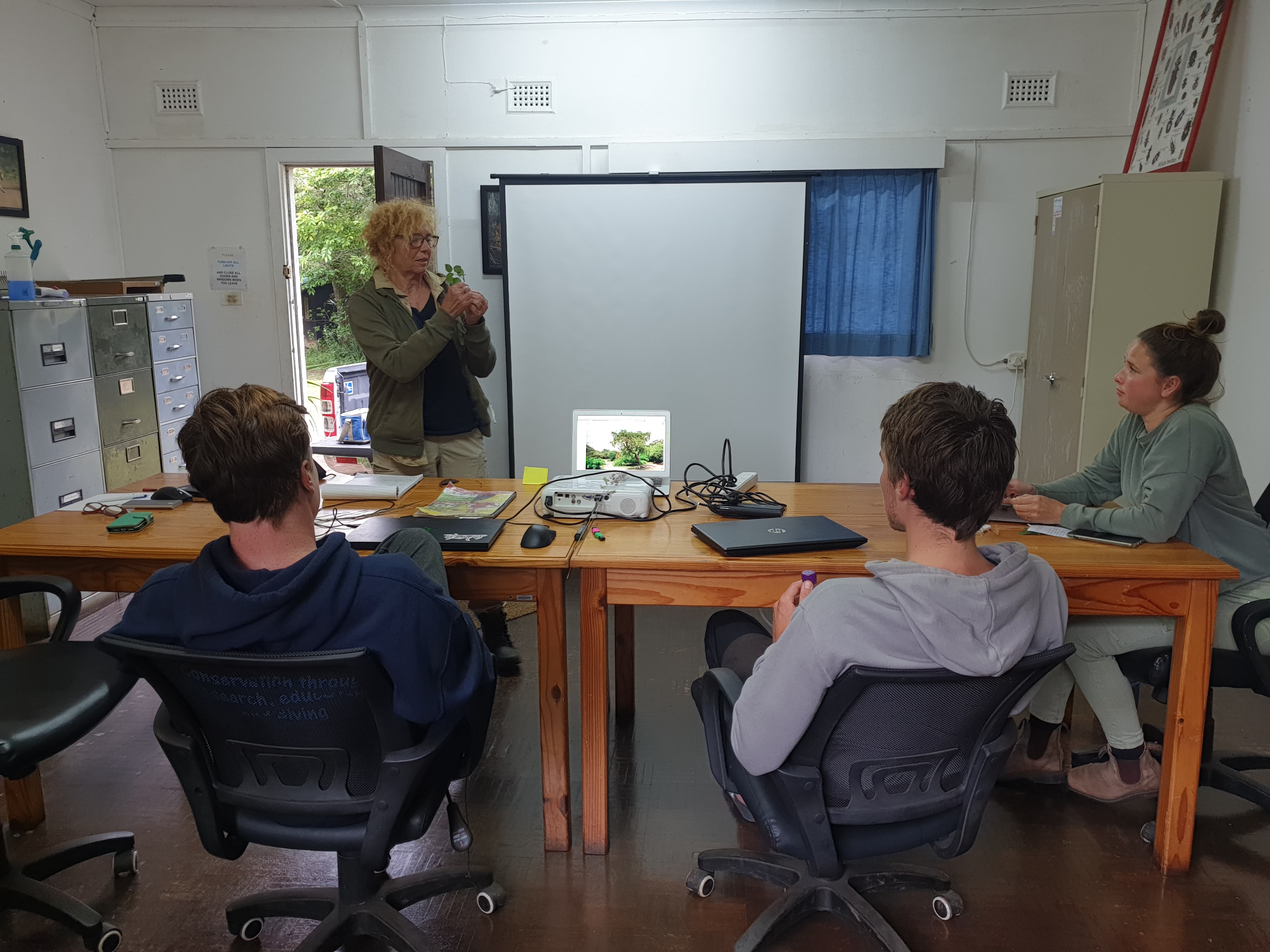
The course is designed for university students and recent graduates in biology, ecology, environmental science, or related fields, and for early-career conservationists looking to build a structured practical foundation before moving into extended field work or further study.
Do both programs involve the same field work?
Both programs involve the same field activities, species, equipment, and conditions. In both, participants join Wildlife ACT monitoring teams in active protected areas. What differs is the framework around the field work, not the field work itself.
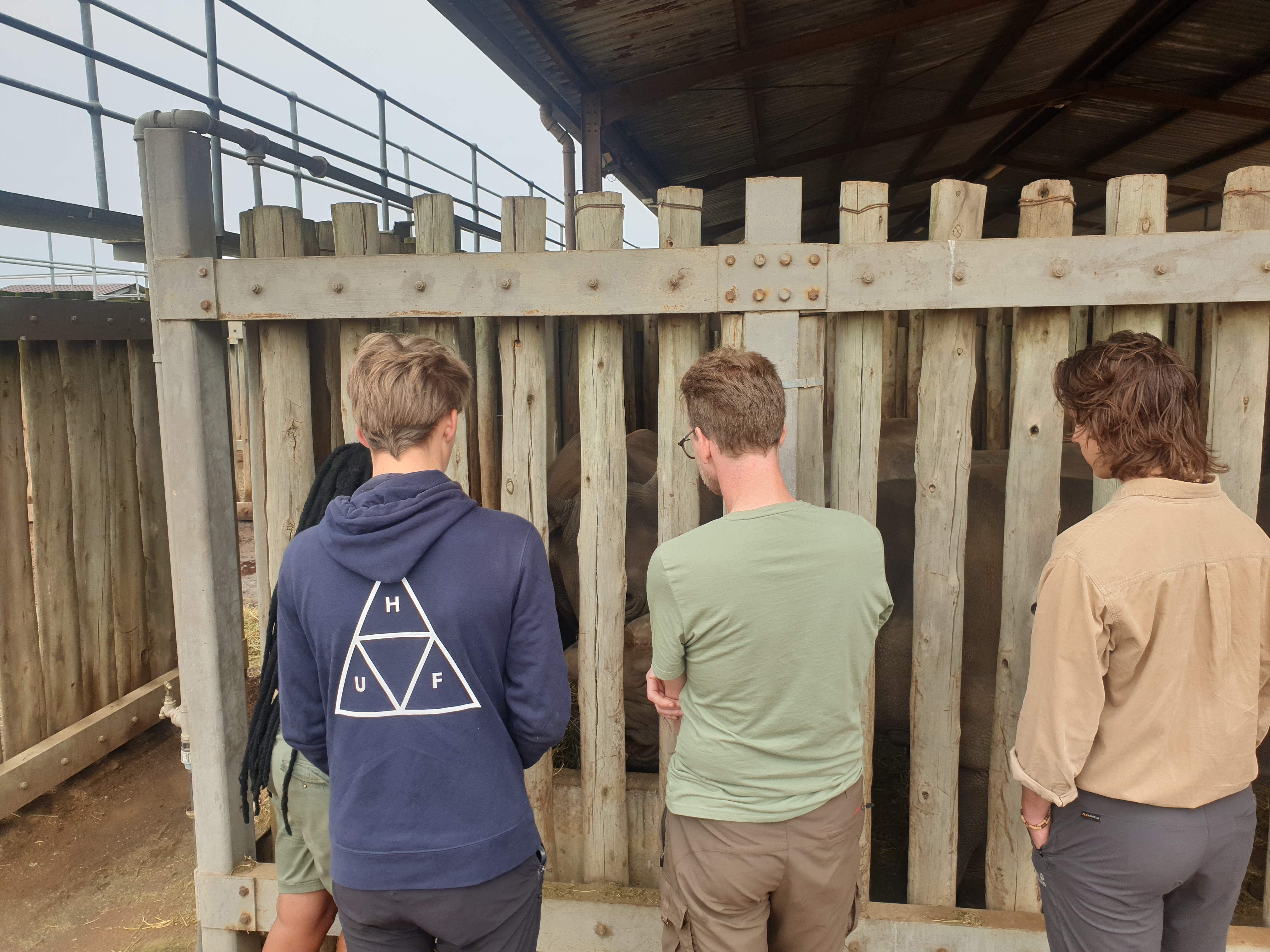
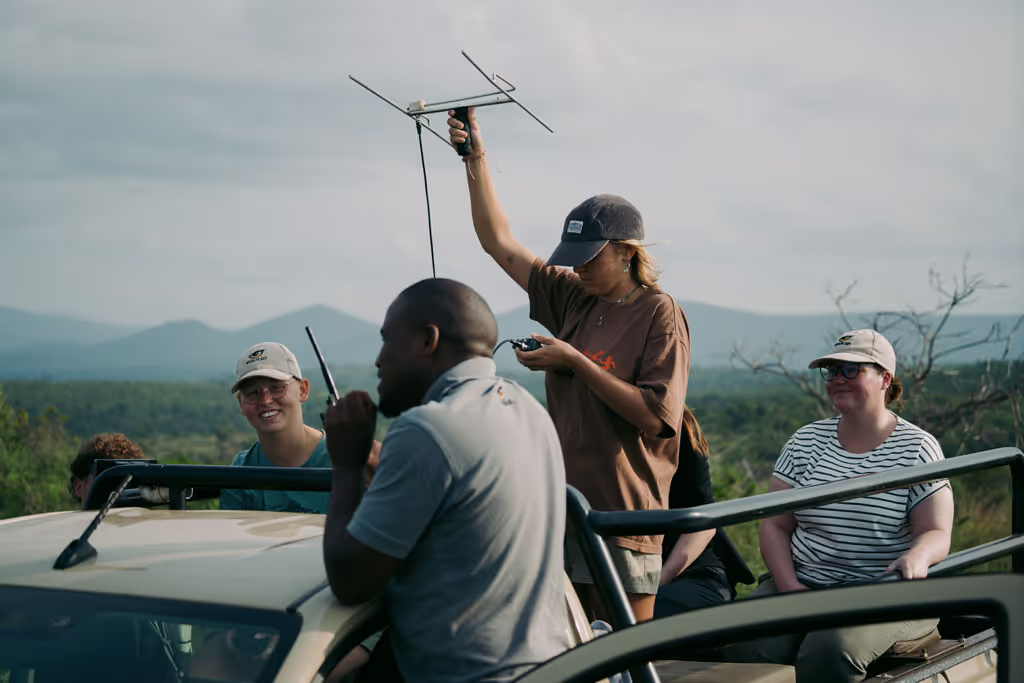
In the Endangered Species Volunteer Program, field sessions serve the monitoring operation. Volunteers assist with data collection and telemetry tracking as part of the team's daily work. There is no structured instruction delivered alongside the field activity, no assessment connected to it, and no formal debrief.
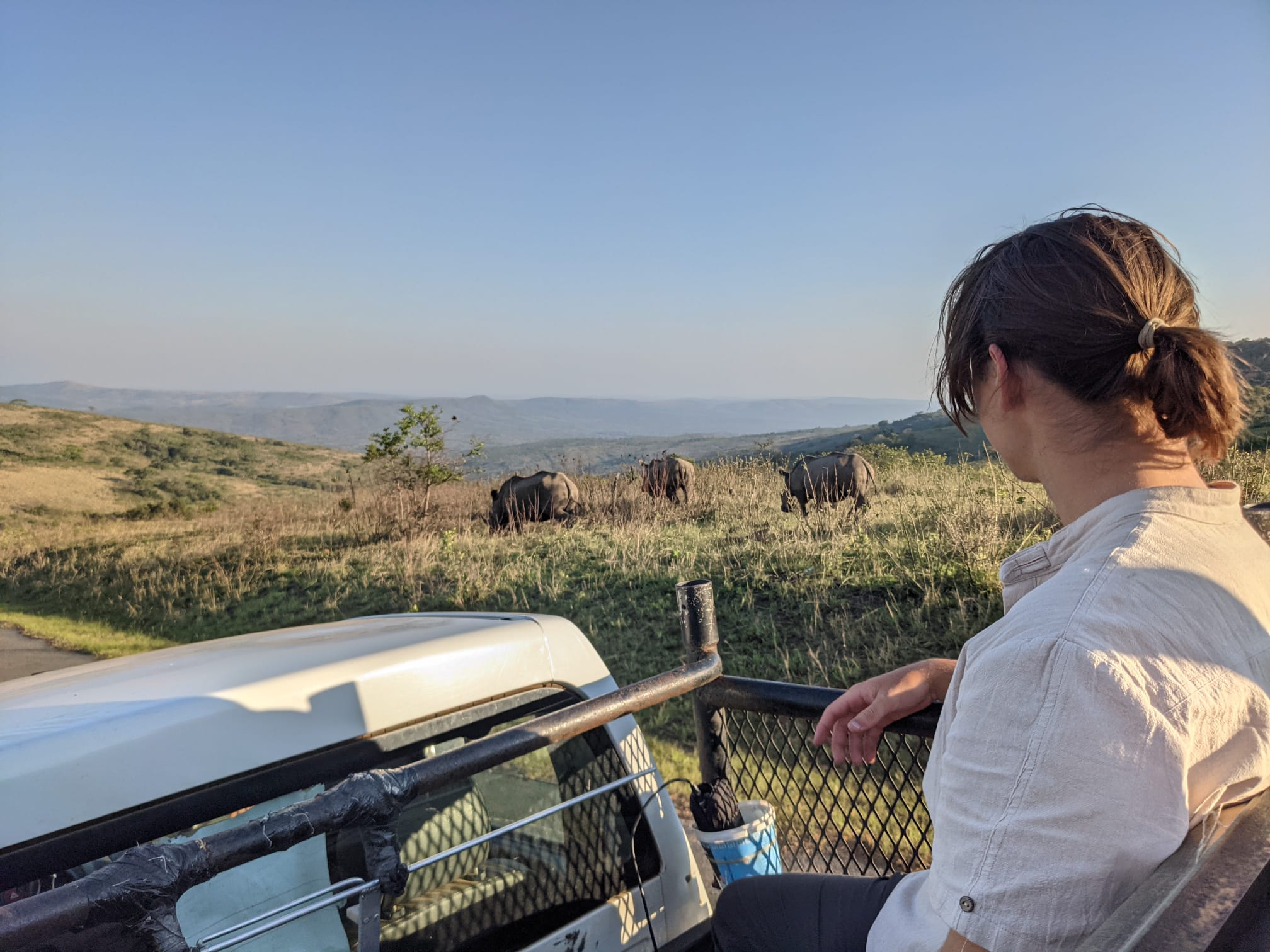
On the course, field sessions are tied to specific learning outcomes. A morning tracking African Wild Dogs by VHF telemetry is followed that afternoon by a lecture on pack social structure and ethology. The following day includes a data analysis session connecting those observations to the long-term monitoring record. Instruction and field experience run in parallel, so that each reinforces the other across the four weeks.

The comparison below sets out the key differences.
African Wildlife Conservation and Habitat Management Course
- Duration: 28 days, fixed monthly dates, based exclusively at Hluhluwe-iMfolozi Park
- Structure: ten formal lectures combined with applied field sessions and written assignments
- Learning materials: 267-page Conservation Handbook and research and methodologies workbook
- Assessment: written and oral exercises plus field performance evaluation with weekly feedback
- Certificate: Certificate of Participation issued by Wildlife ACT on successful completion
- Field time: approximately 60% of the program
- Group size: maximum five participants
- Field work framing: each session is tied to specific learning outcomes with guided instruction
Endangered Species Volunteer Program
- Duration: flexible, minimum two weeks, with rolling start dates throughout the year
- Locations: Hluhluwe-iMfolozi Park and Manyoni Private Game Reserve
- Structure: field-based; no formal lecture program or curriculum
- Learning materials: field briefings and on-the-ground guidance from Priority Species Monitors
- Assessment: none
- Certificate: none
- Field time: the majority of each day
- Group size: maximum six participants per site
- Field work framing: sessions support the ongoing monitoring operation
What does each program actually build in participants?
The course builds structured, articulable knowledge; the volunteer program builds field confidence. By the end of the African Wildlife Conservation and Habitat Management Course, participants can explain the reasoning behind different telemetry techniques, discuss how camera trap data contributes to conservation planning, describe the ecological drivers of bush encroachment, and engage with the complexities of the illegal wildlife trade from a well-informed position. Weekly assessments and facilitator feedback ensure that learning is consolidated rather than accumulated passively. The Certificate of Participation provides a formal record of what has been covered.
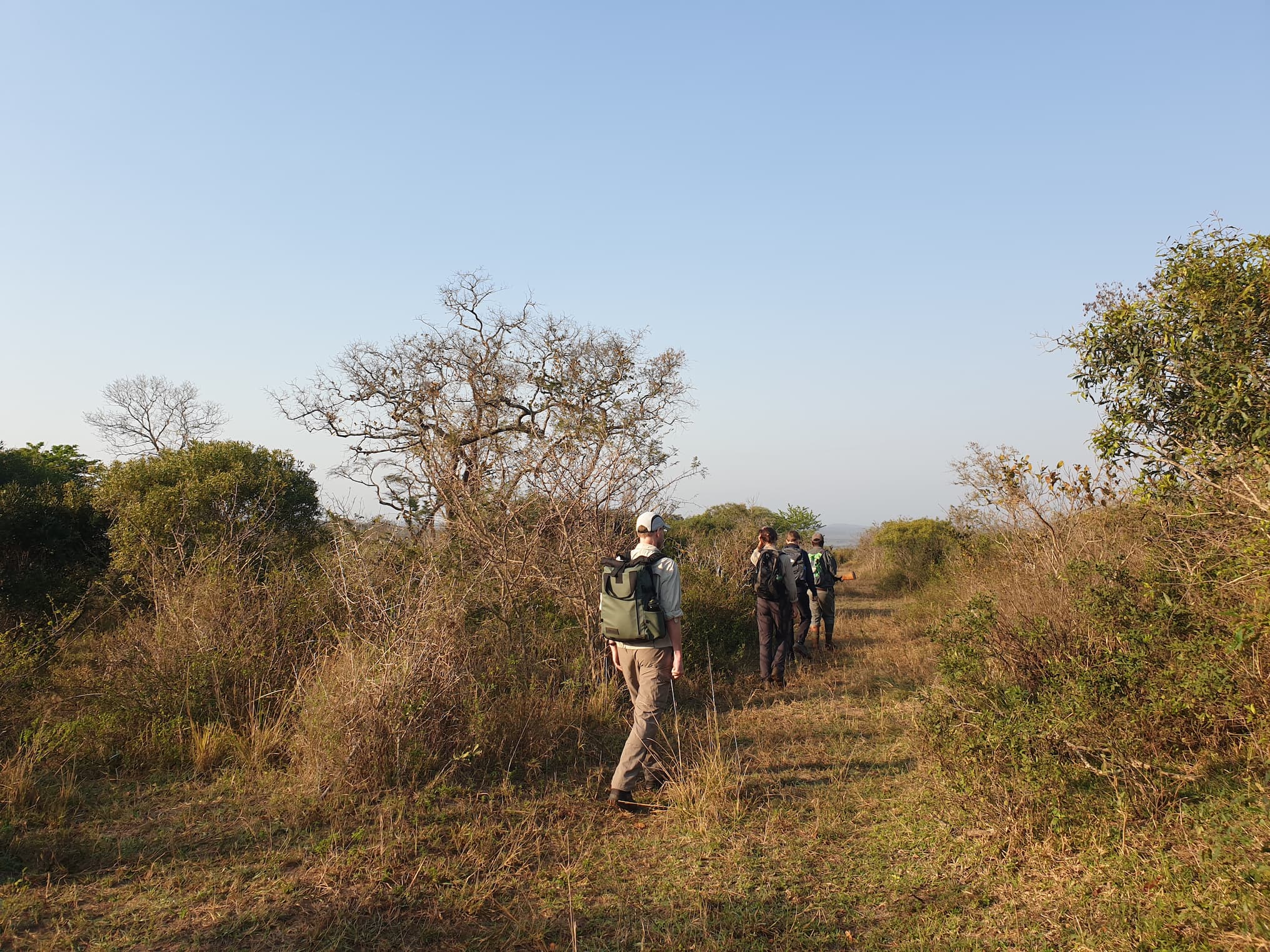
The Endangered Species Volunteer Program builds field confidence. Hundreds of hours of monitoring experience, across varied conditions and multiple weeks, produces a fluency with field operations that a structured 28-day program cannot replicate. Experienced conservationists consistently describe this kind of accumulated field familiarity as foundational.
For people approaching conservation from an academic background who want to understand how professional monitoring works before committing to extended field time, the course is the more structured entry point. For people who already have some conservation foundation and want direct, sustained contribution to active operations, the volunteer program is the better fit. Many participants pursue both in sequence, completing the course first and then moving into a placement.
Who is the Wildlife ACT conservation course designed for?
The course is designed for university students and recent graduates in biology, ecology, environmental science, or related fields who want to move beyond theory and gain a clear understanding of how conservation works in practice. It also suits early-career conservationists building a practical foundation, and individuals transitioning into conservation from related disciplines.
No prior field experience is required. Participants should have a strong interest in wildlife, a reasonable level of physical fitness, and a willingness to work as part of a team in all conditions. English is the language of instruction throughout.
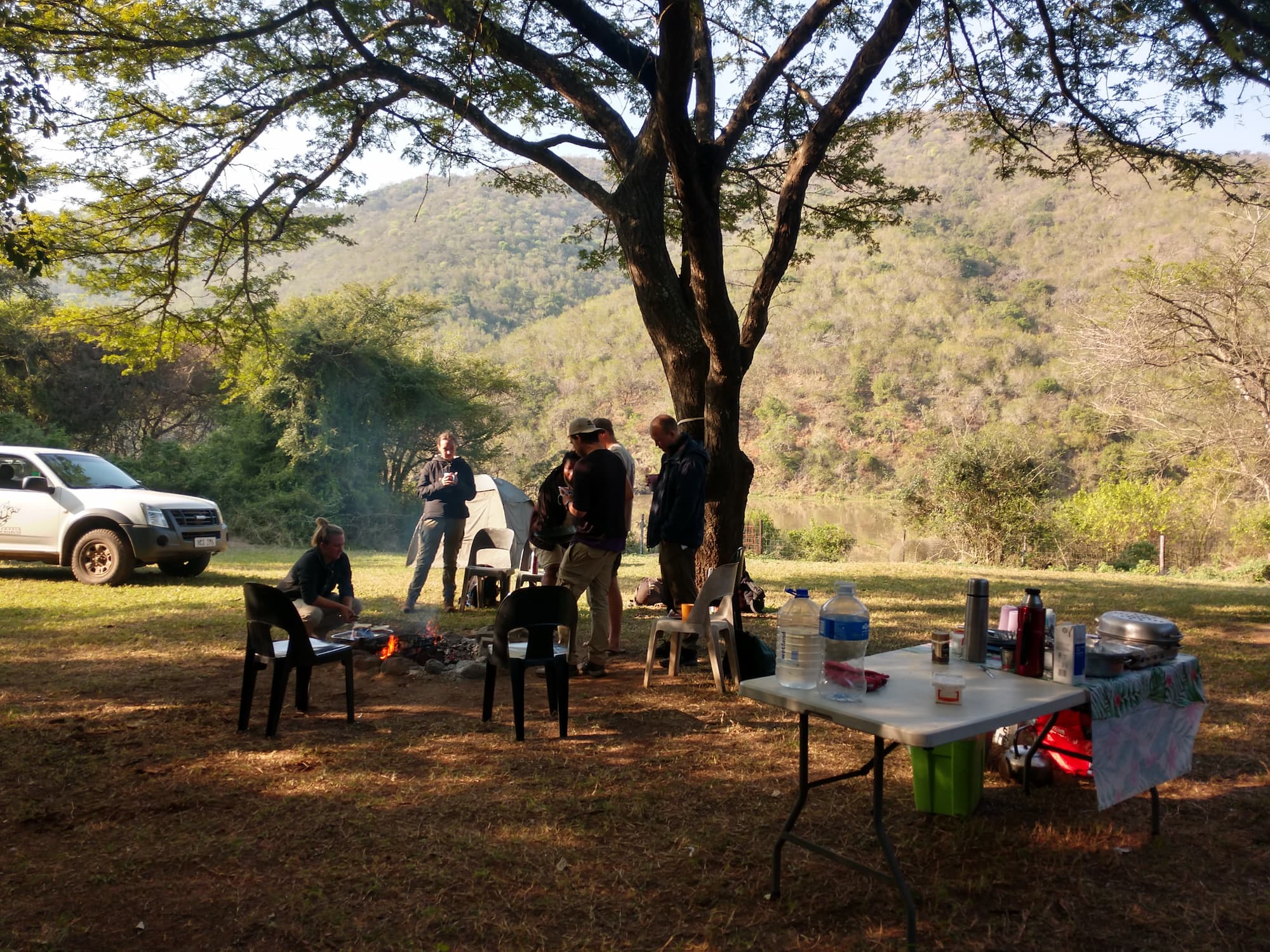
The volunteer program draws a broader range of participants. It is open to anyone with a genuine interest in conservation and no prior experience is expected. It particularly suits people who want extended time in the field without a structured curriculum, or who want to build on an existing conservation foundation through sustained practical contribution.
Can you do the course and volunteer placement in the same trip?
Yes. The African Wildlife Conservation and Habitat Management Course runs on fixed monthly dates and the volunteer program has rolling start dates, making it straightforward to move from one directly into the other. Many participants complete the course at Hluhluwe-iMfolozi Park and then continue into a volunteer placement there or at Manyoni Private Game Reserve.
Participants who arrive at the volunteer program after completing the course are already familiar with monitoring equipment, data protocols, and the ecological principles behind the work. That foundation does not change the activities. It changes how deeply they can engage with them from the first session.
Wildlife ACT's reservations team can advise on scheduling both in sequence. Full details are on the course page and the volunteer program page.
Which program is right for your conservation goals?
The course suits people who want structured learning with formal lectures, assessed exercises, and a certificate, who are connecting academic knowledge to applied conservation, or who are at the start of their conservation career and want a rigorous, credible foundation before committing to extended field time.
The volunteer program suits people who want flexibility on start dates and placement length, who learn best through direct participation, who want to contribute to active ongoing monitoring operations over a sustained period, or who already have some conservation experience and want to build on it in the field.
These are not competing options. They address different needs at different stages of a conservation journey, and many people pursue both.
Frequently asked questions
Do I need prior experience to join the volunteer program?
No prior conservation experience is required. Volunteers learn monitoring techniques through direct field participation alongside Wildlife ACT's Priority Species Monitors. Practical skills are introduced from the start of each placement. A genuine interest in conservation, a reasonable level of physical fitness, and a willingness to engage with the work in all conditions are the main requirements.
Is the African Wildlife Conservation and Habitat Management Course an accredited qualification?
No. The Certificate of Participation documents the training completed and the modules covered. It is not an accredited academic qualification, does not carry university credit by default, and is not a professional certification. It reflects the completion of a program built to the standards of Wildlife ACT's professional staff training curriculum.
How long are Wildlife ACT volunteer placements?
Placements run from a minimum of two weeks, with extended stays available at a reduced rate and flexible start dates throughout the year. Many volunteers extend their placement once in the field. There is no fixed upper limit on duration.
Can international participants join both programs?
Yes. Both programs are open to international participants. All instruction and safety briefings are delivered in English. Wildlife ACT's reservations team can provide guidance on visa requirements, arrival logistics, and preparation ahead of either program.
What does the Certificate of Participation cover?
The Certificate of Participation is issued by Wildlife ACT to participants who meet the required standards across field performance, data collection, and written exercises over the 28-day course. It confirms completion and outlines the modules covered. It is commonly included in CVs, academic portfolios, and postgraduate applications as a record of practical field-based training.
Can I do the course and volunteering in the same trip?
Yes. The course runs on fixed monthly dates and the volunteer program has rolling start dates, making it practical to combine both in a single trip. Many participants complete the course and move directly into a volunteer placement at Hluhluwe-iMfolozi Park or Manyoni Private Game Reserve. Wildlife ACT's reservations team can advise on scheduling.
What is the Certificate of Participation from Wildlife ACT?
The Certificate of Participation is issued by Wildlife ACT on successful completion of the 28-day course. It documents the training completed and the modules covered. It is not an accredited qualification but is recognised as a record of rigorous, professionally standards-aligned field training. Many participants include it in CVs and postgraduate applications.
Is the Wildlife ACT course suitable for gap year students?
Yes. The course is well suited to gap year students with an interest in conservation, biology, or ecology who want structured, practical experience before beginning or continuing their studies. No prior conservation experience is required. The 28-day format fits within a standard gap year timeline, and many participants combine the course with a volunteer placement in the same trip.
How does the course compare to a university conservation module?
The course is a non-accredited practical training program, not a university module, and it does not replace academic study. It is built from Wildlife ACT's internal staff training curriculum and delivers professional-level field skills in wildlife monitoring, telemetry, camera trapping, habitat management, and data collection. University of Illinois Urbana-Champaign students can apply course credit. Students from other institutions should consult their home institution regarding credit arrangements.
How to apply
Applications for the African Wildlife Conservation and Habitat Management Course are submitted through the Wildlife ACT website. The reservations team will confirm available dates and guide you through preparation. The course runs monthly with a maximum of five participants per intake. Early booking is recommended, particularly during peak academic periods.
Full details and available placement dates for the Endangered Species Volunteer Program are on the volunteer program page.
For a closer look at the course and whether it fits your background, Is This Wildlife Conservation Course Right for You? A Practical Guide for Science and Biology Students covers the program in more detail.
References
Ezemvelo KZN Wildlife. (2024). KZN Wildlife. https://www.kznwildlife.com/
University of Illinois Urbana-Champaign. (n.d.). Wildlife conservation and habitat management in South Africa. My Study Abroad. https://app.studyabroad.illinois.edu/index.cfm?FuseAction=Programs.ViewProgramAngular&id=11960
Wildlife ACT. (2026). Endangered and priority species conservation. https://www.wildlifeact.com/about-wildlife-act/endangered-and-priority-species-conservation
Wildlife ACT. (2026). Wildlife conservation training courses. https://www.wildlifeact.com/courses/conservation-training-courses
Wildlife ACT. (2026). Is this wildlife conservation course right for you?. https://www.wildlifeact.com/blog/is-this-wildlife-conservation-course-right-for-you-a-practical-guide-for-science-and-biology-students
.jpeg)