Symbiosis describes any close, long-term biological interaction between two different species. The word comes from the Greek syn (together) and bios (life), and the concept underpins much of what ecologists study and conservationists work to protect. Every ecosystem on Earth is held together by these interspecies relationships, from the bacteria in a Rhinoceros gut to the Oxpeckers riding on its back.
Six broad types of symbiosis are recognised in ecology: mutualism, commensalism, parasitism, competition, predation, and neutralism. Each describes a different balance of benefit and cost between the species involved. Understanding them is fundamental to understanding how ecosystems function, why certain species depend on others for survival, and what happens when those relationships are disrupted.
For students of biology, ecology, and environmental science, these are more than textbook definitions. They are the interactions that determine whether species thrive or decline, whether habitats remain stable or collapse, and whether conservation interventions succeed or fail. In the field, recognising symbiotic relationships is part of daily work.
Mutualism: both species benefit
Mutualism is the symbiotic relationship in which both organisms gain a measurable advantage from the interaction. It is often the first type of symbiosis people think of, and the examples from African ecosystems are some of the most recognisable in ecology.
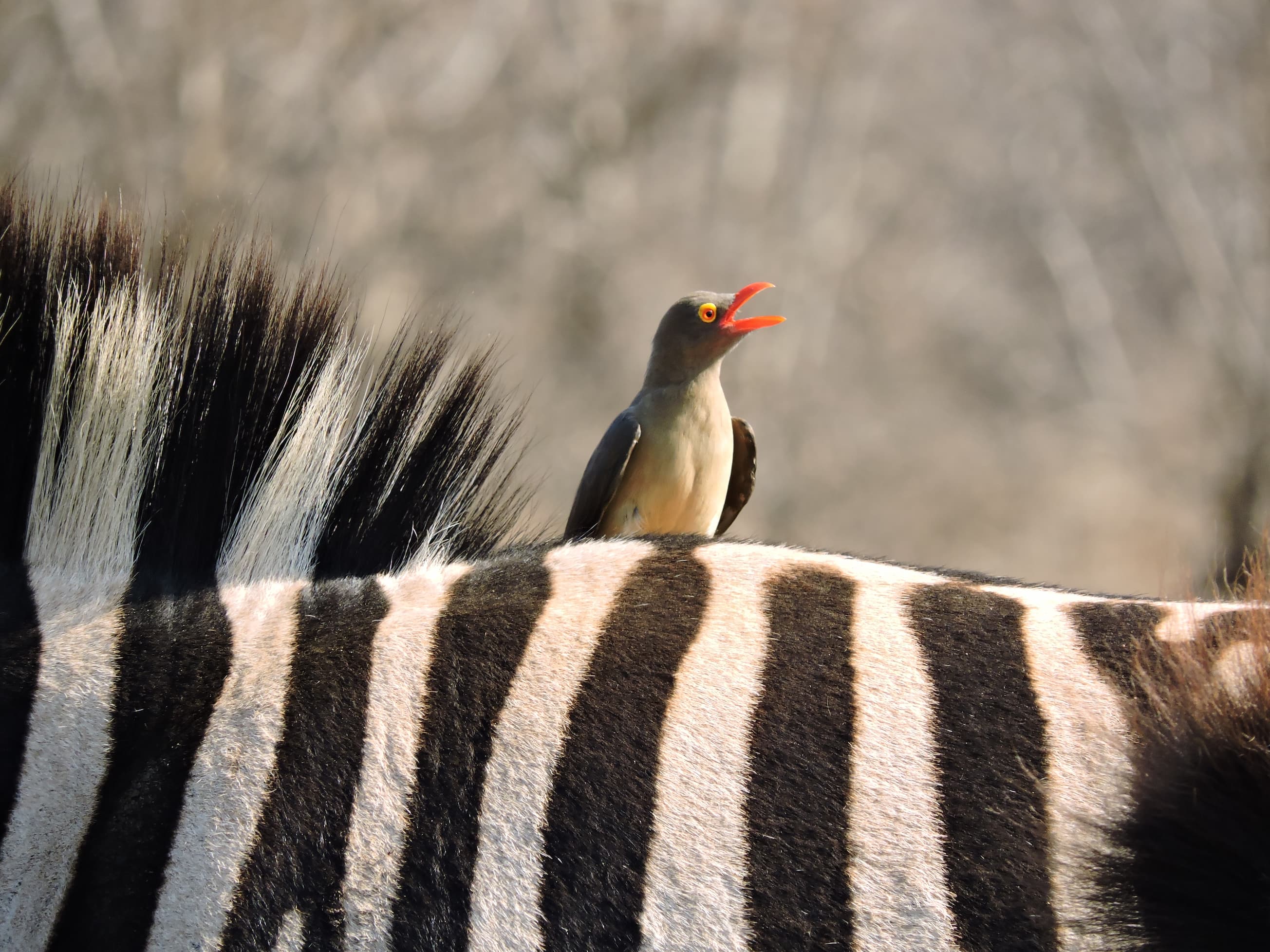
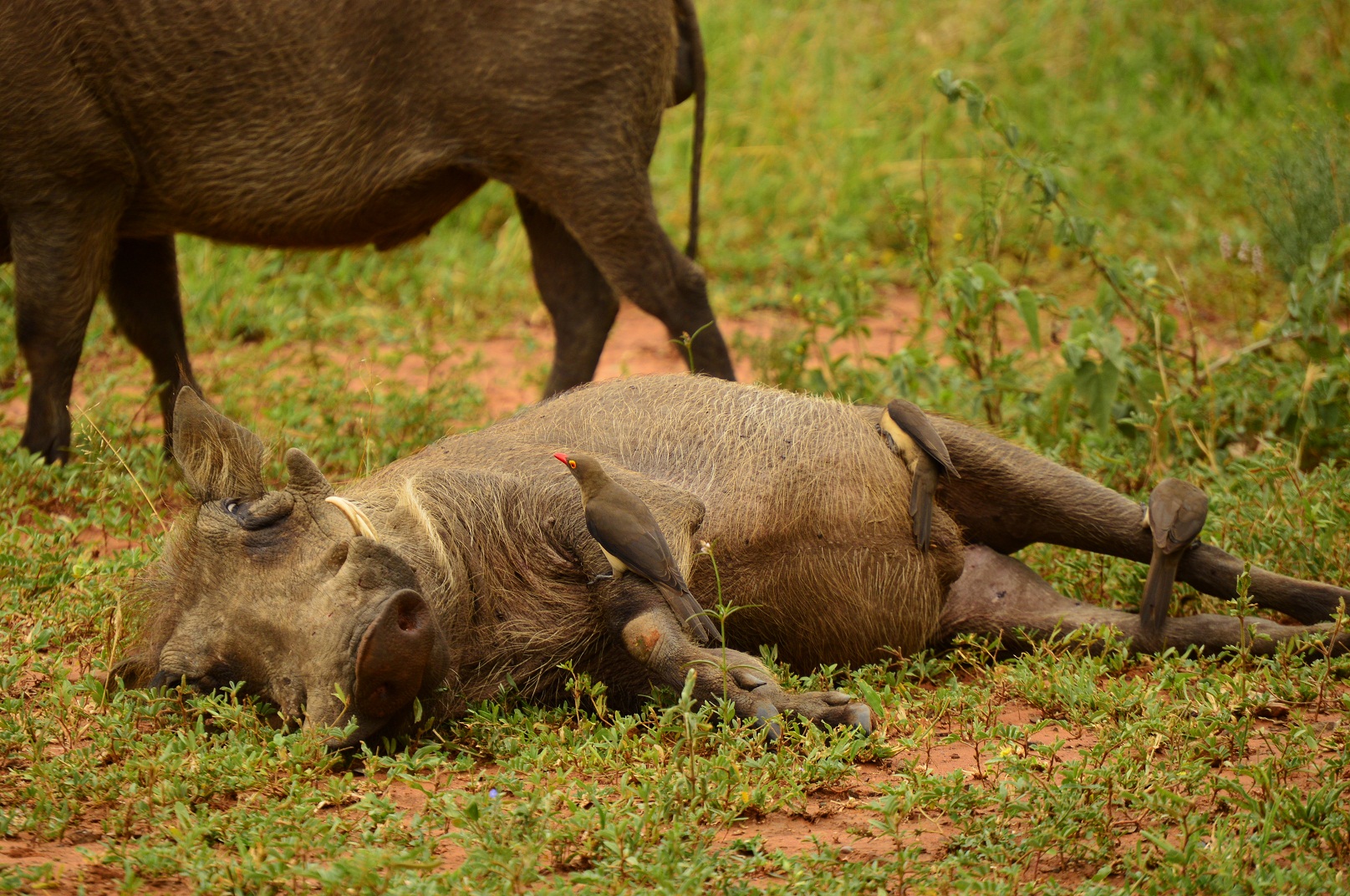
The relationship between the Red-billed Oxpecker (Buphagus erythrorynchus) and large African herbivores is a classic case. These small birds spend their lives on the bodies of Buffalo, Rhinoceros, Giraffe, and other large mammals, feeding on ticks, lice, and other external parasites. The bird gains a reliable food source. The mammal gains a reduction in parasite load, which can improve skin condition and reduce the risk of tick-borne disease. Research into the feeding ecology of Oxpeckers has confirmed that ticks constitute the majority of the Oxpecker diet, though the relationship is more complex than a simple cleaning service.
Mycorrhizal fungi and plant roots provide a less visible but arguably more significant example of mutualism. The fungal network extends the root system's effective reach, improving the plant's uptake of water and minerals. In return, the plant supplies the fungus with carbohydrates produced through photosynthesis. This mutualistic relationship is present in the vast majority of terrestrial plant species and is a driving force behind the productivity of African savanna grasslands.
Pollination is another form of mutualism observed daily in the field. Insects, birds, and bats feed on nectar and in doing so transfer pollen between plants, enabling reproduction. The fig tree and its species-specific fig wasp represent one of the most tightly evolved mutualistic partnerships in the natural world. Each fig species depends on a single wasp species for pollination, and the wasp can only reproduce inside the fig.
Commensalism: one benefits, the other is unaffected
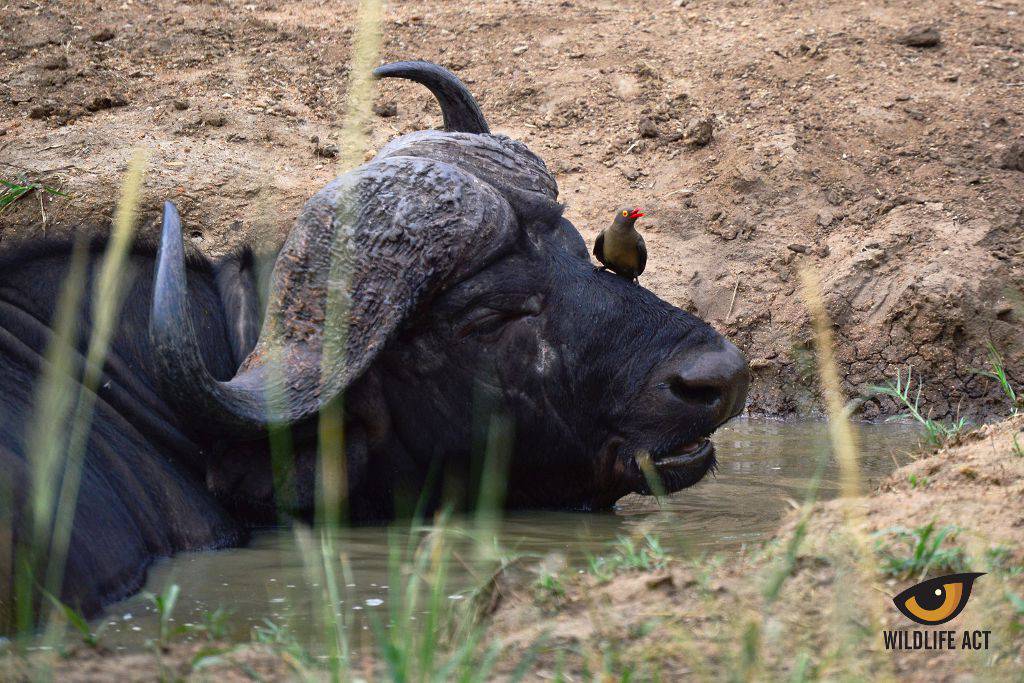
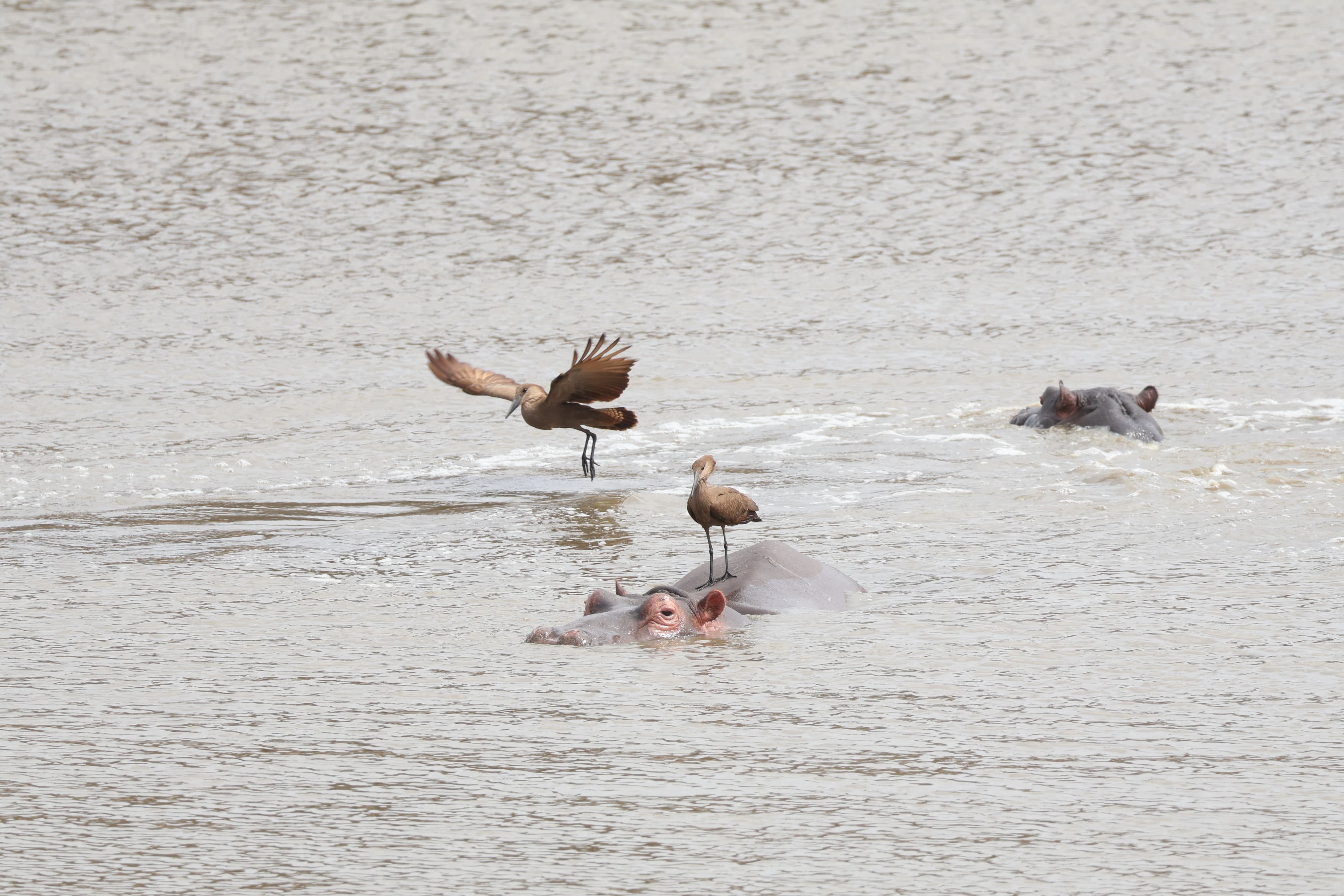
Commensalism occurs when one species benefits from the relationship while the other is neither helped nor harmed. The line between commensalism and mutualism can be difficult to draw in practice, and many relationships that were once classified as commensal have been reclassified as weakly mutualistic or weakly parasitic as research has advanced.
The Cattle Egret (Bubulcus ibis) is one of the most commonly cited commensal species in African ecology. These birds follow large herbivores such as Buffalo, Elephant, and Rhinoceros, feeding on insects and small vertebrates flushed from the grass by the mammals' movement. The egret benefits from the easier hunting. The herbivore, as far as researchers can determine, is not significantly affected either way.
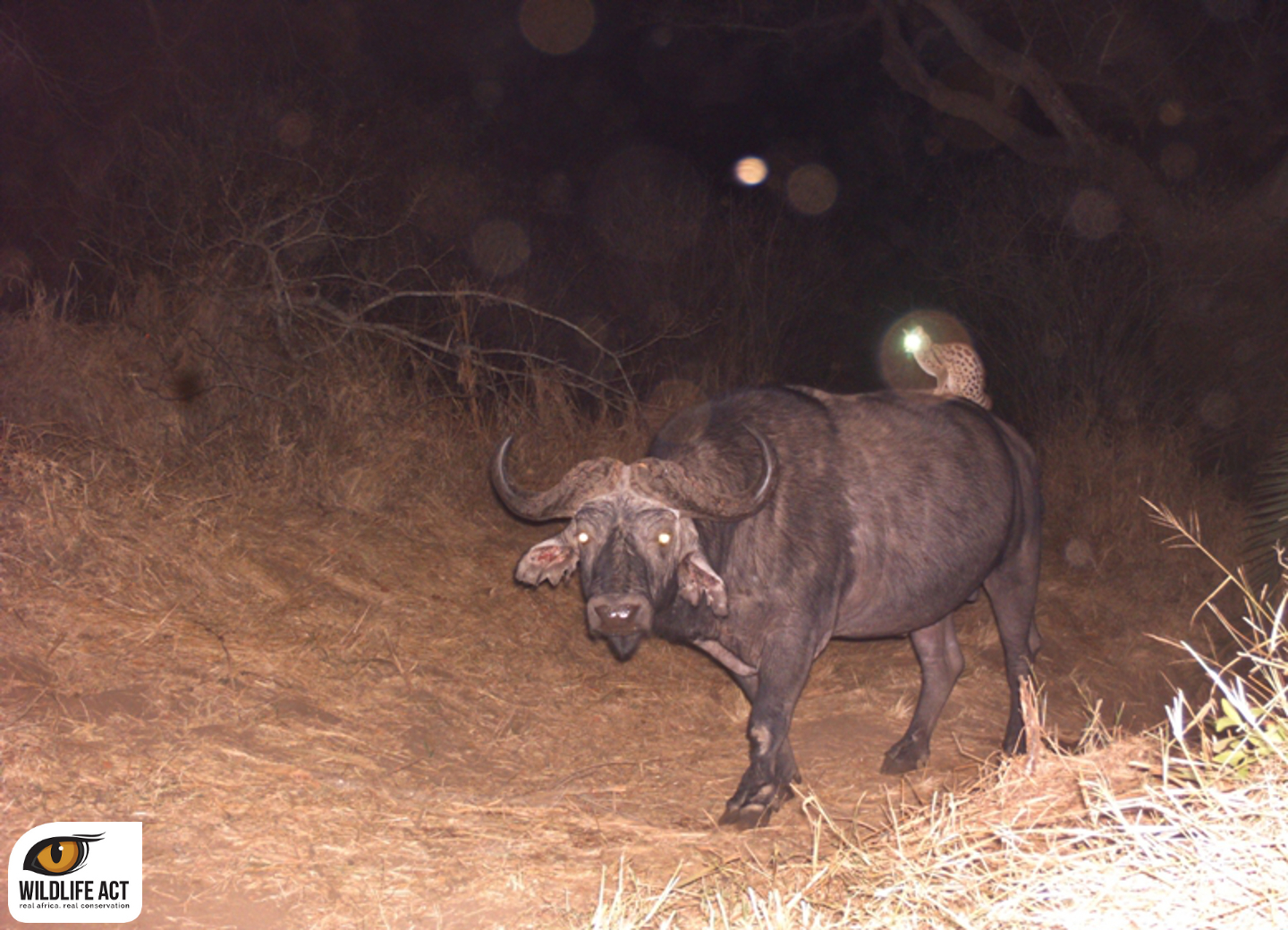
One particularly puzzling case of apparent commensalism was captured by Wildlife ACT camera traps in Hluhluwe-iMfolozi Park. A Large-spotted Genet (Genetta maculata), nicknamed Genet Jackson by the monitoring team, was photographed repeatedly hitch-hiking on the backs of Buffalo and a White Rhinoceros over the course of several nights. One Buffalo tolerated an extended ride. Another shook the Genet off almost immediately. The likely benefit to the Genet is an easier or safer route through thick vegetation, while what the host gains, if anything, remains unclear. The inconsistent tolerance shown by different individual hosts is part of what makes this kind of behaviour so difficult to classify with confidence. The full sighting is documented on the Wildlife ACT blog in Camera Traps Capture a Hitch-hiking Genet.
The Oxpecker relationship, too, has a commensal dimension. These birds also function as a lookout system, emitting a sharp, hissing alarm call when they detect an approaching predator. The mammal benefits from this early warning. The bird itself faces no meaningful threat from the predator, since large carnivores do not target Oxpeckers. In this specific aspect of the relationship, the bird provides a benefit without receiving one in return, which is the definition of a commensal interaction.
Epiphytic plants provide another example. Orchids and ferns growing on the trunks and branches of larger trees gain access to sunlight and airflow without drawing nutrients from the host tree. The host is unaffected. This relationship is common in the forest patches within Hluhluwe-iMfolozi Park, where epiphytes are visible on many of the larger riverine trees.
Parasitism: one benefits, the other is harmed
Parasitism is the symbiotic relationship in which one organism (the parasite) benefits at the expense of another (the host). The parasite draws nutrition, shelter, or reproductive advantage from the host, causing harm ranging from mild to lethal.
Ticks are among the most significant ectoparasites in African wildlife ecosystems. Species of the genus Amblyomma and Rhipicephalus feed on the blood of mammals, causing anaemia, transmitting diseases such as East Coast Fever and heartwater, and creating open wounds vulnerable to secondary infection. Tick loads can be severe enough to affect the body condition and survival rates of young animals, particularly during wet-season population peaks.
The Oxpecker, discussed above as a mutualist and a commensal, also behaves as a parasite. Research has documented that Oxpeckers peck at existing wounds and scabs on their hosts, reopening them to feed on blood. This delays healing, increases infection risk, and can cause significant tissue damage over time. Studies on captive Oxpeckers found that wound-feeding increased when tick abundance was low, suggesting that the birds switch to parasitic behaviour when their preferred food source is scarce. The same species, in the same relationship, can therefore be mutualistic, commensal, and parasitic depending on the specific behaviour being observed, a complexity that illustrates why simplistic classification of symbiotic relationships rarely holds in the field.
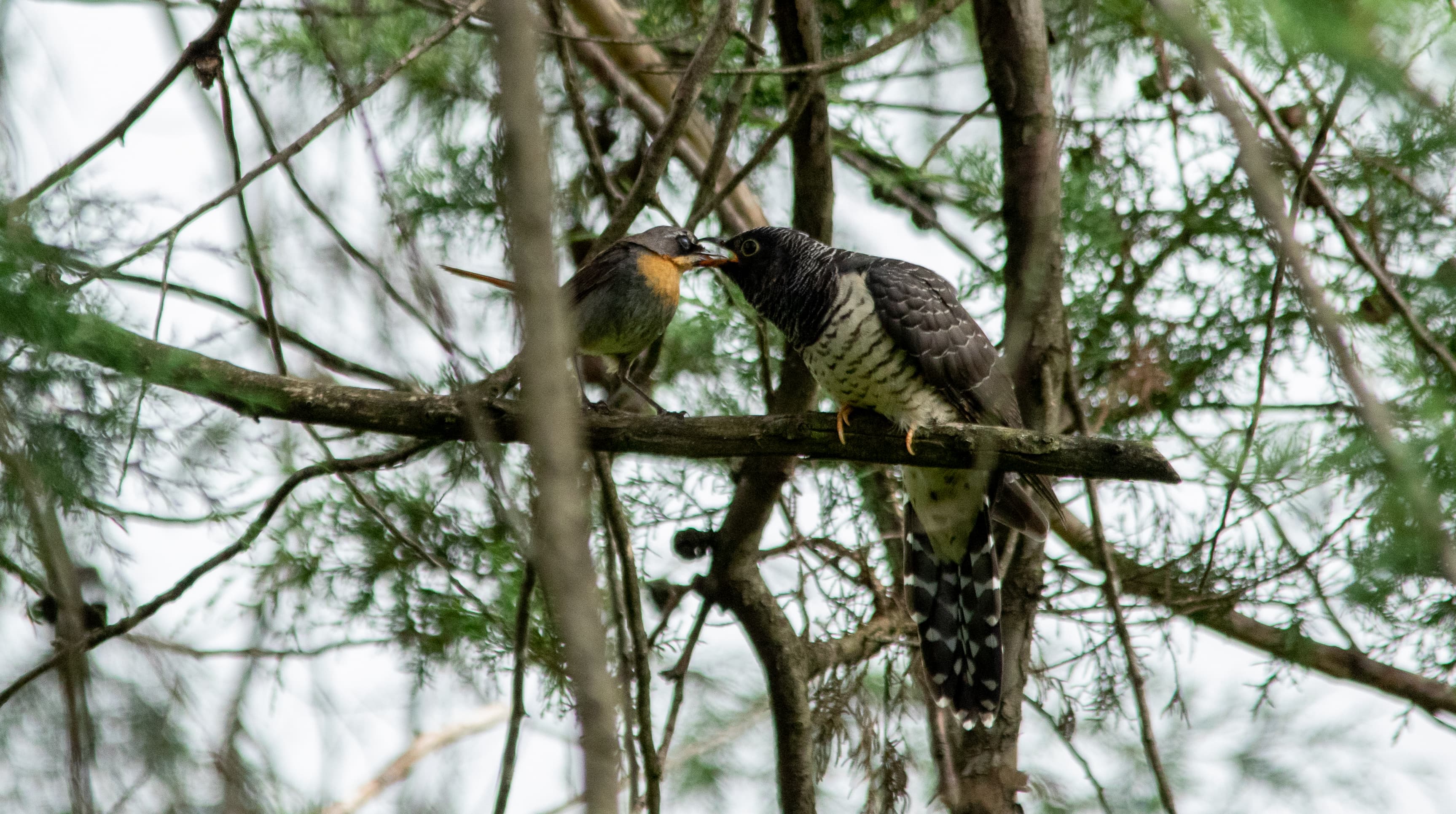
Brood parasitism is a different form entirely, and one witnessed firsthand at Wildlife ACT's Southern Drakensberg site. A young Red-chested Cuckoo (Cuculus solitarius), photographed being fed by a Cape Robin-Chat (Cossypha caffra), demonstrates the strategy clearly: the host bird raises a chick several times its own size as though it were its own offspring. Female cuckoos lay their eggs in the nests of other bird species, and the host is generally unable to distinguish the parasitic egg from its own clutch. The parasitic chick typically grows faster and demands more food than the host's genuine chicks would, and the host parents can end up investing significant energy into raising an offspring that is not their own. The same reproductive strategy is used by honeyguides and cowbirds elsewhere in the world.
Internal parasitism is equally significant for conservation. Gastrointestinal helminths, protozoal infections, and blood parasites are monitored in priority species populations because parasite burdens can affect individual fitness, reproductive output, and population viability. In small, managed populations such as those of African Wild Dog (Lycaon pictus) or Cheetah (Acinonyx jubatus) within fenced protected areas, the impact of parasites is magnified by limited genetic diversity and restricted range.
Competition: neither species benefits
Competition is the symbiotic relationship in which both organisms are negatively affected by shared use of a limited resource. That resource may be food, water, territory, nesting sites, or access to mates. Competition is one of the primary drivers of natural selection and is observed in virtually every ecosystem.
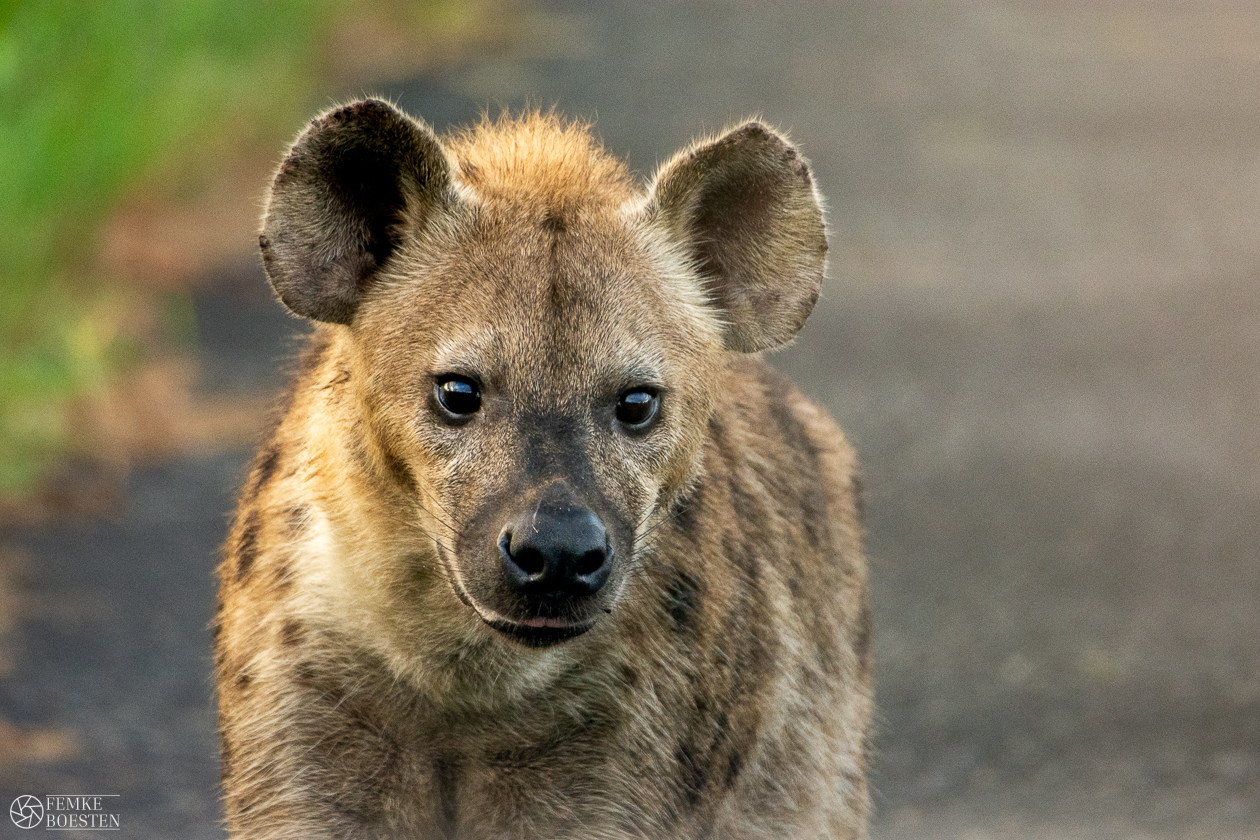
Interspecific competition between African large predators is one of the most studied examples in ecology. Lion (Panthera leo) and Spotted Hyaena (Crocuta crocuta) are direct competitors for prey resources, and their interactions shape the structure of predator communities across southern African savannas. Lion regularly displace Hyaena from kills. Hyaena, in turn, use their superior numbers and endurance to scavenge or steal kills from smaller predator species. Both populations are constrained by this competition, neither gains a net benefit, and the intensity of the interaction varies with prey availability and predator density.
Cheetah face particularly severe competitive pressure. As the smallest of the large African predators, they lose a significant proportion of their kills to Lion, Leopard (Panthera pardus), and Spotted Hyaena. Kleptoparasitism, the theft of food by a stronger competitor, is a serious survival pressure for Cheetah and one of the reasons they tend to hunt during the middle of the day, when other large predators are less active. This behavioural adaptation to competition is visible during daily monitoring sessions and is a frequent point of discussion on conservation training courses.
Competition also occurs between herbivores. White Rhinoceros (Ceratotherium simum) and bulk-grazing ungulates such as Wildebeest and Zebra share grass resources, and in fenced protected areas where immigration and emigration are managed, competition for grazing can influence population management decisions. Understanding these competitive dynamics is part of the carrying capacity assessments that inform reserve management.
Predation: one benefits, the other dies
-2.jpeg)
Predation is the symbiotic interaction in which one organism (the predator) kills and consumes another (the prey). While it may seem distinct from the other forms of symbiosis, predation is a close, evolved relationship between species that shapes population dynamics, community structure, and evolutionary adaptation on both sides.
African Wild Dog are among the most effective predators in any ecosystem, with hunting success rates that vary significantly depending on habitat type, pack size, and prey species. In open grassland, cooperative pursuit hunting produces high group success rates. In the mixed woodland savanna that makes up most of their remaining habitat, Wild Dog use multiple short-distance chases with lower individual capture rates but high group feeding rates through prey sharing. Their cooperative hunting strategy, in which pack members coordinate pursuit, is an evolved response to the speed and endurance of their prey species, primarily medium-sized antelope such as Nyala and Impala.
Predation regulates prey populations and prevents overgrazing, which in turn affects vegetation structure, fire behaviour, soil erosion, and the habitat available to every other species in the ecosystem. The reintroduction of predators to protected areas where they had been locally extinct demonstrates this clearly. When African Wild Dog were reintroduced to reserves in KwaZulu-Natal, shifts in prey behaviour and distribution followed, with cascading effects on vegetation recovery and biodiversity.
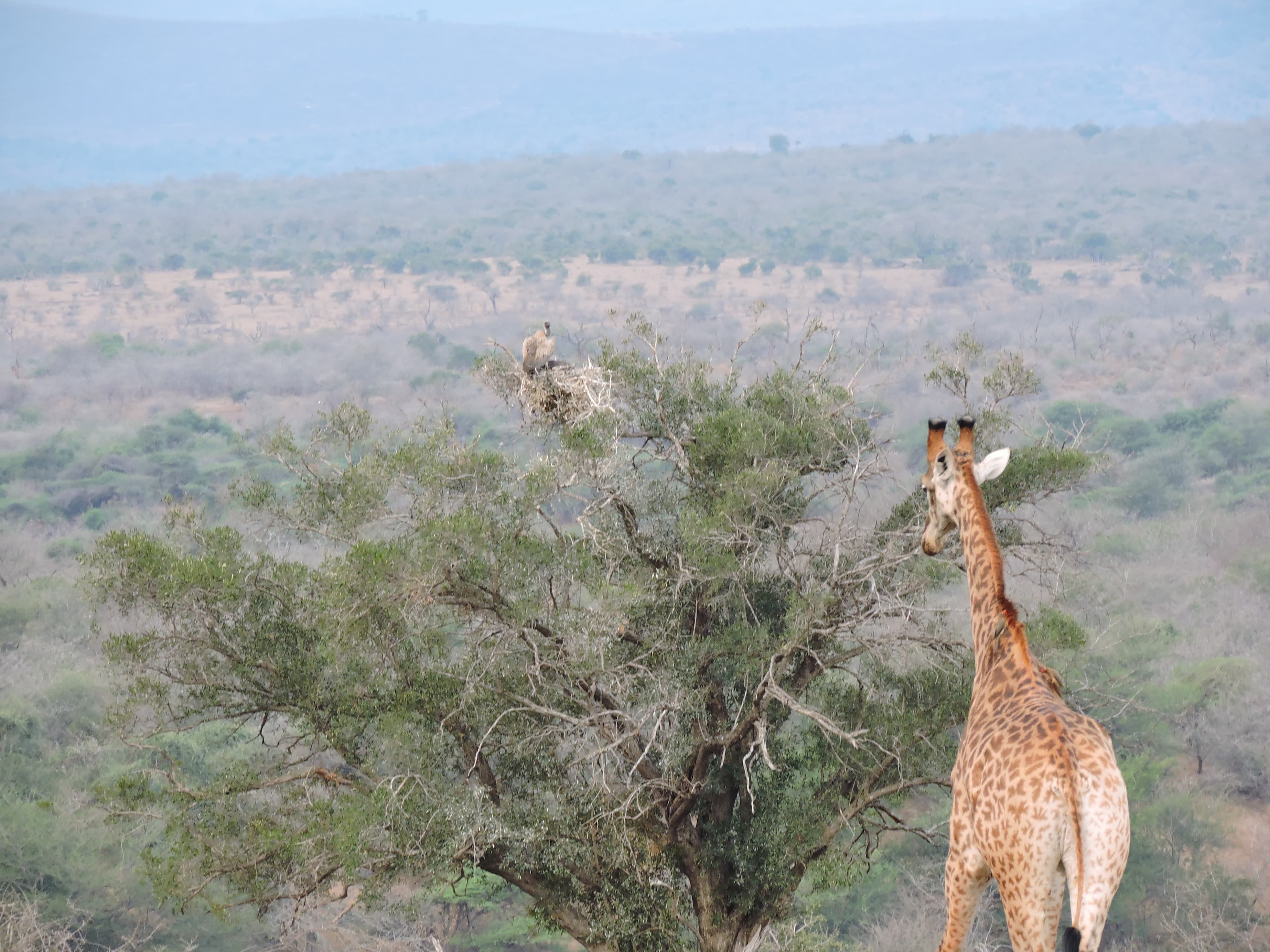
Vultures are not predators in the strict sense, but their scavenging role is functionally connected to predation. African White-backed Vultures (Gyps africanus), Lappet-faced Vultures (Torgos tracheliotos), and other Vulture species locate and consume carcasses that result from predation events, disease, and natural mortality. Without Vultures, carcasses decompose more slowly, disease transmission increases, and nutrient cycling is disrupted. The near-collapse of Vulture populations across southern Africa, driven by poisoning and habitat loss, has had measurable consequences for ecosystem health.
Neutralism: both species are unaffected
Neutralism describes a relationship in which two species coexist in the same environment without any measurable effect on one another. In practice, true neutralism is extremely rare. Most species that share a habitat interact in at least some minor way, whether through competition for space, indirect food web effects, or incidental contact.
Neutralism is better understood as a theoretical endpoint on a spectrum rather than a common ecological reality. Two bird species feeding on entirely different food sources in the same forest canopy may approach neutralism, but even they may compete indirectly for nesting sites or be affected by the same predator. The concept is useful for students as a framework for understanding the range of possible interactions, but field ecologists rarely encounter relationships that are genuinely neutral in all dimensions.
Why the Oxpecker defies simple classification
The Red-billed Oxpecker is worth returning to because it demonstrates a point that matters far more than memorising definitions. A single relationship between two species can involve mutualism, commensalism, and parasitism simultaneously. The Oxpecker eats ticks (mutualism). It sounds alarm calls that benefit the host (commensalism). It reopens wounds to feed on blood (parasitism). The net balance of these interactions shifts depending on tick abundance, wound prevalence, and the individual animals involved.
This complexity is the norm in ecology, not the exception. Real ecosystems do not sort neatly into textbook categories. The relationships between species are dynamic, context-dependent, and often shift over time as environmental conditions change. For students, understanding this complexity is more valuable than being able to list six definitions. For conservationists, it is essential.
Why symbiotic relationships matter for conservation
Conservation decisions depend on understanding how species interact. Removing or losing one species from an ecosystem does not simply reduce the species count by one. It disrupts every symbiotic relationship that species was part of, with cascading effects that can be difficult to predict.
The decline of Vulture populations in southern Africa provides a stark example. Vultures are involved in mutualistic, commensal, and competitive relationships with dozens of other species. Their loss has increased carcass persistence times, expanded populations of mammalian scavengers that are less efficient decomposers, and altered disease dynamics across entire landscapes. Conservation interventions targeting Vultures, such as GPS tracking and anti-poisoning response programmes, are not only about saving Vultures. They are about preserving the network of ecological relationships that Vultures sustain.
Habitat management decisions within protected areas also depend on understanding symbiosis. Fire management, alien plant removal, and herbivore population control all alter the conditions under which symbiotic relationships operate. Bush encroachment, for example, changes the competitive balance between browsers and grazers, affects the availability of nesting sites for ground-nesting birds, and shifts the structure of plant-pollinator relationships. Managing these dynamics requires ecological knowledge that goes well beyond single-species thinking.
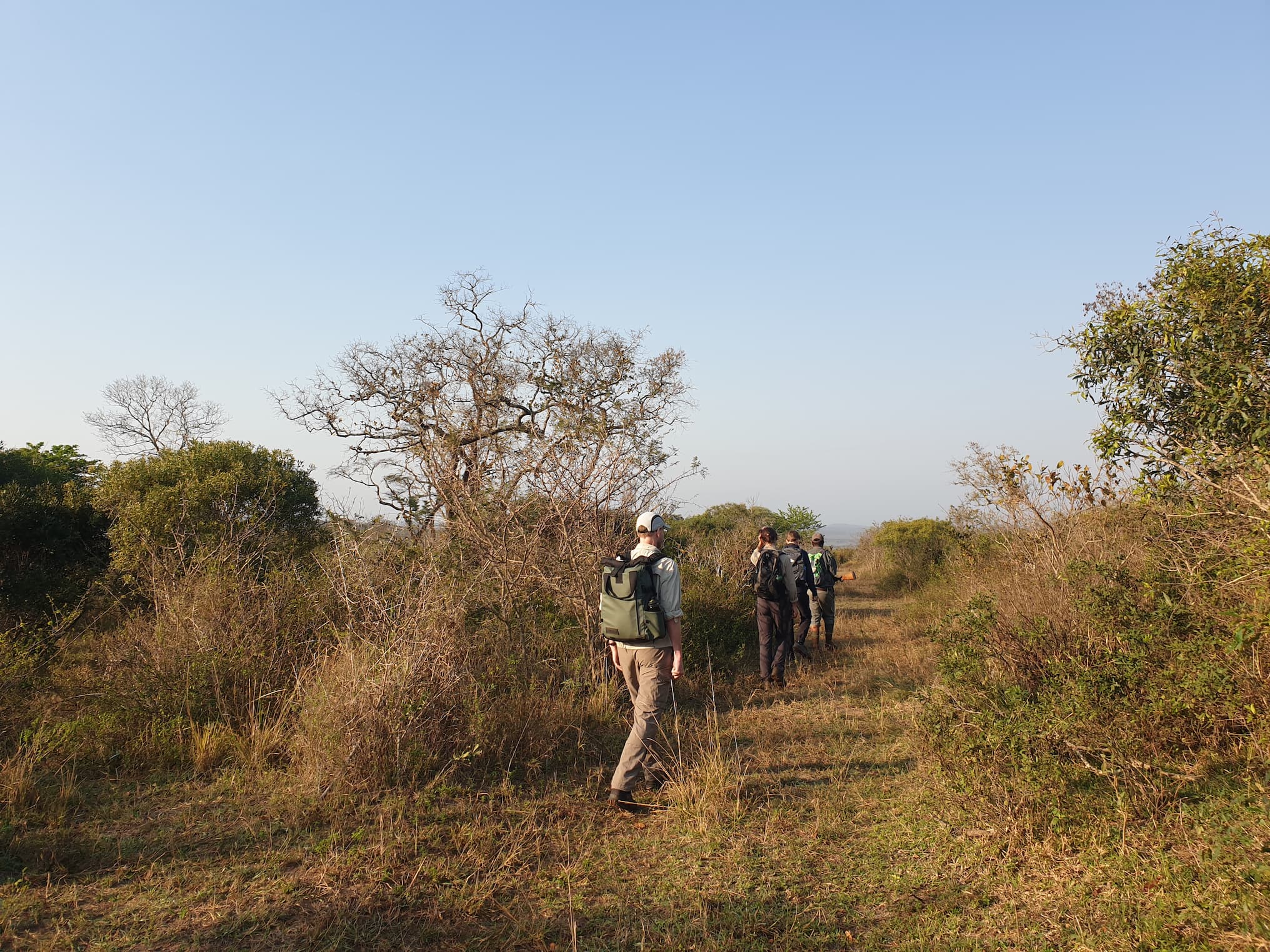
Studying symbiosis in the field: the African Wildlife Conservation and Habitat Management Course
For students of biology, ecology, and environmental science, the concepts covered in this article are foundational. They appear in textbooks, lectures, and examinations at every level. What is harder to access from a classroom is the experience of observing these relationships in a functioning ecosystem and understanding how they inform real conservation decisions.
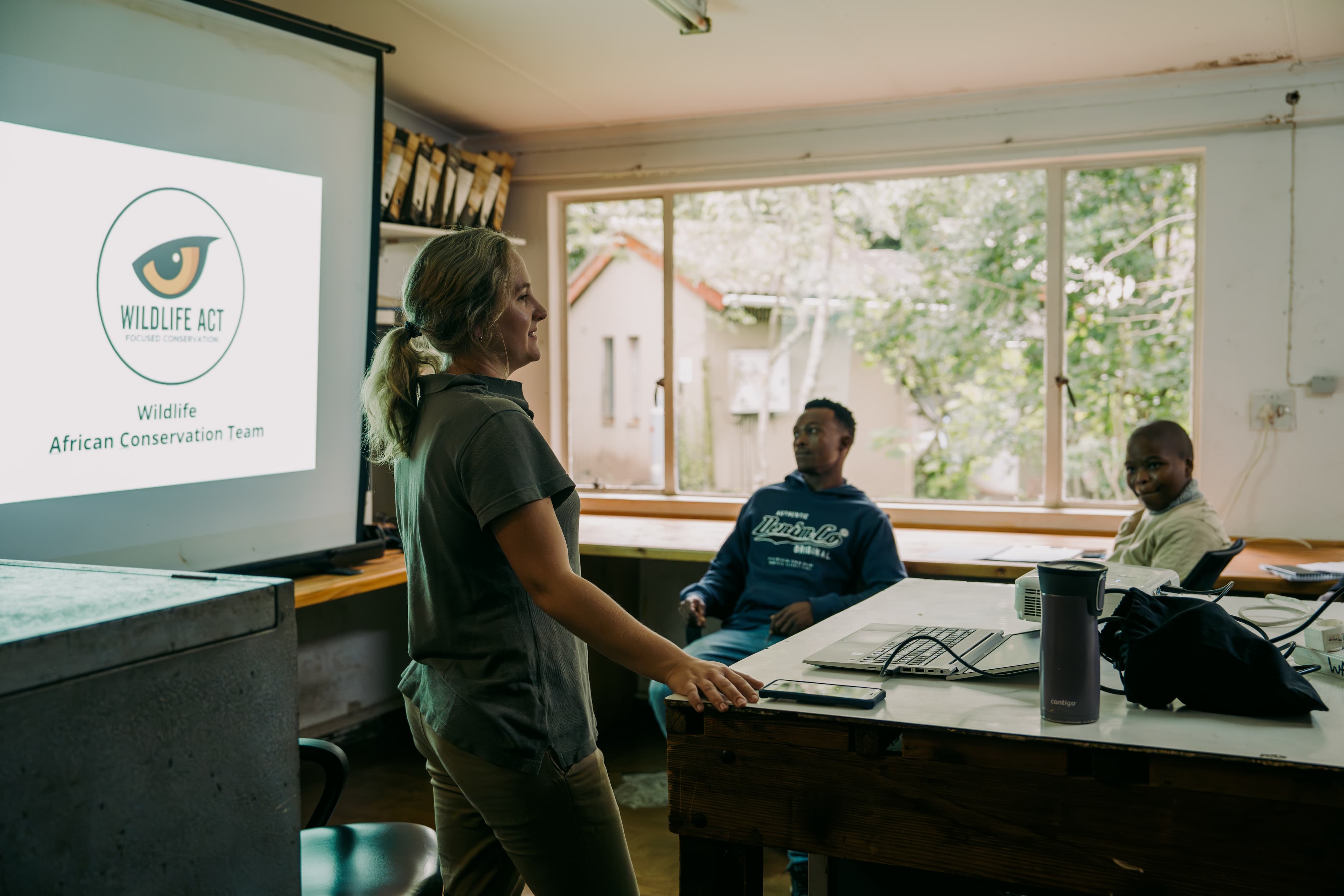
Wildlife ACT's African Wildlife Conservation and Habitat Management Course is a 28-day, field-based conservation training programme delivered within Hluhluwe-iMfolozi Park, KwaZulu-Natal, the oldest proclaimed protected area on the African continent. The course was developed from Wildlife ACT's professional staff training framework, the same framework used to prepare the organisation's field-based conservation teams.
The programme includes 10 formal lectures delivered by experienced conservation practitioners, covering wildlife monitoring, animal behaviour and ethology, tracking and spoor identification, camera trapping, wildlife capture and relocation, conservation and habitat management, wildlife crime and the illegal trade, and community conservation. Each lecture is connected directly to practical field sessions in which participants work alongside Wildlife ACT's active monitoring teams, contributing to real conservation data collection for priority species including African Wild Dog, Cheetah, Lion, Leopard, Elephant, Black Rhinoceros, White Rhinoceros, and Vulture species.
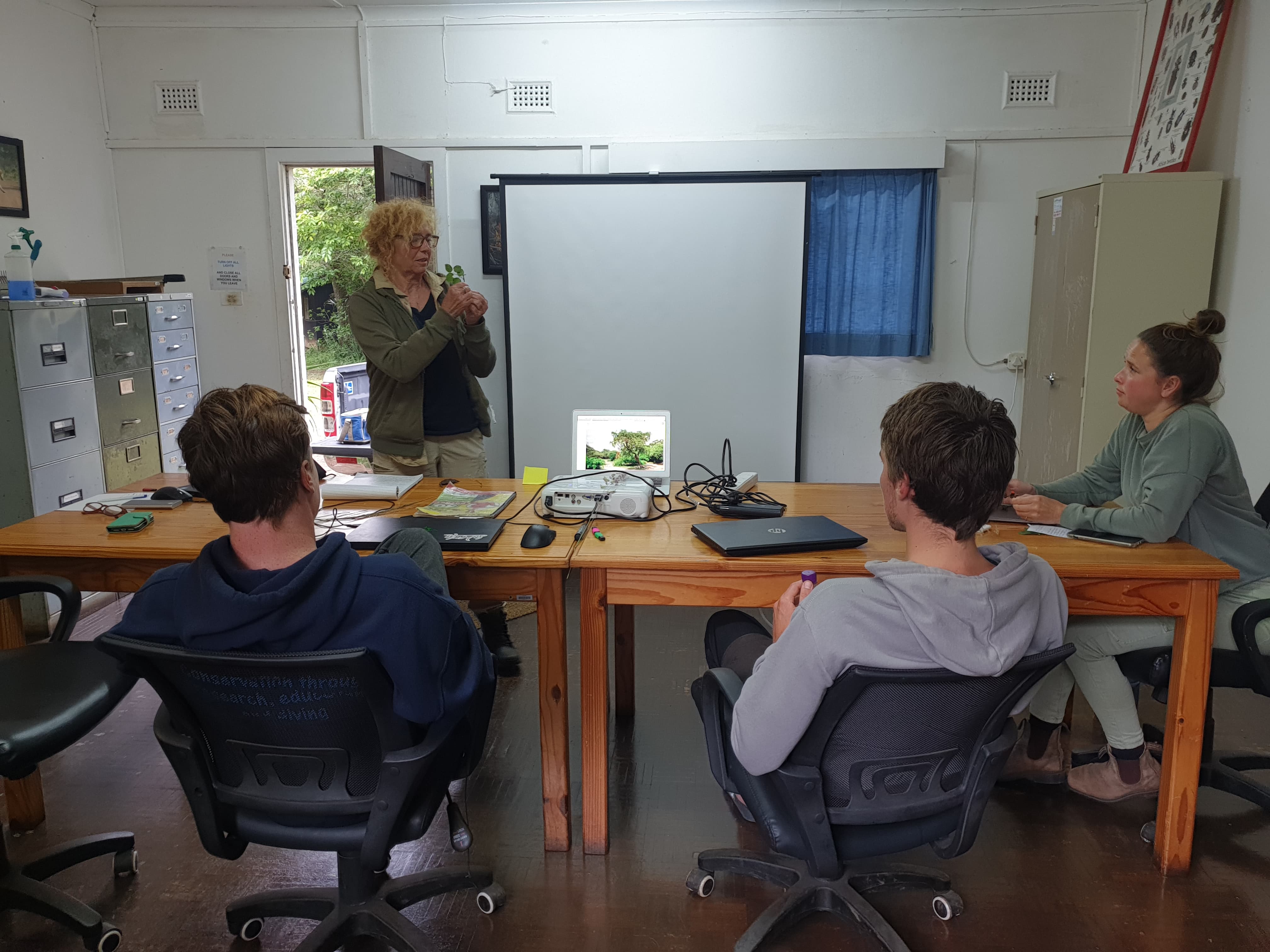
The animal behaviour lecture covers interspecies interactions in detail: social systems, communication, home ranges, territorial behaviour, and the symbiotic relationships that participants observe first-hand during field sessions. The habitat management lectures address fire ecology, bush encroachment, vegetation surveys, and carrying capacity, all of which depend on understanding the competitive and mutualistic dynamics between plant and animal species.
Participants receive a comprehensive research and methodologies workbook that serves as a long-term professional reference, and a certificate on completion. Groups are limited to a maximum of five participants. Many students use the course to bridge the gap between academic theory and the practical realities of conservation work, and some continue into Wildlife ACT's Endangered Species Volunteer Program to apply their knowledge over a longer period in the field. A practical guide for science and biology students considering the course is available on the Wildlife ACT blog.
Wildlife ACT is the only Fair Trade Tourism certified wildlife volunteer programme in Africa and has been awarded both a World Responsible Tourism Award and an African Responsible Tourism Award in the category Best for Habitat and Species Conservation.
The web of relationships that holds ecosystems together
Symbiosis is not an abstract concept. It is the mechanism by which ecosystems function. Every predator-prey interaction, every parasite-host relationship, every mutualistic exchange of nutrients or services contributes to the structure and resilience of the living systems that conservation works to protect.
The six types of symbiosis, mutualism, commensalism, parasitism, competition, predation, and neutralism, provide a framework for understanding these interactions. The African ecosystems where Wildlife ACT operates provide some of the most vivid and well-studied examples of all six. And the ongoing loss of species from these ecosystems is, at its core, the unravelling of symbiotic networks that took millions of years to evolve.
Understanding these relationships is the first step toward protecting them.
References
- Cheng, T.C. (1967). "Definitions of Types of Symbioses." Advances in Marine Biology, 5, pp. 4–9. Academic Press. https://www.sciencedirect.com/science/chapter/bookseries/abs/pii/S0065288108603259
- GeeksforGeeks (2025). "Symbiosis and Symbiotic Relationship." https://www.geeksforgeeks.org/biology/symbiosis-types-definition/
- Nunn, C.L. et al. (2011). "Mutualism or Parasitism? Using a Phylogenetic Approach to Characterize the Oxpecker-Ungulate Relationship." Evolution, 65(5), pp. 1297–1304. https://onlinelibrary.wiley.com/doi/10.1111/j.1558-5646.2010.01212.x
- Plantan, T.B. et al. (2013). "Feeding Preferences of the Red-billed Oxpecker, Buphagus erythrorhynchus: A Parasitic Mutualist?" African Journal of Ecology, 51(2), pp. 325–336. https://www.researchgate.net/publication/264254632
- Diplock, N. et al. (2024). "Feeding Ecology and Interactions with Mammal Hosts in a Symbiotic Genus of Birds (Buphagus spp.) in Namibia." Global Ecology and Conservation, 54. https://www.sciencedirect.com/science/article/pii/S2053716624000434
- Hubel, T.Y. et al. (2016). "Additive Opportunistic Capture Explains Group Hunting Benefits in African Wild Dogs." Nature Communications, 7, 11033. https://www.nature.com/articles/ncomms11033
- Wikipedia contributors. "Oxpecker." Wikipedia, The Free Encyclopedia. https://en.wikipedia.org/wiki/Oxpecker
- National Center for Case Study Teaching in Science. "Are Oxpeckers Friends or Foes? Evaluating a Symbiotic Relationship." https://static.nsta.org/case_study_docs/case_studies/oxpeckers.pdf
.jpeg)