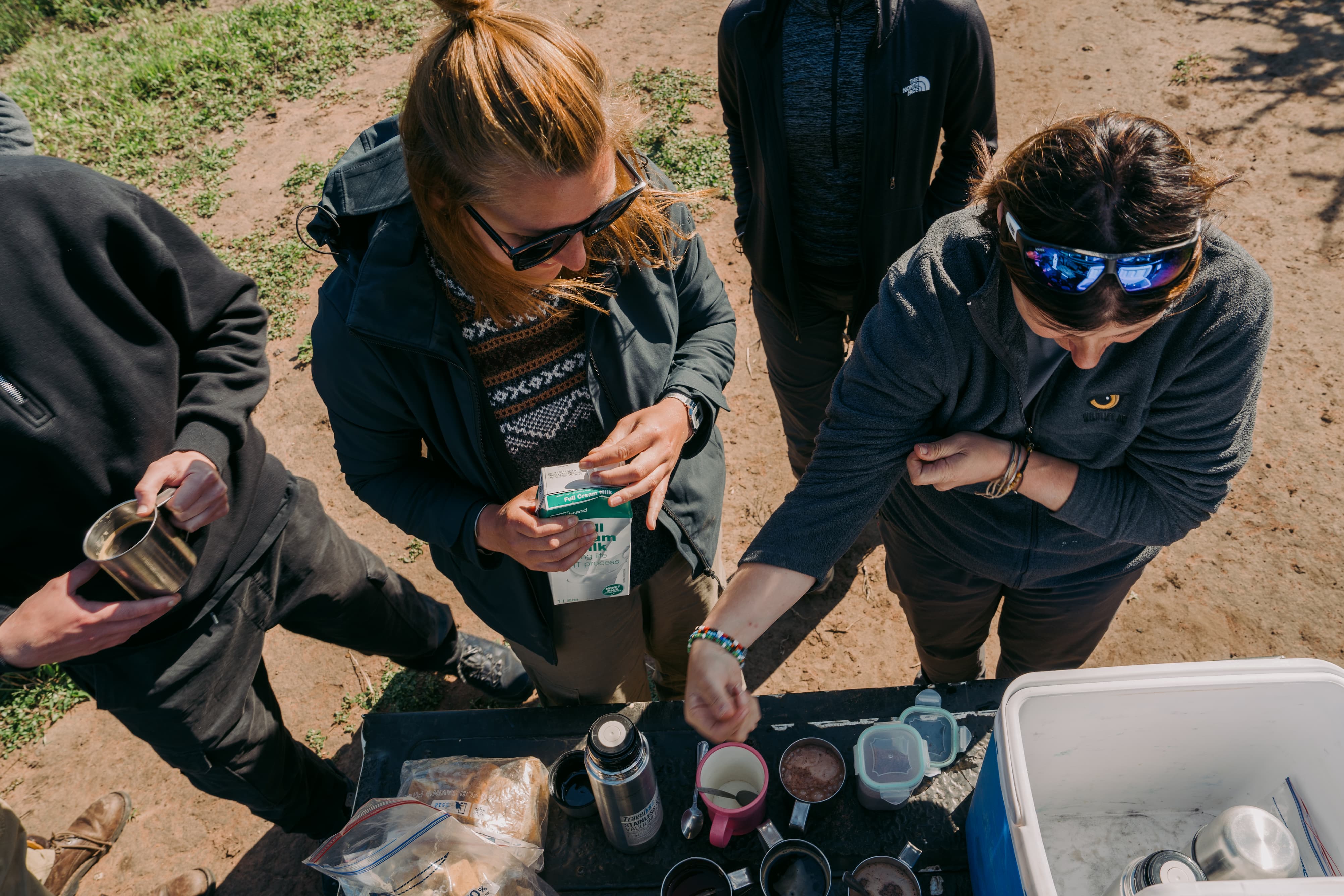
Few things are as quintessentially South African as a rusk dunked into a cup of coffee. It is one of the small traditions Wildlife ACT is delighted to introduce almost every volunteer to within their first days in Zululand, the kind of local custom South Africans set aside a day each year to celebrate on Heritage Day, and one that needs no explanation to anyone who grew up here. Below, alongside the story of where the rusk comes from, are two of our favourite rusk recipes to bring the ritual home with you.
A ritual of every monitoring morning
Preparation starts the night before, with rusks baked or bagged, flasks filled, and gear checked and packed ready for a start that can be as early as 4 a.m. Endangered species monitoring follows the rhythm of the day's priority and many of the species Wildlife ACT tracks are most active at dawn and dusk. Two monitoring sessions run each day, one before sunrise and one ending around sunset, and there is rarely enough time, or appetite, for breakfast before the first one begins.
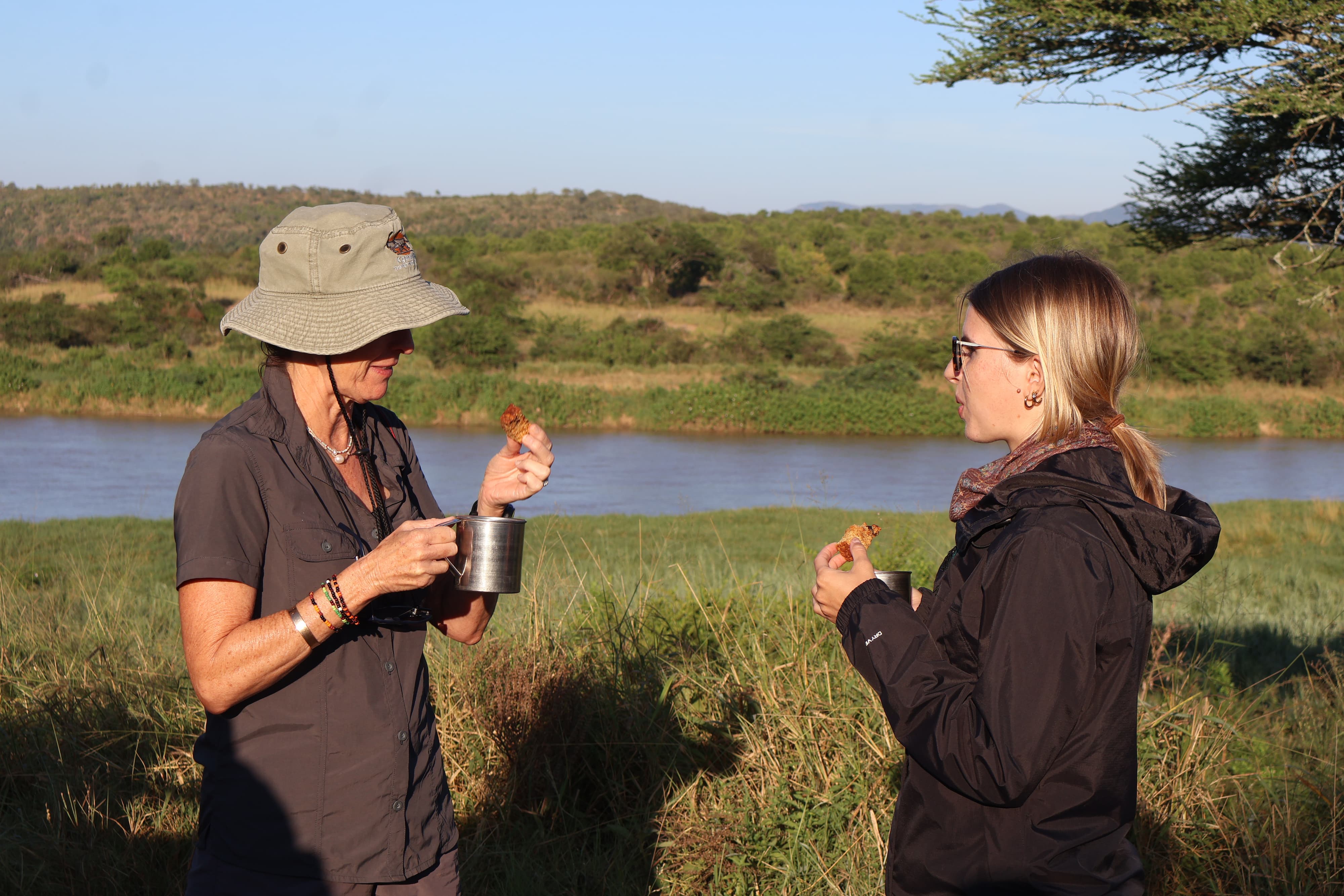
What every volunteer looks forward to instead is the coffee stop partway through the session. Monitors make a point of finding a good spot for it, a rise with a view over the grassland, a quiet stretch of riverbank, wherever the morning's route allows, and the vehicle pulls over for coffee and rusks before the session continues. It becomes the anchor of the morning: the smell of instant coffee (filter if you're lucky!), the stillness of the bush at that hour, and the rusk once it has softened just enough to take a bite.

How the rusk became a South African tradition
The rusk's roots reach back to the founding of the Cape Colony. When the Dutch East India Company established a supply station at the Cape of Good Hope in 1652, Dutch settlers brought with them the tradition of beschuit, twice-baked bread built to survive long sea voyages without spoiling. The Afrikaans word for rusk, beskuit, comes directly from that Dutch original.
French Huguenot settlers, who brought winemaking skills to the Cape, added a refinement of their own. Fermented grape must, left over from the winemaking process, became a natural rising agent for early Cape rusks and produced a notably better bake than the ship's biscuit that came before it.
Its long shelf life made the rusk ideal padkos, food for the road, and it travelled with the ox wagons of the Great Trek and with Boer commandos during the Anglo-Boer War, sustaining people on long journeys through unforgiving terrain. It remained a rural, farmhouse staple for generations, until Molteno farmer Ouma Greyvenstein began selling her buttermilk rusks commercially in 1939, a moment widely credited with carrying the rusk from farm kitchens into supermarkets across the country. Many of Wildlife ACT's volunteers will have enjoyed an original Ouma's Rusk firsthand.
Why the rusk carries cultural weight
Offering a guest a rusk with their tea or coffee is a standard act of hospitality in South Africa, and dunking it is a shared ritual most South Africans grew up with. For many it also carries a strong pull of nostalgia, tied to childhood kitchens and family road trips, and for us, it is tied to conservation fieldwork, keeping our bodies fuelled and sustained throughout the long days.
Wildlife ACT volunteers arrive from dozens of countries, often with little in common beyond an interest in wildlife, and within days they are sharing the same flask and the same box of rusks at the same coffee stop every morning. It is a small routine, but it marks the start of a shared season of early starts and demanding fieldwork. Before long, the conversations shared over these coffee stops blossom into lifelong friendships.

Bake your own: two rusk recipes worth the wait
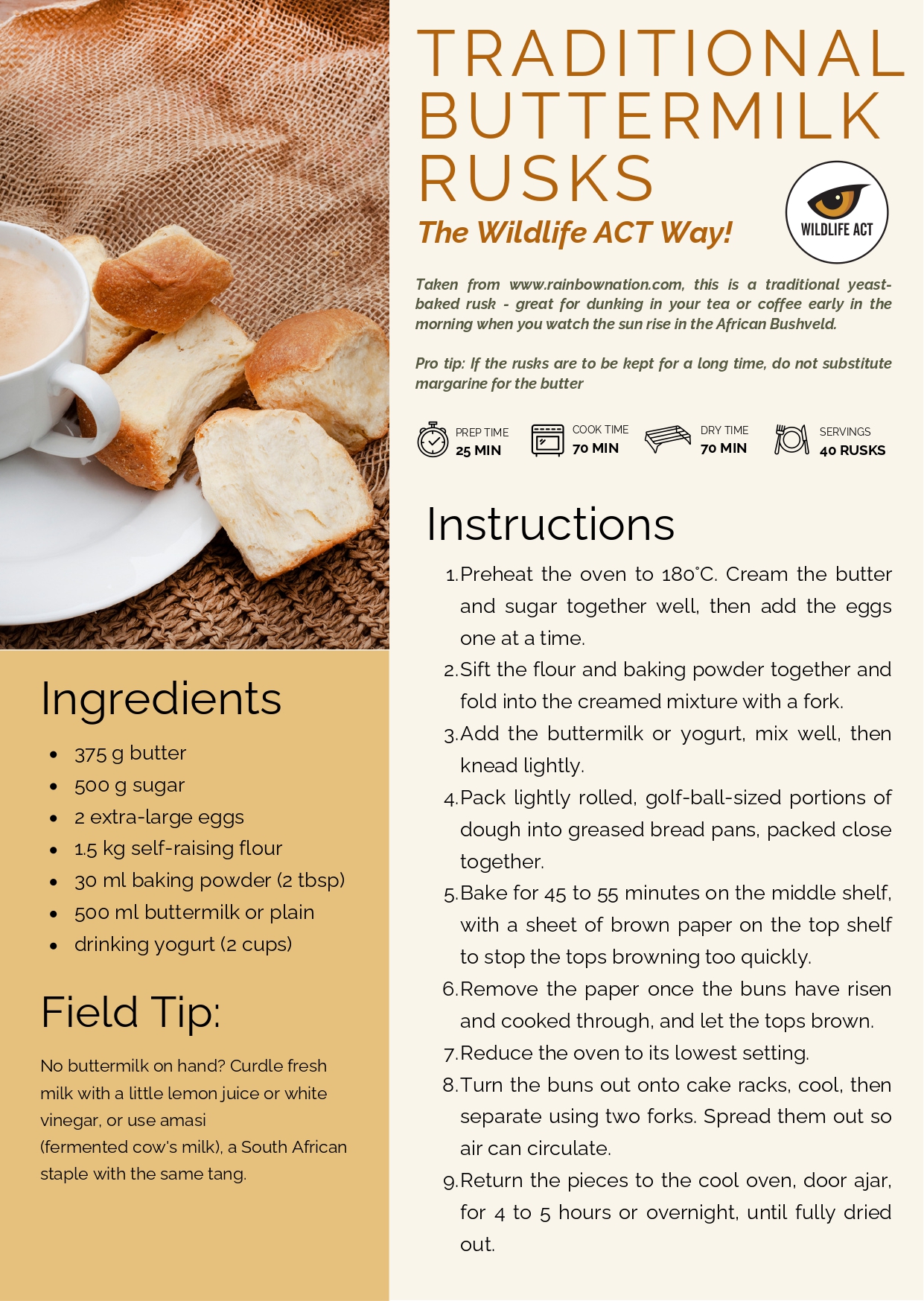
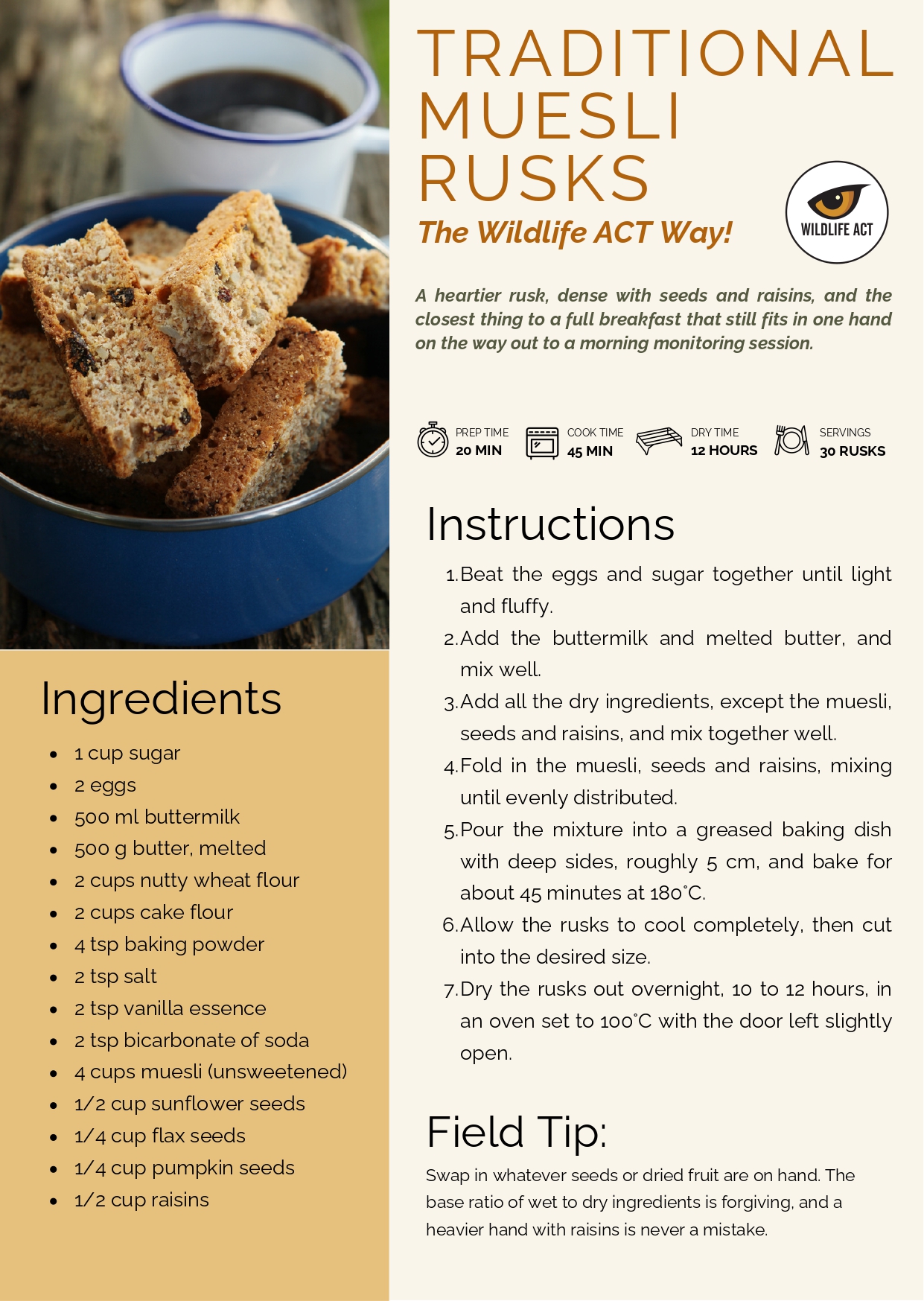
Two recipes are included below in the accompanying graphics: a traditional buttermilk rusk, the style favoured on Boer trek journeys and still the most common recipe baked in South African homes today, and a muesli rusk, a heartier variation with seeds and dried fruit. Both need an overnight dry-out in a low oven, so plan to bake the day before you want to serve them.
References
South African Spaza Shop (2024) The History and Tradition of South African Rusks. Available at: https://southafricanshop.uk/blogs/news/the-history-and-tradition-of-south-african-rusks (Accessed: 22 September 2026).
Life & Thyme (2018) A South African Biscuit Tradition. Available at: https://lifeandthyme.com/recipes/a-south-african-biscuit-tradition/ (Accessed: 22 September 2026).
Binuns Bakery (n.d.) The Return and Rise of the Rusk: A South African Story. Available at: https://blog.binuns.co.za/?p=235 (Accessed: 22 September 2026).
Odes, N. (2024) Why Do South Africans Love Rusks?, Sedo Snax. Available at: https://www.sedosnax.com/blog/why-do-south-africans-love-rusks/ (Accessed: 22 September 2026).
.jpeg)